Pop Art Style: A Complete Guide to Definition, Features & Ideas
Learn what pop art style is, its defining features, famous influences, and creative ideas for making eye-catching pop art designs. Use Vmake Labs to turn your static images into vibrant pop style art.

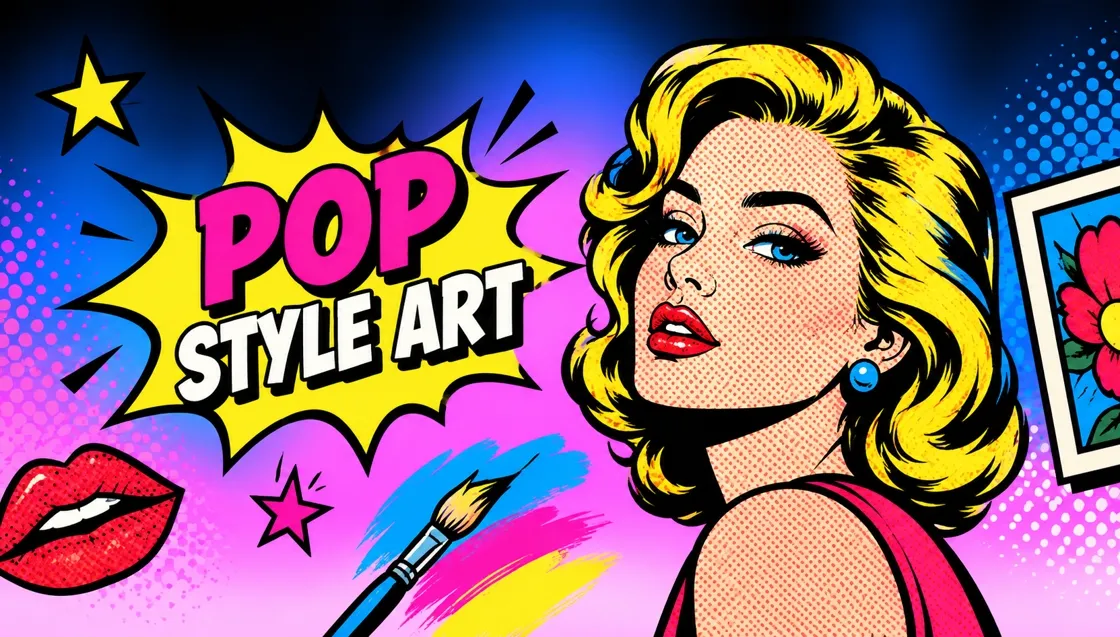
Pop art style combines images of everyday life with bold visuals. Its bright colors, comic-inspired details and repeated imagery are still instantly recognizable. This guide looks at the history, features, popular techniques and creative ideas of pop art. It also discusses how AI tools such as Vmake Labs can be used to create pop art visuals.
What is pop art style?
Pop art is an art movement that employs imagery from popular and commercial culture. Artists often take their inspiration from advertisements, comics, celebrities, products, packaging, and everyday objects. The style is generally bold, colorful, graphic, and easily identifiable.
The movement originated in the 1950s in Britain and the United States. It was especially influential during the 1960s. Pop art was closely associated with artists such as Andy Warhol, Roy Lichtenstein, Richard Hamilton and Claes Oldenburg.
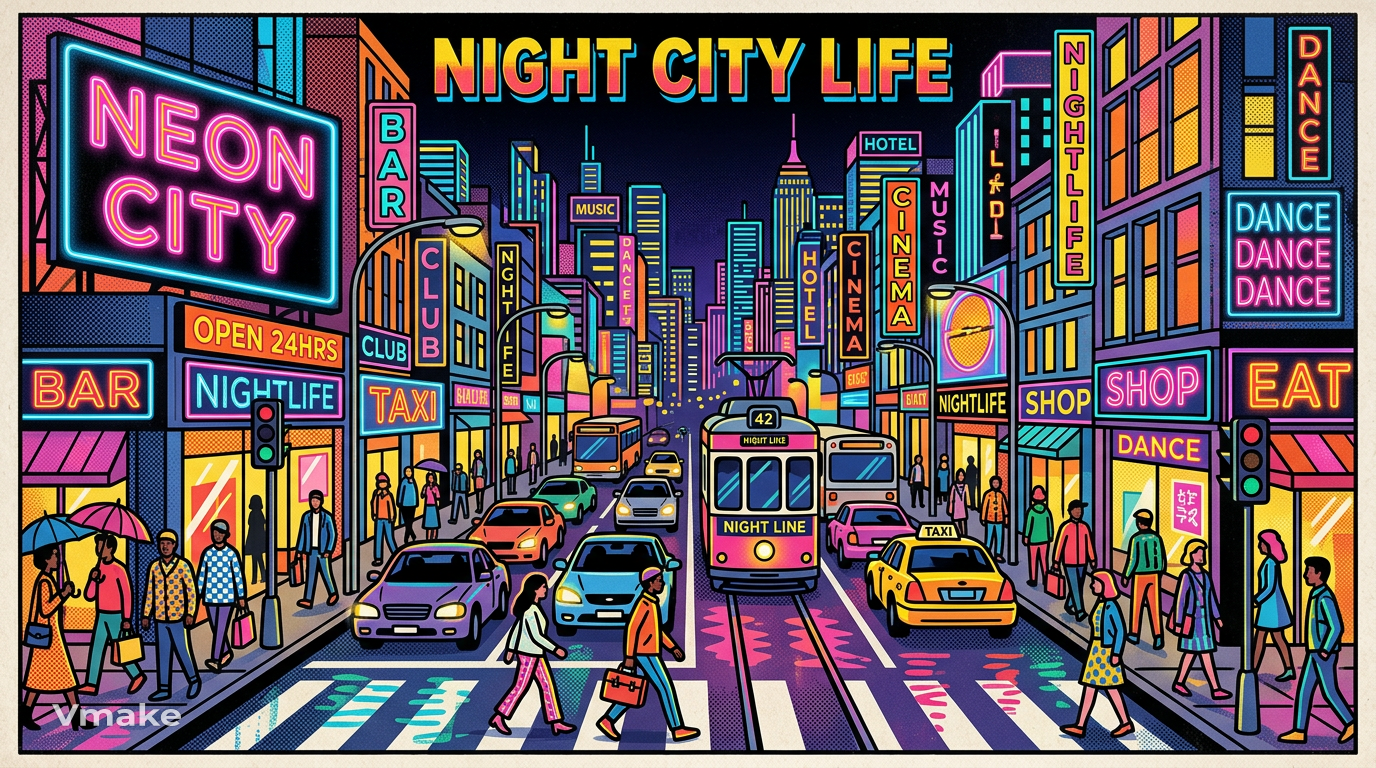
This art style moved away from the traditional division between "high art" and popular or commercial culture. Instead of focusing on classical themes, artists brought everyday consumer imagery into galleries and museums. An artwork could be a soup can, a comic strip, an advertisement, a portrait of a star.
The style also reflected the growing impact of consumerism and mass media. Television, magazines, billboards, advertising and celebrity culture defined what people were seeing every day. Pop artists frequently recast these images to explore the effects of modern culture on attention, desire and identity.
Key features of pop art painting style
Pop art can take many forms, but several visual characteristics appear repeatedly. These elements contribute to the instantly recognizable look of art.
-
Bold, bright colors
Many Pop art styles feature bright, saturated colors. Artists often use bright reds, yellows, blues, pinks, greens and oranges. But colors can be different from real life. The deliberate exaggeration makes for a strong graphic quality in the work.
-
Everyday and commercial imagery
Pop art often deals with people's everyday life subjects. These can be in the form of food products, household items, advertisements, packaging, magazines, and popular characters. Commercial imagery is especially important as it ties art to consumer culture. Artists change the scale, colors, context, or presentation of familiar products to make them visually interesting.
-
Repetition and mass production
Repetition is one of the most recognizable techniques of Pop art. The same portrait, product, or object can be repeated several times in one composition by an artist. The recurring imagery is a reflection of the influence of mass production. Factories could turn out thousands of identical products, and the media could repeat the same photograph or advertisement over and over again.
-
Comic-inspired graphics
Pop art artists were greatly influenced by comic books. Thick outlines, speech bubbles, dramatic expressions, captions, and action words are often used to convey their visual language. Pop art comic book style can make a scene feel theatrical and energetic. Halftone patterns can also be used to reproduce the appearance of printed comic artwork.
-
Flat, graphic composition
Pop art is more about shapes, outlines, and blocks of color than realistic depth. There are many compositions that have a clean graphic look. Objects may be simplified instead of being highly detailed. Shadows and textures can be flattened too, to give a flatter look. This graphic style is well suited for posters, advertising, editorial illustrations, portraits and digital art.
Popular pop art style techniques
Pop art uses many different ways to copy, change, and remix familiar imagery. These techniques help to give it its bold, graphic, commercial-inspired look.
-
Silkscreen printing
Silkscreen printing is used to reproduce the same image many times. Artists can change the colors from print to print and still be recognized as the same image. This technique is an example of how Pop art relates to mass production.
-
Appropriation
Appropriation takes well-known imagery from popular culture and re-contextualizes it. Artists can use ads, photos, comics or celebrity images. Familiar images are recontextualized to create new meaning.
-
Collage
A collage is a combination of photos, ads, text and found images. Artists construct these elements into visually complex compositions. This method works well with Pop art, because it places different elements of mass media and popular culture in one visual realm.
-
Ben-Day dots
Ben-Day dots are small, regularly spaced dots traditionally used in commercial printing to create shading, color, and texture. Pop artists used the technique to reproduce the unique look of comic books and mechanically produced images.
-
Repetition
Pop artists used this technique to comment on mass production, advertising and the repeated images that we see everywhere in popular media. Repeated elements may be identical or modified in color, scale or treatment to create a visual rhythm.
How to make comic style pop art
Comic pop art is achieved by taking a recognizable subject and reducing it to its most basic elements with bold graphic treatment. The effect can be created using traditional techniques, digital editing, or AI image-generation tools.
-
Choose a familiar subject
If you are doing a pop art comic style, choose something that people will immediately recognize. It can be a portrait, product, food item, vehicle, or household object. Pop art is about making everyday images interesting to look at. It works great on familiar subjects.
-
Simplify the image
Remove the non-essentials and focus on what makes the subject most recognizable. Use simple shapes and thick lines for graphic effect. For portraits, concentrate on facial features and expressions. Objects can be reduced to their silhouettes and main features.
-
Apply a vibrant color palette
Use bright, contrasting tones instead of realistic colors. Experiment with combinations that create a strong visual separation between subject and background. You can also create several versions of the same image with different color treatments that can give you a classic Pop art look.
-
Add graphic elements
Add comic books and old printing details. Speech bubbles, captions, halftone dots, thick outlines, and action words all contribute to the comic feel. Use these elements sparingly, so they help the main subject, not make the composition hard to read.
-
Experiment with repetition
Repeat the main subject in different colors or backgrounds. It creates a visual rhythm and refers to mass production and commercial imagery. Repeating an element can add a more dynamic, distinctive quality to a simple portrait or object.
Popular pop art style ideas to try
Pop art can be used for portraits, posters, fashion visuals, food designs, travel artwork and many more subjects. These are just simple jumping-off points to play with the style.
-
Pop art portrait
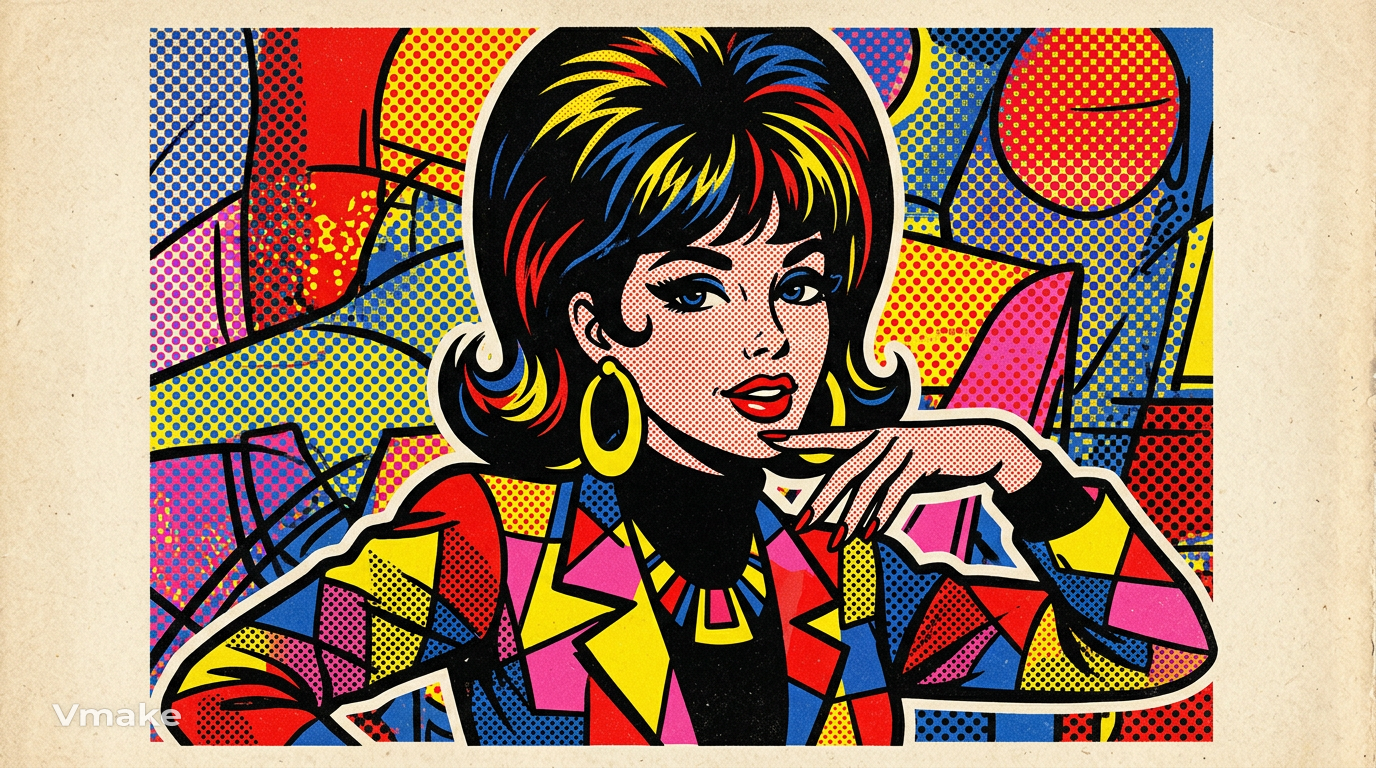
Make a portrait with bold colors, bold outlines, and halftone textures. You can do the same face multiple times and provide different color schemes for each version. Through this method, you are able to create a recognizable pop art composition but still have space to play with color and expression.
-
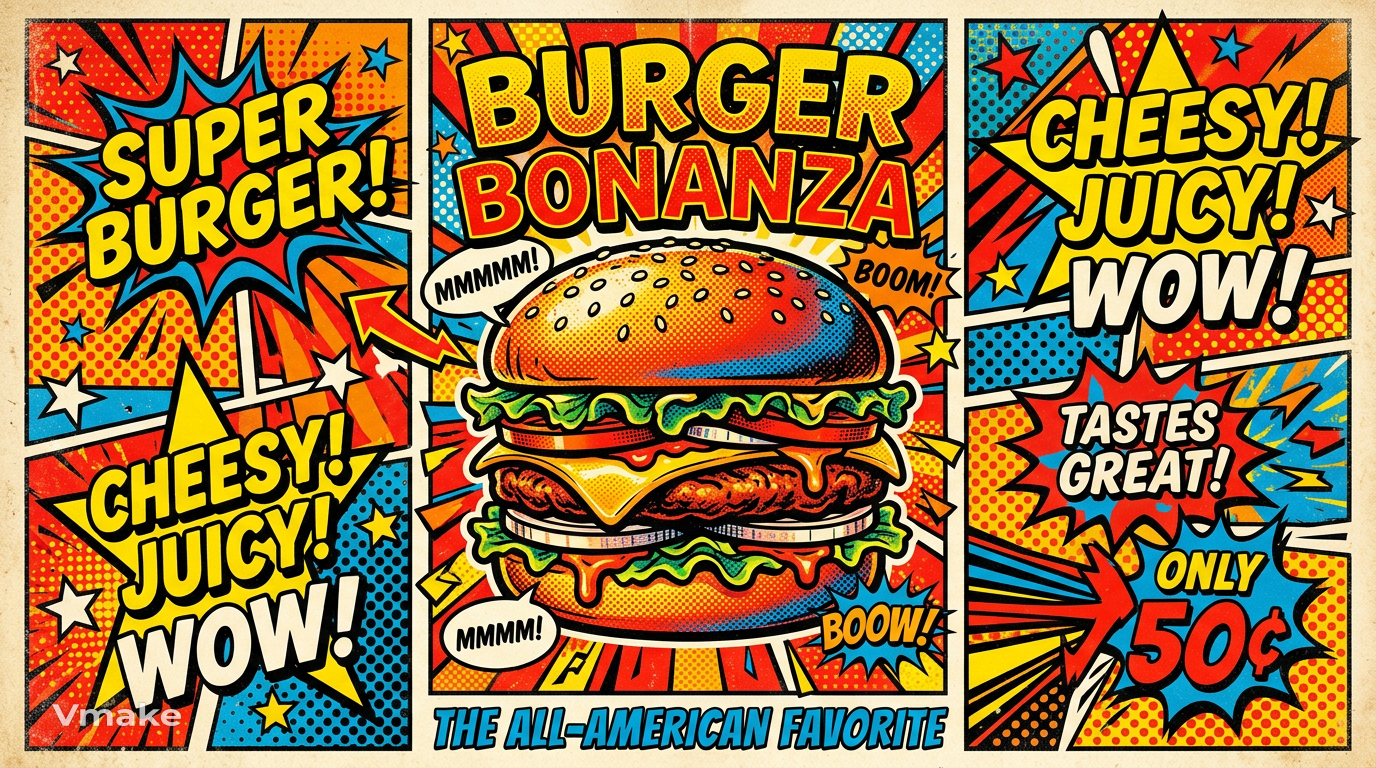
Pop art food poster
Make a vibrant, eye-catching poster starring a popular food or drink. Burgers, soda cans, candy, fruit, and ice cream all can work well because their shapes are easily recognizable. The bold typography, contrasting colors, and comic book graphics come together to create a vintage advertising style.
-
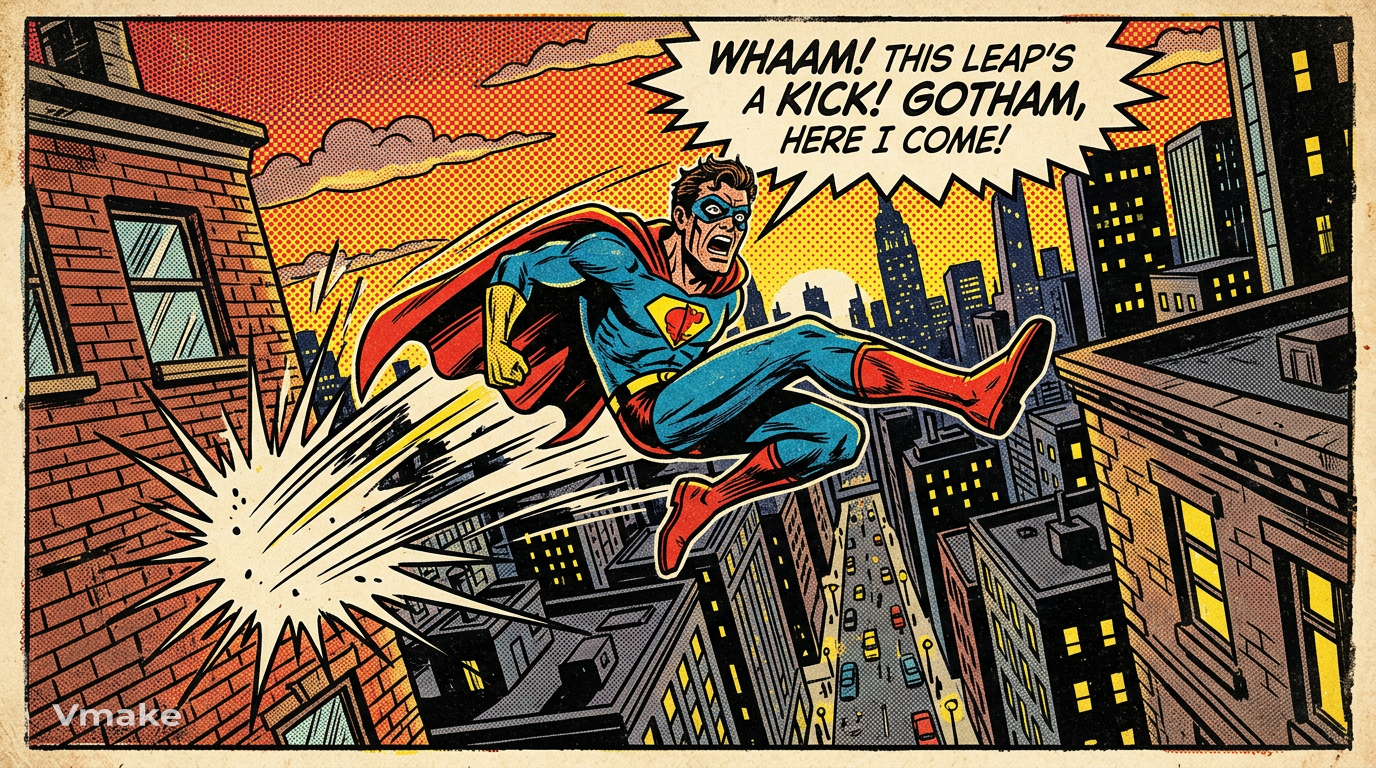
Retro comic scene
Design a colorful retro comic scene featuring a dynamic superhero launching from a rooftop across a bustling city skyline. Complete with vintage Ben-Day dot shading, an energetic explosion effect, and a classic dialogue bubble exclaiming, "WHAAM! THIS LEAP'S A KICK! GOTHAM, HERE I COME!", it captures classic comic book art style.
-
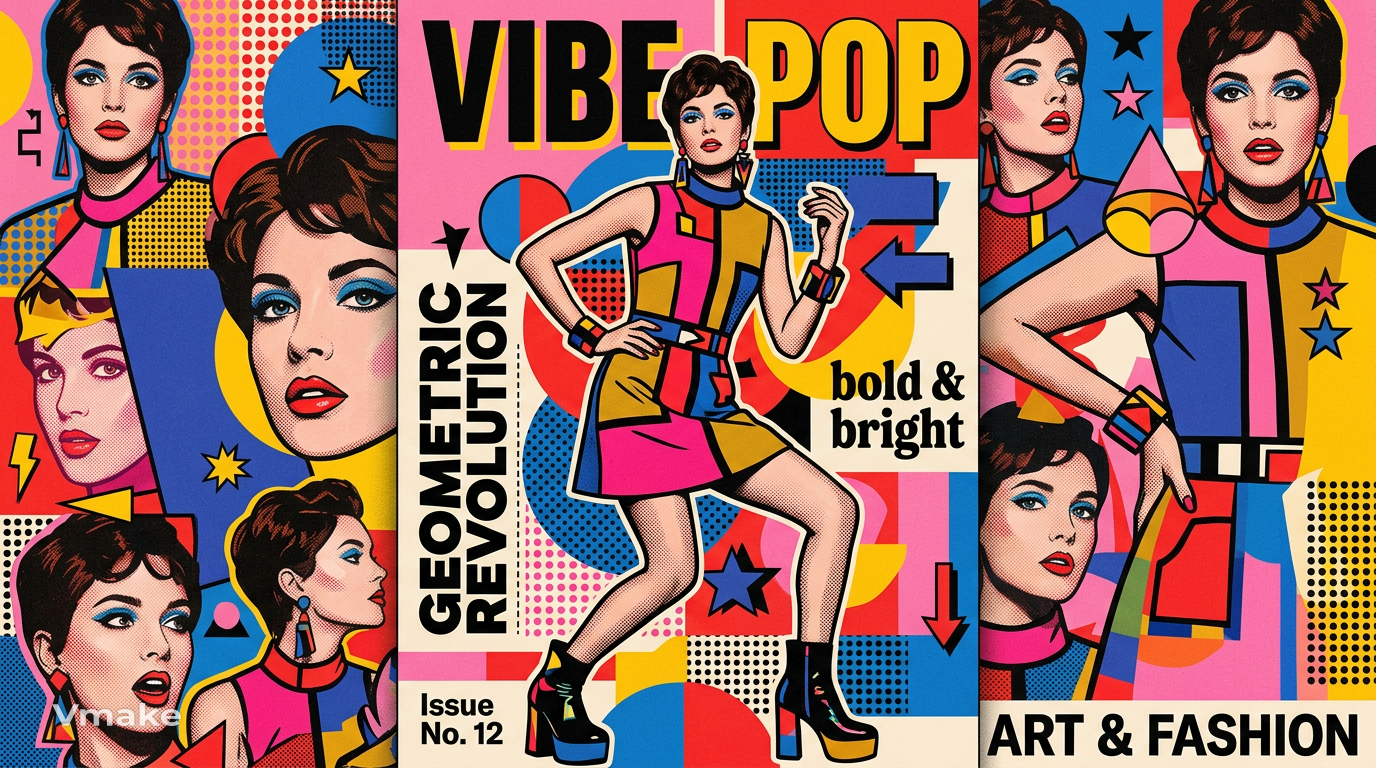
Pop art fashion editorial
Combine fashion photography with strong pop art treatments. Bright colors of clothes, repeated poses, graphic backgrounds, large typography, and halftone textures. The combination creates an editorial shot that feels playful, but still looks like polished fashion photography.
-
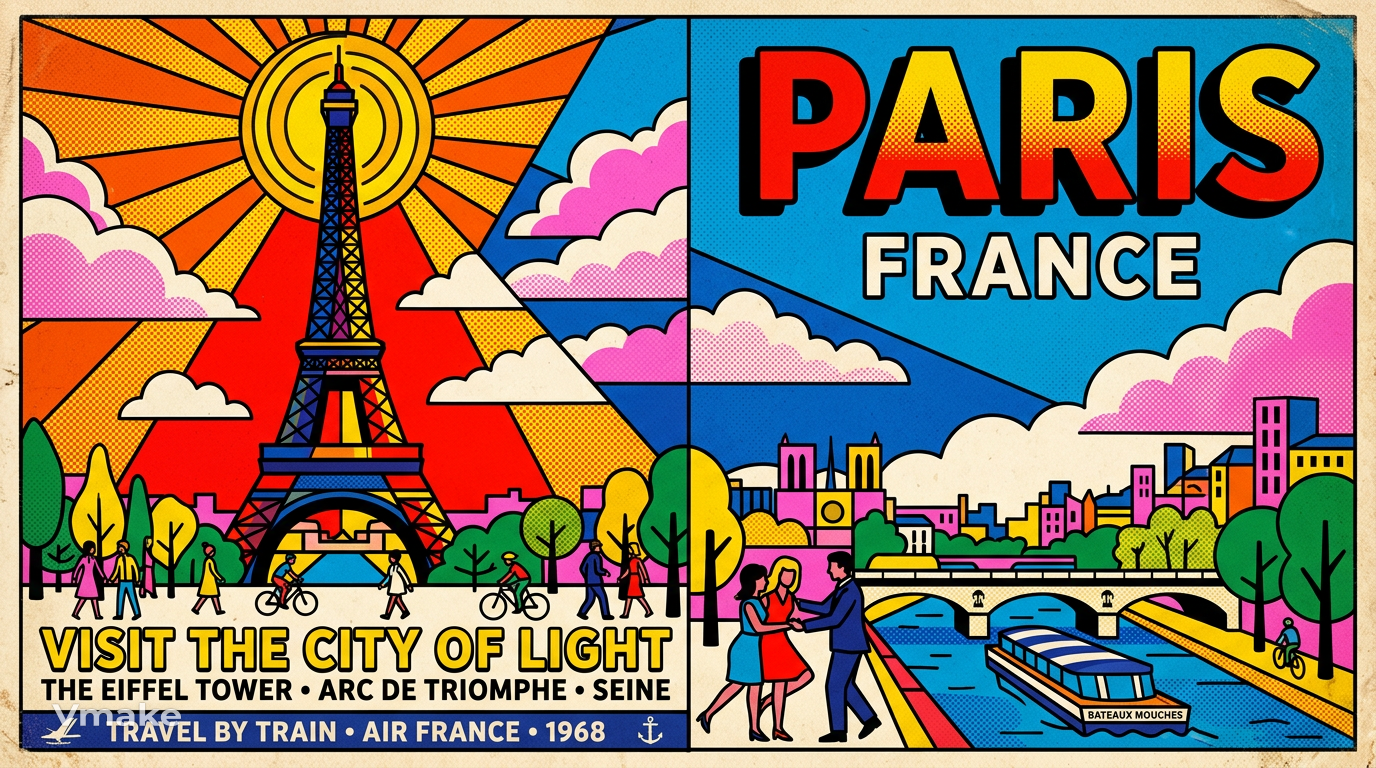
Retro travel poster
Design a vibrant pop art travel poster showcasing a place or landmark. Use familiar buildings, landscapes, or monuments and simplify them into strong graphic shapes, then add large typography and contrasting colors. Halftone textures can add a vintage printed look to the design.
Vmake Labs: Create pop art style images with AI
Vmake Labs AI image generator lets you create Pop art-like images from text prompts and reference images. Its image-generation workflow lets you create a concept from scratch or transform an existing image into a different visual style. Choose from multiple AI models, select an appropriate aspect ratio, and let AI handle the rest.
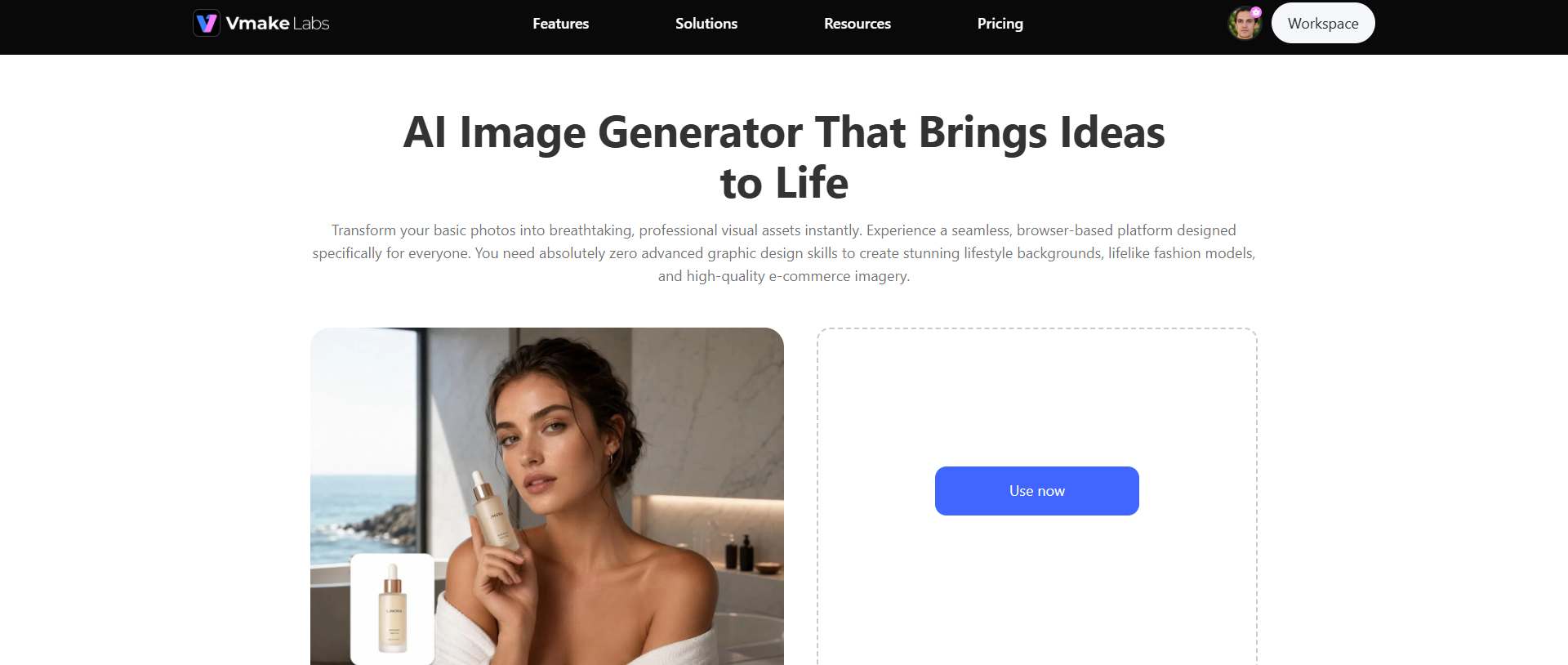
Steps to generate images using Vmake Labs
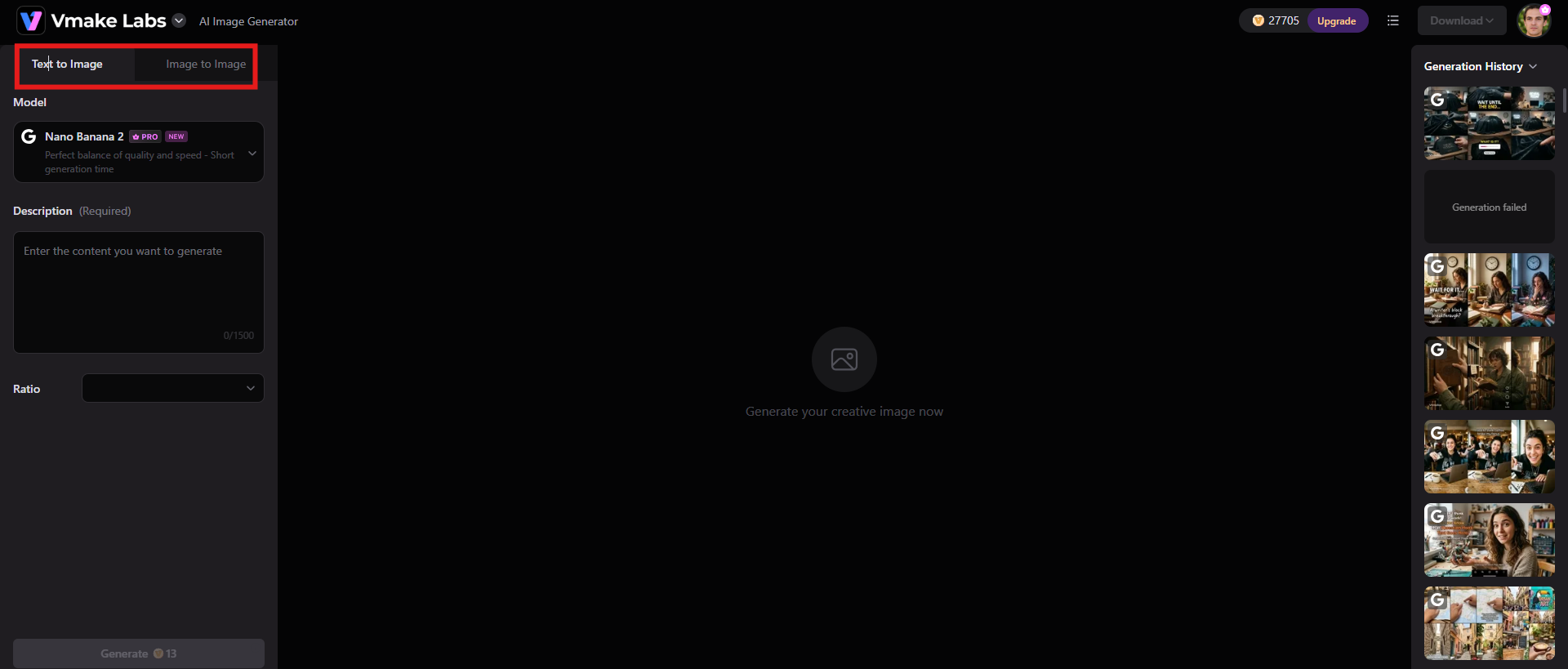
Step 1: Select Text to Image or Image to Image and choose a model
Open Vmake Labs image generator and choose a generation mode between Text to Image and Image to Image, depending on your preferences.
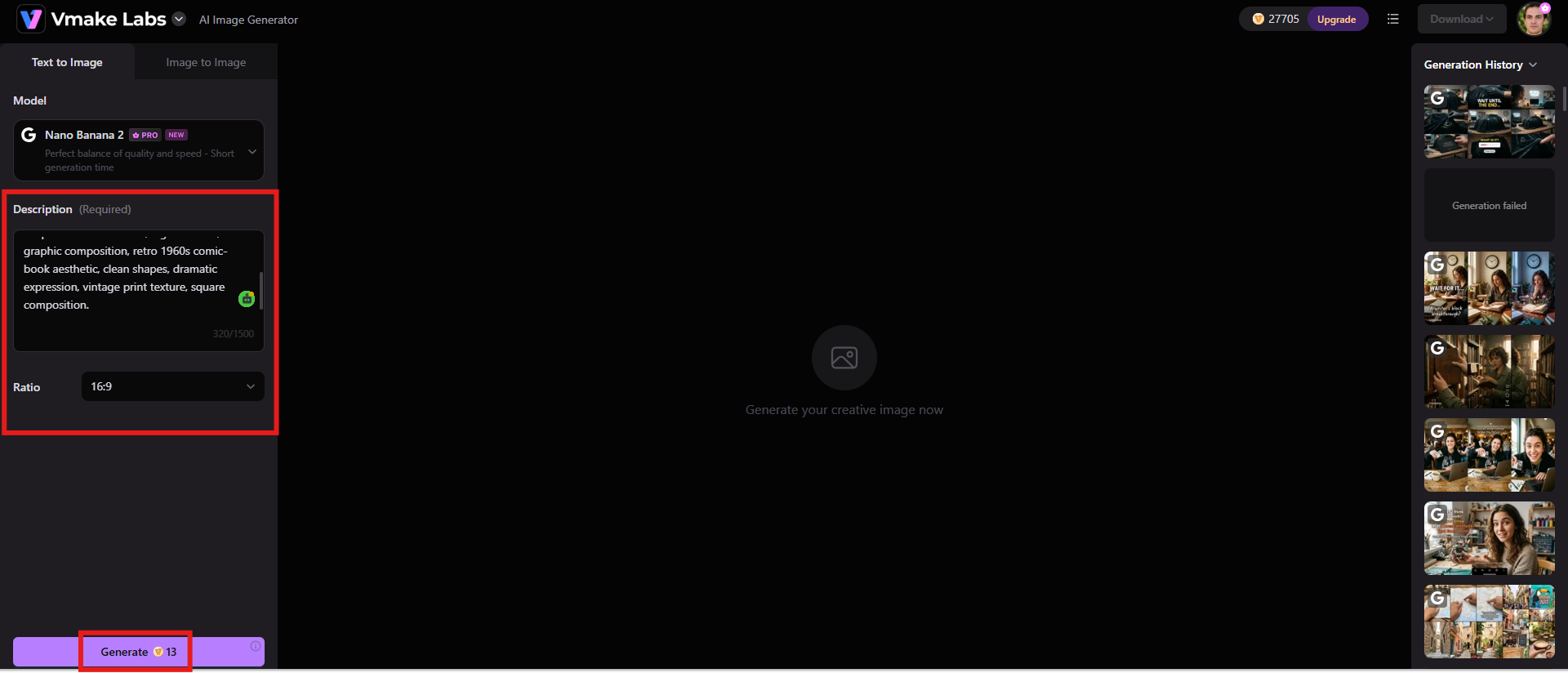
Step 2: Input a prompt or upload 1-3 reference images
In the prompt, describe your preferred pop art style, subject, colors, composition, and graphic details. To further guide the image, upload 1-3 reference images for image-to-image generation. Select the appropriate aspect ratio and click "Generate".
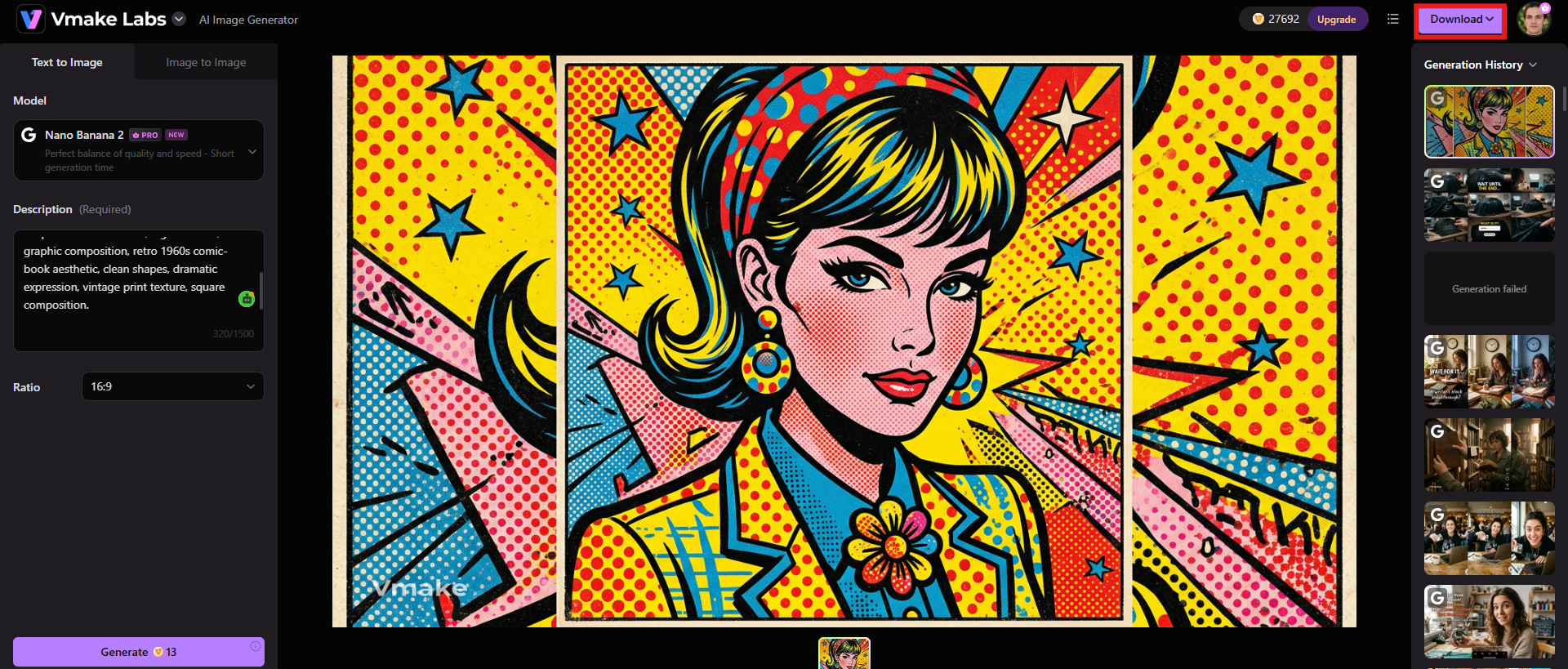
Step 3: Preview and download after generation
Check the generated output to make sure it is in the style you want. Once you get the result you like, click on “Download” to save your finished image.
Key features
-
Text-to-image generation for custom visuals
Vmake Labs can generate custom images from written ideas. The prompt must describe your subject, colors, composition, and pop art aesthetic. You can ask for details such as bold outlines, halftone dots, vivid colors, or retro comic graphics to guide the outcome.
-
Image-to-image generation with reference images
Transform an existing image with Vmake Labs while retaining its main subject. Upload 1-3 reference images for visual guidance. This is useful if you already have a portrait, product photo, or other image that you want to reinterpret in a Pop art style.
-
Flexible aspect ratios and image generation settings
Vmake Labs features different aspect ratios and generation settings for different creative needs. Create graphics for posters, e-commerce, social media posts, real estate visuals, editorial graphics, and other formats, without the limitation of a fixed canvas.
Conclusion
Pop art changed the relationship between fine art and popular culture. It uses everyday products, advertisements, comic strips, celebrities, and imagery from mass media in art spaces. Its visual identity is based on strong colors, repetition, graphic compositions, and familiar subjects.
The style also offers a lot of creative freedom. You can use pop art effects for portraits, food posters, fashion editorials, comic scenes, and travel designs. AI image-generation tools such as Vmake Labs are another way to play with these visual ideas and create original interpretations.
FAQs
What is Pop Art style?
Pop art is an art movement based on popular and commercial culture. It often uses recognizable subjects such as advertising, celebrities, products, comics, and everyday objects. Common characteristics are graphic compositions, repetition, and bold colors.
What are the main characteristics of pop art?
It is known for the use of vivid colors, everyday life imagery, repetition, comic-inspired graphics, and flat compositions. Pop art is also closely associated with consumerism, advertising, mass media, and celebrity culture.
Who are the most famous pop art artists?
Some of the best-known pop art artists are Andy Warhol and Roy Lichtenstein. The movement was also associated with Richard Hamilton and Claes Oldenburg. Their work helped to define the relationship of pop art to popular and commercial culture.
What colors are commonly used in pop art?
Pop art often features bright, saturated, and contrasting colors. Red, yellow, blue, pink, orange, and green are commonly used. Artists may also use unrealistic colors to make a subject more graphic and expressive.
How can I turn a photo into Pop art?
Turn a photo into Pop art with an image-to-image AI generator. Upload a photo of yourself as a reference and let us know what sort of visual treatment you're after. Use features including bright colors, thick outlines, halftone dots, flat composition, and comic-inspired graphics.
You May Be Interested
20+ AI Art Prompts for Stunning AI-Generated Artwork
Goofy AI Images: Funny Ideas, Prompts & A Creative Guide
Gemini AI Photo Prompt: Create Stunning Images with Text Instructions
AI Art Styles Explained: Stunning Styles with Ready-to-Use Prompts
AI Art Tools: 8 Best AI Art Generators to Try in 2026