Video Marketing Strategy: A Guide to Creating Videos that Convert
Discover how a strategic approach to video marketing can help you increase conversions. Learn a practical video marketing strategy and create impactful videos with Vmake that deliver real business growth.

Video grabs attention fast, builds instant credibility, and drives action far better than text ever could. But turning views into value takes more than raw creativity—you need a focused strategy. This guide breaks down practical, high-impact video marketing frameworks designed to turn audience attention into measurable business results.
What is a Video Marketing Strategy?
A video marketing strategy is basically your roadmap for how you're going to handle video content. It outlines how you create the videos, where you actually post them, and how you measure whether they worked. It covers audience targeting, content themes, publishing channels, and performance measurement.
Simply put, video content marketing gives each piece of content a job to do. Without that direction, you're mostly guessing.

Common Goals of Video Marketing
-
Increase brand awareness: You want people to recognize your brand before they need what you sell. Then, when the buying moment finally arrives, your name is already sitting somewhere in the back of their mind.
-
Generating leads: Good video content can spark curiosity and get potential customers to raise their hand. Maybe they request a demo. Maybe they download a guide or fill out a contact form. The trick is giving them a reason to act now.
-
Driving website traffic: Social platforms can get attention. Video helps bridge that gap. A well-placed video can move people away from social platforms, video channels, or ads and bring them to your website, where you have far more control over the experience.
-
Building trust and credibility: People naturally buy from businesses they actually trust. Video is one of the few mediums that handles this well.
Benefits of Video Marketing
-
Captures attention quickly: People scroll fast. Really fast. That's why video tends to work so well. A good one can interrupt that pattern just long enough for your message to get through before someone's attention shifts elsewhere.
-
Increases engagement: People just naturally stick around longer when there is a video playing. When the pacing is right, it keeps people hooked. They end up watching way longer than they would have spent scrolling through a wall of plain copy.
-
Strengthens customer relationships: A good video can answer questions before support tickets ever get submitted. It can show customers how to get more value from what they've already bought.
-
Works across multiple channels: One video can often be adapted for websites, social media, email campaigns, and paid advertising, making content production more efficient.
Building a video marketing strategy that works
-
Define your video marketing goals
If you don't know what you're trying to accomplish, every performance metric becomes confusing. One video might generate thousands of views but zero leads. Be specific about what you're trying to achieve. You might be focused on increasing brand awareness. Maybe the goal is to generate qualified leads. In other cases, driving website traffic makes the most sense.

-
Identify topics that matter to your audience
Too many brands create videos about what they want to say instead of what their audience wants to know. Your customers leave clues everywhere. They ask questions during sales calls. They search for solutions online. They complain about problems in reviews and community forums. Pay attention. The best video topics often come directly from recurring customer questions
-
Conduct keyword and competitor research
Keyword research gives you a clearer picture of what people are actually typing into search bars. More importantly, it shows you the language your audience naturally uses instead of the terms you think they use. Take a close look at the videos getting attention in your space.

-
Develop a video content calendar
Consistency beats random bursts of activity. A content calendar helps keep the moving pieces in one place. Map out your publishing schedule before deadlines start piling up. Plan campaign themes early and give production timelines some breathing room.
-
Create consistent brand messaging
Your audience shouldn't feel like they're watching videos from a different company every time you upload. That disconnect happens more often than people realize. The way you speak matters. So does your messaging. Visual style plays a role too, but it's really the overall voice that ties everything together.

-
Repurpose existing content into videos
You probably already have more video ideas than you realize. Blog posts, customer testimonials, case studies, webinars, email newsletters, FAQs, and social media discussions can all become video content with relatively little effort. Sometimes the highest-performing video starts as a simple blog article that almost nobody noticed.
How to create marketing videos that convert

-
Start with a strong hook: Most viewers make up their minds fast. Within a few seconds, they're either settling in to watch or moving on to the next video in their feed.
-
Target audience pain points: People pay attention when they feel understood. Before you explain your product, talk about the challenge your audience is facing. People pay attention when they feel understood.
-
Deliver a clear and concise message: Choose a primary message and build the video around it. Every scene, visual, and line of dialogue should support that core idea.
-
Use storytelling to increase engagement: You don't need a complicated plot. A simple story with a relatable problem and a believable solution is often enough to keep viewers interested.
-
Showcase benefits instead of features: Features tell people what a product has. Benefits explain why any of that matters. To be honest, most customers don't wake up hoping to learn about features.
-
Add a compelling call-to-action: Don't leave viewers wondering what happens next. You've worked to earn their attention. Tell people exactly what you want them to do.
Modern black tech: How Vmake simplifies the video creation process
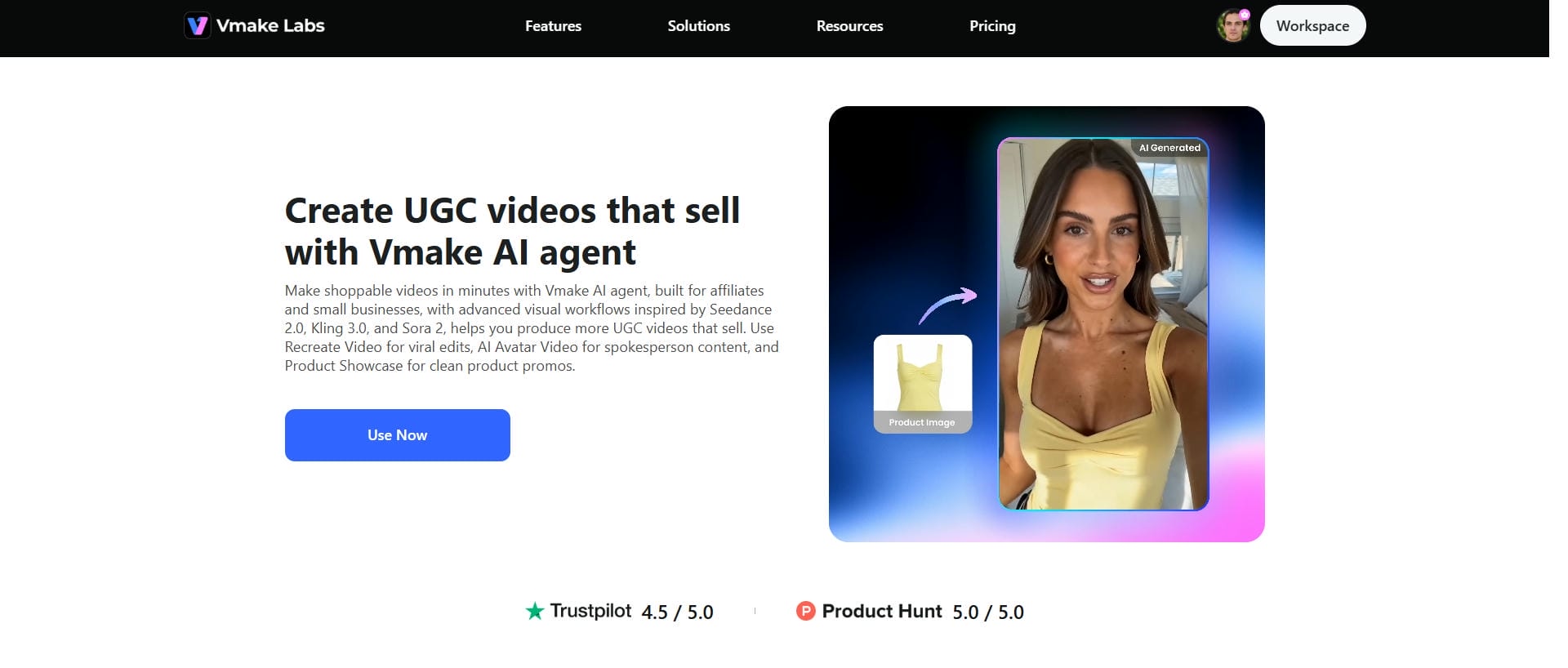
As we mentioned, video marketing is literally hard: it requires effort from dealing with tight budgets and strict timelines to the endless pressure of scriptwriting and editing. Fortunately, Vmake's UGC Video Generator can help turn product images into ready-to-publish UGC videos using AI-powered workflows. Instead of coordinating shoots or learning advanced editing software, you can generate marketing videos through a guided process that handles much of the heavy lifting for you.
Key features
-
Product showcase
Vmake helps create professional product showcase videos from a single product image. It automatically generates marketing-ready videos without filming, making it useful for e-commerce stores, product launches, and social media campaigns.
-
Clone viral video
Allows you to recreate the structure and pacing of a clone viral video using your own product. Vmake analyzes the viral format, adapts the storytelling and selling flow, and generates a ready-to-post shoppable video.
-
AI Avatar
Vmake helps generate realistic talking AI avatar videos from a product image. Users can choose different avatars, languages, and scenes to create localized promotional videos without hiring models or recording new footage.
Step-by-step guide
Step 1: Choose your workflow
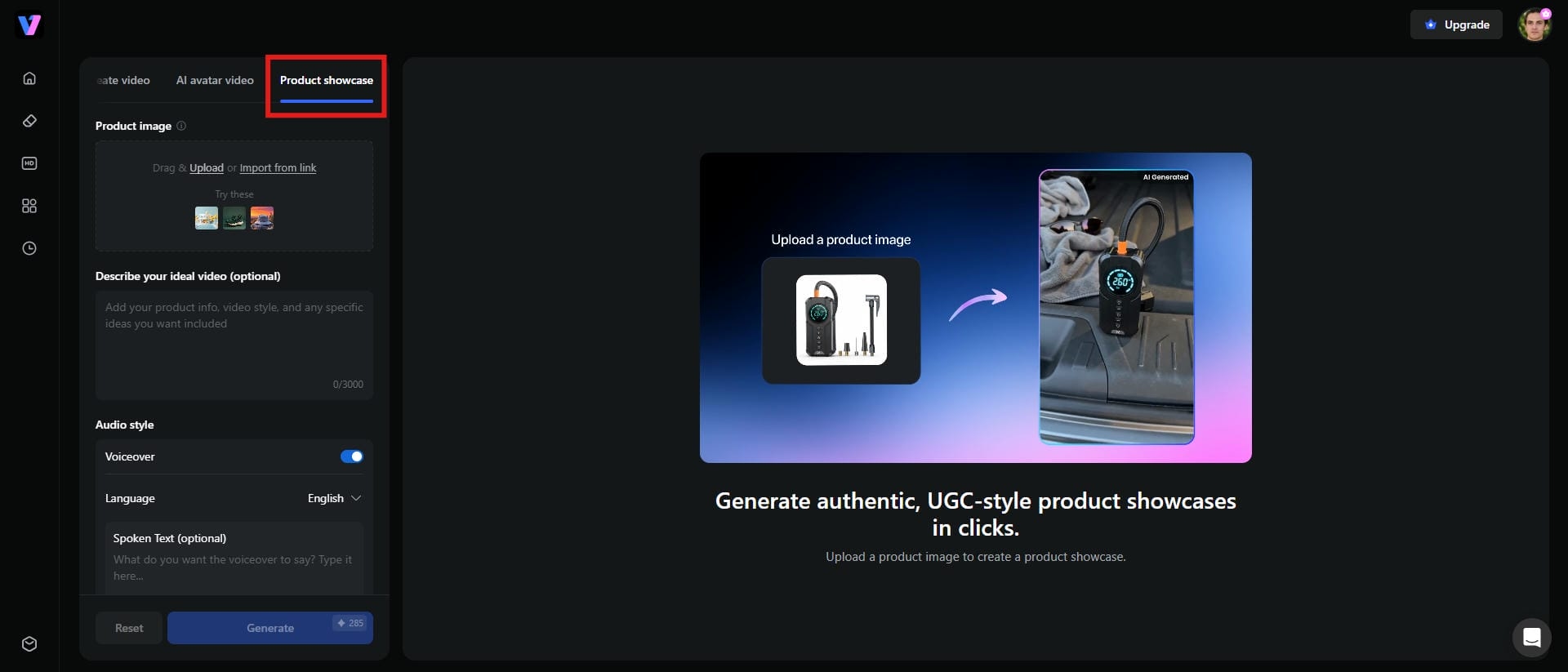
Select the type of video you want to create. Options include Product Showcase, AI Avatar Video, Recreate Video, etc., depending on your campaign goals.
Step 2: Upload the product image or paste the product URL
Upload a product image or provide the product URL. Instead of writing lengthy prompts, you'll complete a structured form that guides the creation process.
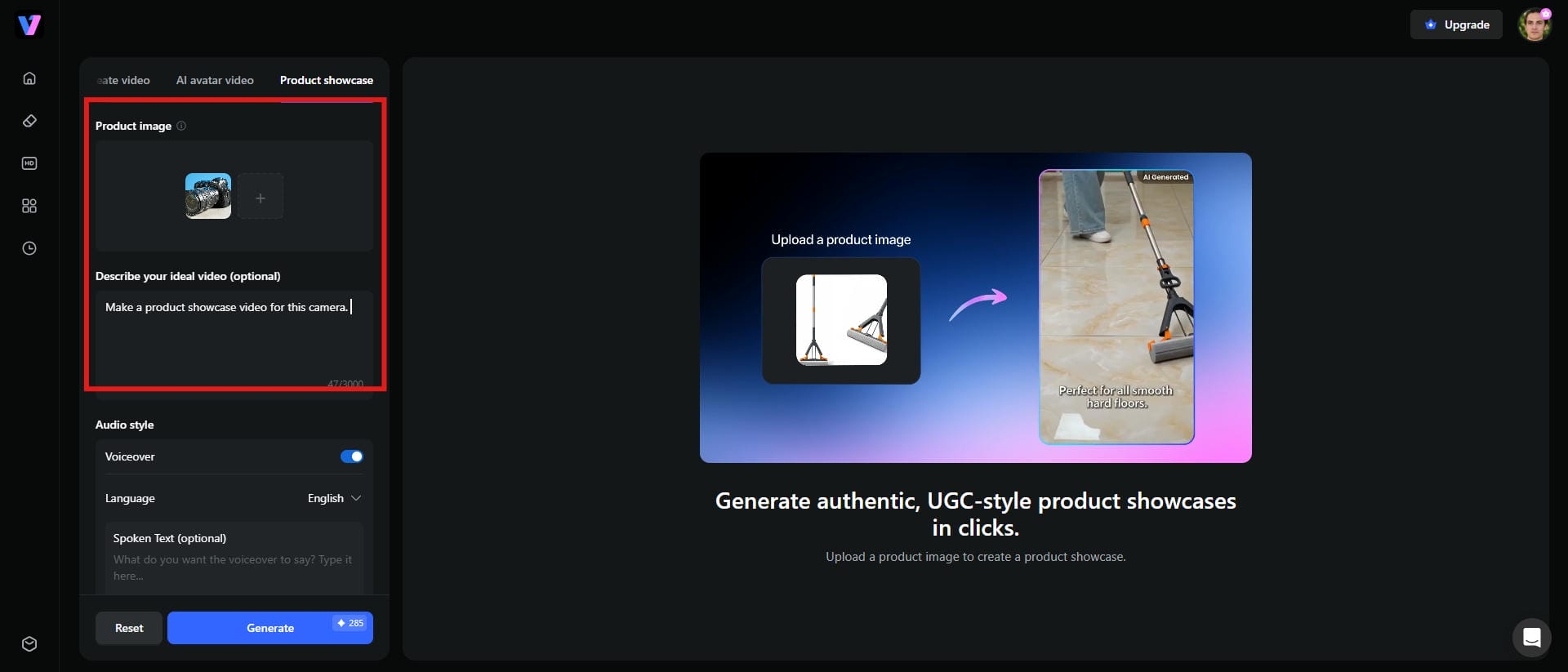
Step 3: Generate and download the video
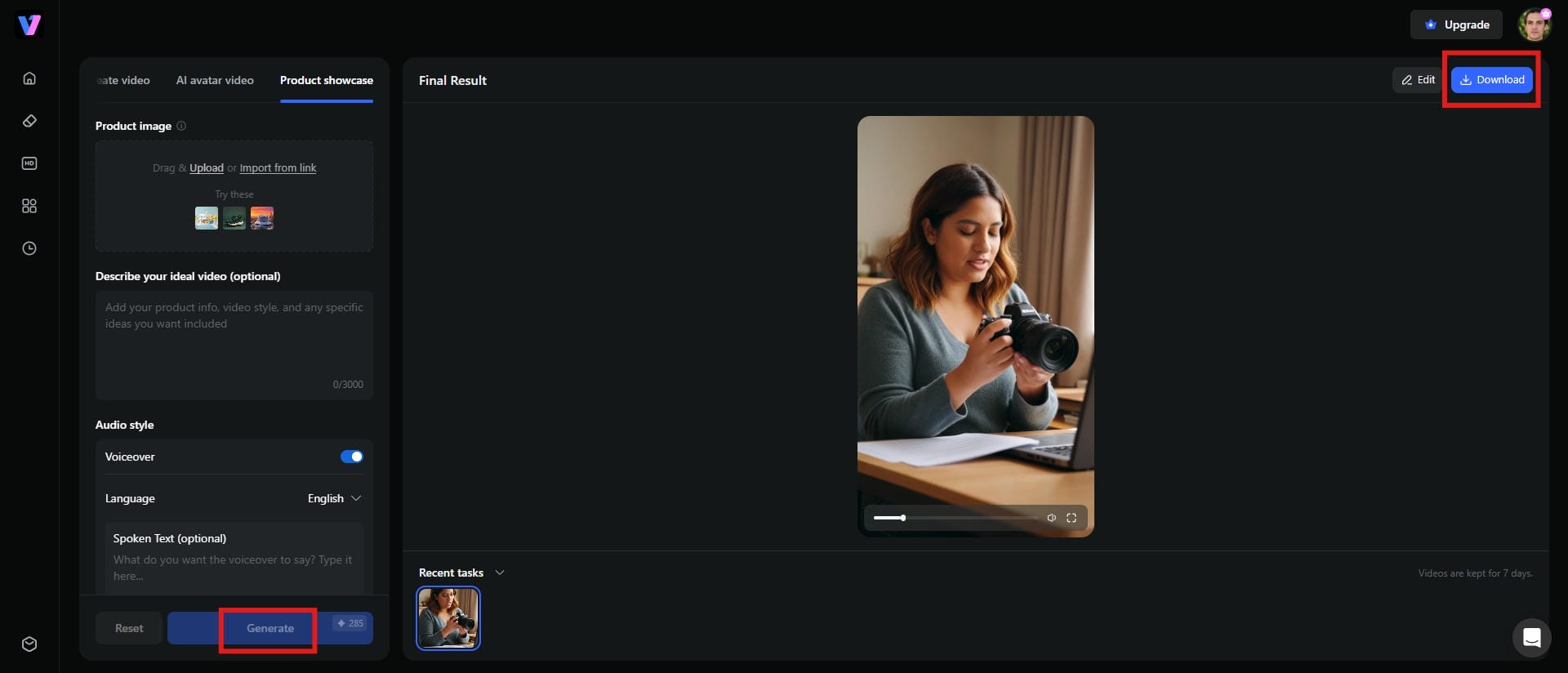
Once your inputs are ready, click Generate. At that point, Vmake takes over. The platform pulls together your visuals, scripts, voiceovers, and supporting elements, then turns them into a finished video. If everything looks good, click "Download" and save the video.
Bonus: How to distribute your marketing videos effectively
Now that you've crafted your video, let’s explore how to distribute your assets strategically across platforms to maximize engagement and drive meaningful business results.
-
Know Your Target Audience
Start with the people you want to reach. While it's tempting to jump straight into platform choices and promotion tactics, moving forward without a crystal-clear picture of your audience means you're just making educated guesses. Different audiences tune into different things, and they certainly don't all behave the same way.
-
Choose the Right Platforms
Not every platform deserves your attention. One of the most common mistakes businesses make is trying to publish everywhere at once. It sounds productive. Usually, it spreads resources too thin. Focus on the platforms your audience actually uses.
-
Optimize for Each Channel
A single video rarely performs equally well everywhere. Each channel has its own expectations. People watch content differently on YouTube than they do on Instagram Reels. LinkedIn is another story entirely.
-
Leverage Social Media
Social media can push your videos far beyond the audience you already have. That's one of its biggest strengths. Share short clips pulled from the main video. Create teaser content that gives people a reason to click.
-
Use Email Marketing
Email remains one of the most reliable distribution channels available. Email has one advantage that social media doesn't. You don't have to rely entirely on algorithms to get your message in front of people. Use video throughout your email marketing. Include it in newsletters. Add it to product announcements when there's something new to share.

Conclusion
Successful online video marketing isn't really about making more videos. It's about making the right videos. The strongest video marketing strategies don't start with cameras, editing software, or content calendars. They start with clear goals. You need to know who you're trying to reach, what matters to them, and which questions or challenges are already on their minds. Miss that part, and even a well-produced video can struggle to connect.
Tools like Vmake help reduce a lot of the work involved in generating, testing, and scaling video campaigns. Instead of juggling filming schedules, editing timelines, and production bottlenecks, you can move from idea to published content much faster.
FAQs
What is a video marketing strategy?
A video marketing strategy is your plan. Without one, you're mostly creating content and hoping it lands somewhere useful. At its core, the strategy helps you decide who you're trying to reach, what message you want to communicate, where your videos will be published, and how you'll measure success.
How do I create videos that convert viewers into customers?
Start with your audience. Before you think about scripts, editing, or calls-to-action, figure out what problem people are trying to solve. A strong hook earns you a few more seconds, and those seconds matter. After that, focus on benefits. People are usually less interested in what a product does than in how it improves their situation.
Which types of videos generate the highest conversions?
Product demonstrations, customer testimonials, case studies, explainer videos, and comparison videos often convert well for a simple reason: they answer questions before a buyer has to ask them. When someone is thinking about a purchase, they're usually looking for proof. They want to see the product in action. They want to know if other customers got results. Sometimes they just need a clearer explanation than the product page provides.
How long should marketing videos be?
There isn't a single ideal length for a video. Short-form content tends to do well on social media because it grabs attention before people scroll away. Longer videos, though, can work extremely well when you're explaining a product, teaching a process, or walking someone through a topic that simply can't be covered in 30 seconds. What matters is the value you're delivering. Not the timer.
How can I measure the success of my video marketing strategy?
Watch time, engagement rate, click-through rate, lead generation, conversion rate, and sales can all be meaningful depending on the goal you're working toward. A video can rack up thousands of views and still have little impact on the business. What matters more is whether people take action afterward.
How can Vmake help improve my video marketing efforts?
Vmake takes a lot of the friction out of video creation. Instead of starting from a blank page, you upload product images and provide structured inputs, and the platform uses AI to turn that information into UGC-style marketing videos. That's appealing for a simple reason: getting from an idea to a finished video is usually where most of the time disappears.
You May Be Interested

Best AI-Driven UGC Video Platforms for Startups in 2026
Valentine's Day UGC Video Marketing Guide for Small Businesses (2026)

[2026] How to Turn World Cup Hype into a Marketing Chance
Valentine's Day UGC Video Marketing Guide for Small Businesses (2026)