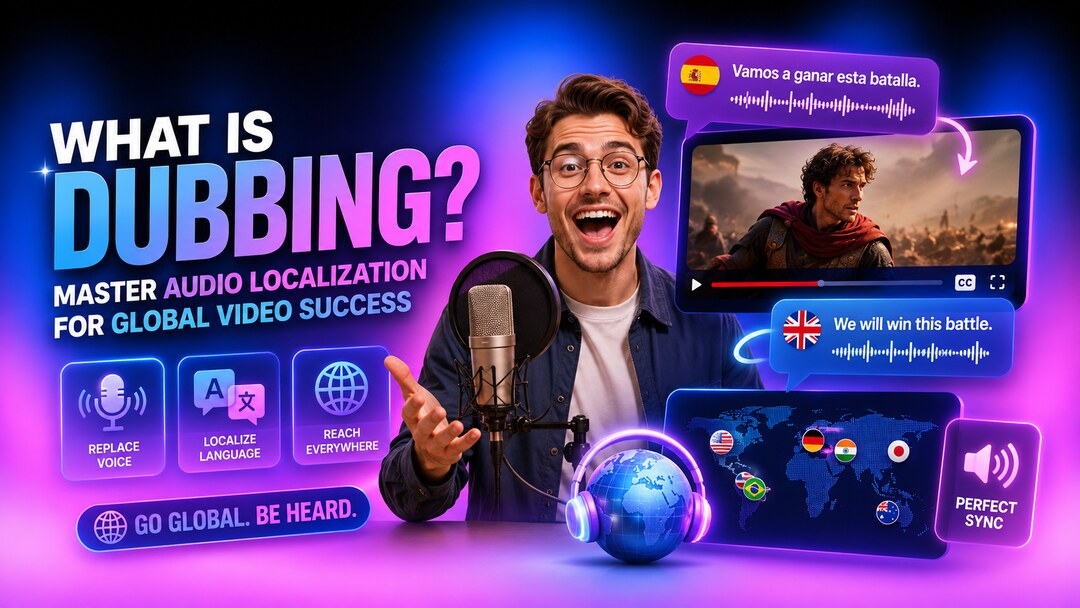
What is Dubbing? Master Audio Localization for Global Video Success
Curious about what is dubbing and, how it transforms global content? We break down the exact definition, traditional studio workflows, and how AI lip sync technology simplifies video translation.

Whether individuals watch international films, create social media content, or localize business presentations, translating audio helps global audiences understand videos naturally. This guide explains what is dubbing, explores traditional studio processes, and reveals how artificial intelligence transforms modern localization.
Understanding the core dub definition and meaning
Replacing audio drives global video production, but the terminology often causes confusion. What does it mean to dub, exactly? It simply involves swapping a video's original audio track for a fresh recording in another language. A clear dub definition centers entirely on this specific voice replacement. When viewers ask what dubbed means, they usually picture international shows where local actors recreate the spoken dialogue. The strict dubbed definition demands matching the original emotion and lip movements perfectly.
Why is dubbing important?
Audio replacement holds immense value for reaching broader demographics effectively. Instead of alienating viewers who might struggle with reading fast-paced on-screen text, providing a native auditory experience keeps retention rates high. Localized speech bridges cultural gaps seamlessly, and when characters or presenters speak a viewer's native tongue, the emotional impact of the video deepens significantly.
Furthermore, algorithms on major streaming and social platforms actively favor highly accessible content. Releasing multiple audio tracks allows channels to capture international search traffic naturally, boosting overall visibility. Prioritizing comprehensive voice translation over text alone often separates standard regional uploads from truly global media campaigns.
What does dubbed vs. voiceover mean?
Many people confuse audio replacement with general voiceovers, though the two techniques serve entirely different production goals. The table below outlines the primary distinctions between these popular localization methods.
|
Feature |
Video Dubbing |
Standard Voiceover |
|---|---|---|
|
Primary Goal |
Replaces original dialogue seamlessly. |
Adds narrative over the original audio. |
|
Visual Match |
Requires strict lip sync video AI or manual timing. |
Does not require precise lip matching. |
|
Emotional Tone |
Mimics the original actor's exact emotion and timbre. |
Often informative, descriptive, or narrative. |
|
Best Used For |
Films, TV shows, localized YouTube videos. |
Documentaries, tutorials, commercials. |
How does dubbing work from recording to final video?
Turning a raw script into a polished audio track requires deep coordination between writers, actors, and engineers. Most production teams follow a systematic 7-step workflow to keep the visuals and audio completely seamless.
-
Script transcription: First, engineers extract the spoken dialogue into a clean text document. To save time during this baseline stage, studios frequently deploy an AI subtitle generator to capture words, pauses, and pacing cues automatically.
-
Translation: Next, language experts convert the transcript into the target language while tracking specific cultural contexts. Because direct word-for-word translation typically sounds stiff, the priority lies in capturing the original humor and emotional intent.
-
Script adaptation: This phase is where timing becomes critical. Specialized dialogue writers tweak the translated lines so they occupy the exact duration of the original speech, matching the exact window the on-screen actor uses.
-
Voice recording: Inside a soundproof booth, voice talent brings the rewritten script to life. Directors guide these actors to match the exact emotional intensity, volume levels, and breathing patterns of the original video performance.
-
Lip synchronization: Editors then work frame-by-frame to align the new vocal tracks with the actor's lip movements. While this manual alignment takes significant effort, it prevents any jarring disconnect that might pull the viewer out of the story.
-
Audio mixing: Sound designers take the perfectly timed vocal files and blend them back into the master recording. They balance the fresh speech with the original background score, ambient noises, and Foley effects to ensure a realistic soundscape.
-
Final quality review: Before distribution, producers review the completed video to catch any lingering timing shifts or audio drops. The quality control team validates that the final mix adheres to broadcasting standards before its global launch.
Traditional dubbing vs AI dubbing
Evaluating traditional studio techniques against modern artificial intelligence highlights significant shifts in production speed, overall cost, and workflow efficiency.
|
Feature |
Traditional dubbing |
AI dubbing |
|---|---|---|
|
Recording |
Human studio |
AI voices |
|
Translation |
Manual |
AI-assisted |
|
Human voice actors |
Required for every role |
Not required |
|
Voice cloning |
Not applicable |
Supported for consistent tone |
|
Subtitle generation |
Separate manual process |
Integrated and automatic |
|
Speed |
Slow |
Fast |
|
Cost |
Higher |
Lower |
|
Lip sync |
Manual editing |
AI automatic |
|
Scalability |
Low volume production |
High batch processing |
|
Best for |
Movies, premium productions |
Marketing, creators, businesses |
When should you use dubbing instead of subtitles?
Choosing between audio localization and on-screen text depends heavily on the specific target audience and content format. Each method serves distinct viewing habits and project budgets, making it essential to evaluate exact production goals.
|
Content Type |
When Dubbing Works Best |
When Subtitles Work Best |
|---|---|---|
|
Films |
Creates a more immersive viewing experience |
Preserves original performances |
|
YouTube videos |
Reaches international audiences naturally |
Suitable for multilingual viewers |
|
Educational videos |
Improves comprehension for learners |
Useful when retaining original audio |
|
Marketing videos |
Increases engagement in local markets |
Suitable for budget-conscious campaigns |
|
Children's content |
Best choice for younger audiences |
Less effective due to reading demands |
|
Corporate training |
Improves accessibility for global teams |
Useful as an additional accessibility option |
Key factors when choosing dubbing
-
Viewer engagement: Audiences typically abandon videos if reading text distracts them from vital visual information on the screen. Replacing the audio entirely allows viewers to focus on cinematography, facial expressions, and action sequences without splitting their attention.
-
Accessibility: Visually impaired viewers rely completely on spoken dialogue to follow a storyline or comprehend a tutorial. Additionally, global literacy rates vary significantly, making text-based translation ineffective for certain demographics.
-
Audience preference: Audience preference varies drastically depending on geographic location and cultural history. Certain European and Latin American countries possess a long-standing tradition of watching localized television, making audio replacement the expected standard.
-
Multilingual reach: Expanding multilingual reach requires a strategic approach to content distribution. Translating videos into Spanish, French, or Japanese opens up massive new viewer demographics that would otherwise remain untapped.
-
Content localization: Effective content localization goes beyond simple translation by adapting the entire viewing experience for a new culture. It involves modifying slang, adjusting cultural references, and selecting voice talent that matches the local demographic's expectations.
What are the benefits of AI dubbing and lip synchronization?
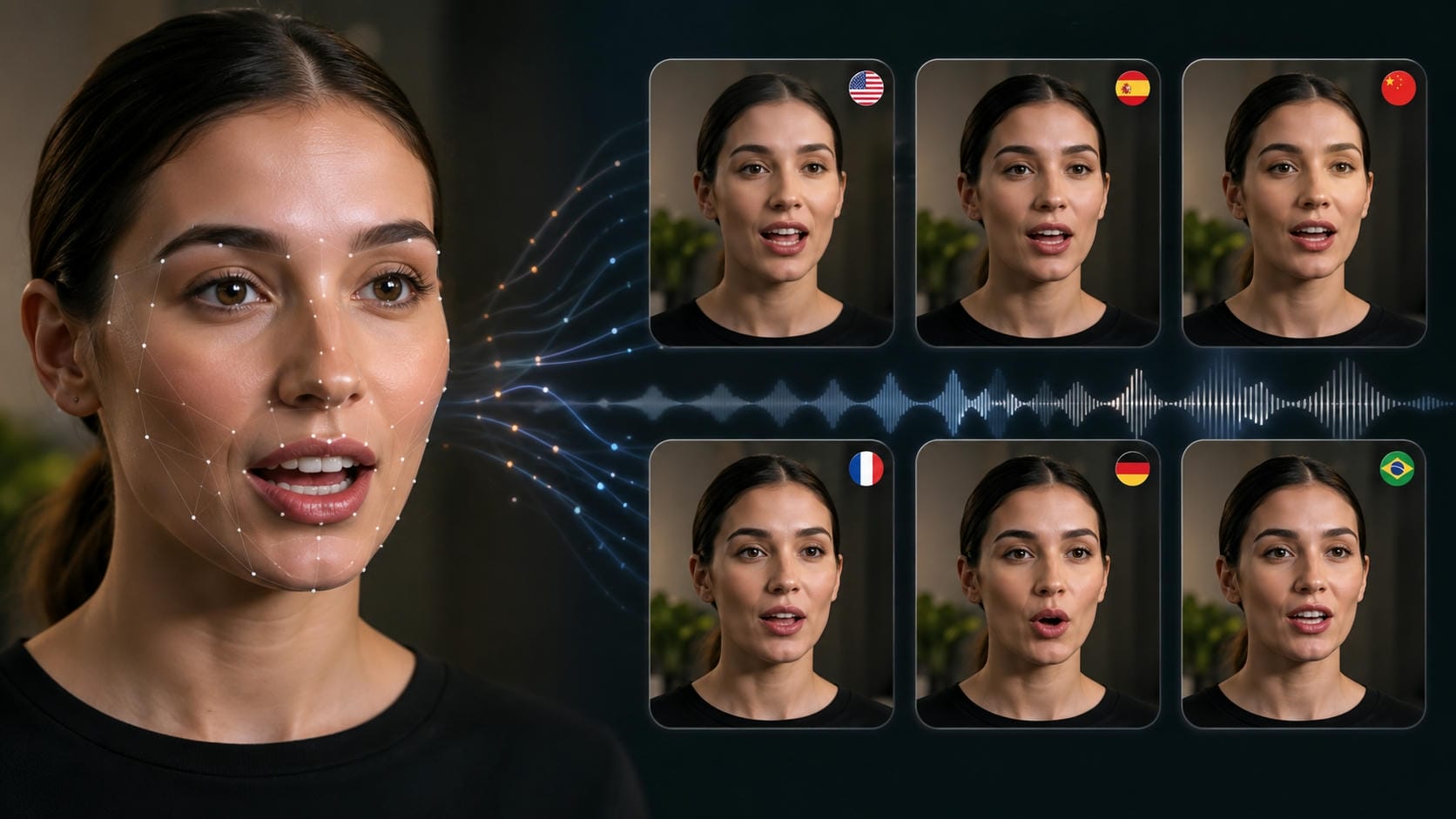
Advancements in machine learning have significantly optimized the way creators approach multilingual content. Artificial intelligence streamlines previously complex audio engineering tasks, ensuring faster delivery and expanded global reach.
-
Faster localization: Achieving faster localization represents the most immediate advantage of artificial intelligence in video production. Algorithms can process, translate, and generate new vocal tracks in minutes, allowing creators to release international content simultaneously.
-
Lower production costs: Lower production costs allow independent creators and small businesses to compete globally. Automated tools eliminate expensive overhead costs associated with hiring professional translators and voice talent, making high-quality localization highly accessible.
-
Multilingual publishing: Enabling multilingual publishing transforms single-language channels into global media hubs. Creators can effortlessly generate versions of their content in over a dozen languages from a single source file, establishing a strong presence in emerging markets.
-
Scalable content creation: Scalable content creation becomes possible when automation handles the heavy lifting of audio translation. Companies producing daily marketing videos or extensive e-learning libraries can process massive batches of content overnight without exhausting resources.
-
Improved viewer experience: Delivering an improved viewer experience remains the ultimate goal of any localization effort. High-quality automated voices now capture subtle emotional inflections, providing an immersive experience that rivals traditional studio recordings and keeps audiences engaged.
New tech: Why AI lip synchronization matters
Visual harmony between spoken words and mouth movements prevents audiences from experiencing the distracting disconnect known as the uncanny valley. Modern tools show exactly why AI lip sync is essential for maintaining audience retention across different regions.
-
Matches mouth movement: A sophisticated lip sync AI video system manipulates the pixels around the speaker's face to form correct shapes for newly translated words. This ensures the physical delivery matches the audio perfectly.
-
Improves realism: This process improves realism dramatically, making it appear as though the original speaker is genuinely fluent in the target language. The final video looks entirely authentic to international viewers.
-
Reduces viewer distraction: Consequently, this technology reduces viewer distraction by removing jarring visual delays. The audience can focus entirely on the educational or narrative message of the video.
-
Supports multiple languages: Because it supports multiple languages, video lip sync AI software seamlessly transitions a single spokesperson's video into a global marketing campaign. This capability proves exceptionally suitable for diverse international deployments.
-
Suitable for various platforms: Integrating a lip sync video AI elevates standard translated content into a highly professional presentation. It serves as an ideal solution for YouTube, e-learning, product demos, and social media content where direct connection drives engagement.
Step into a new era: How to create AI dubbed videos with Vmake Labs
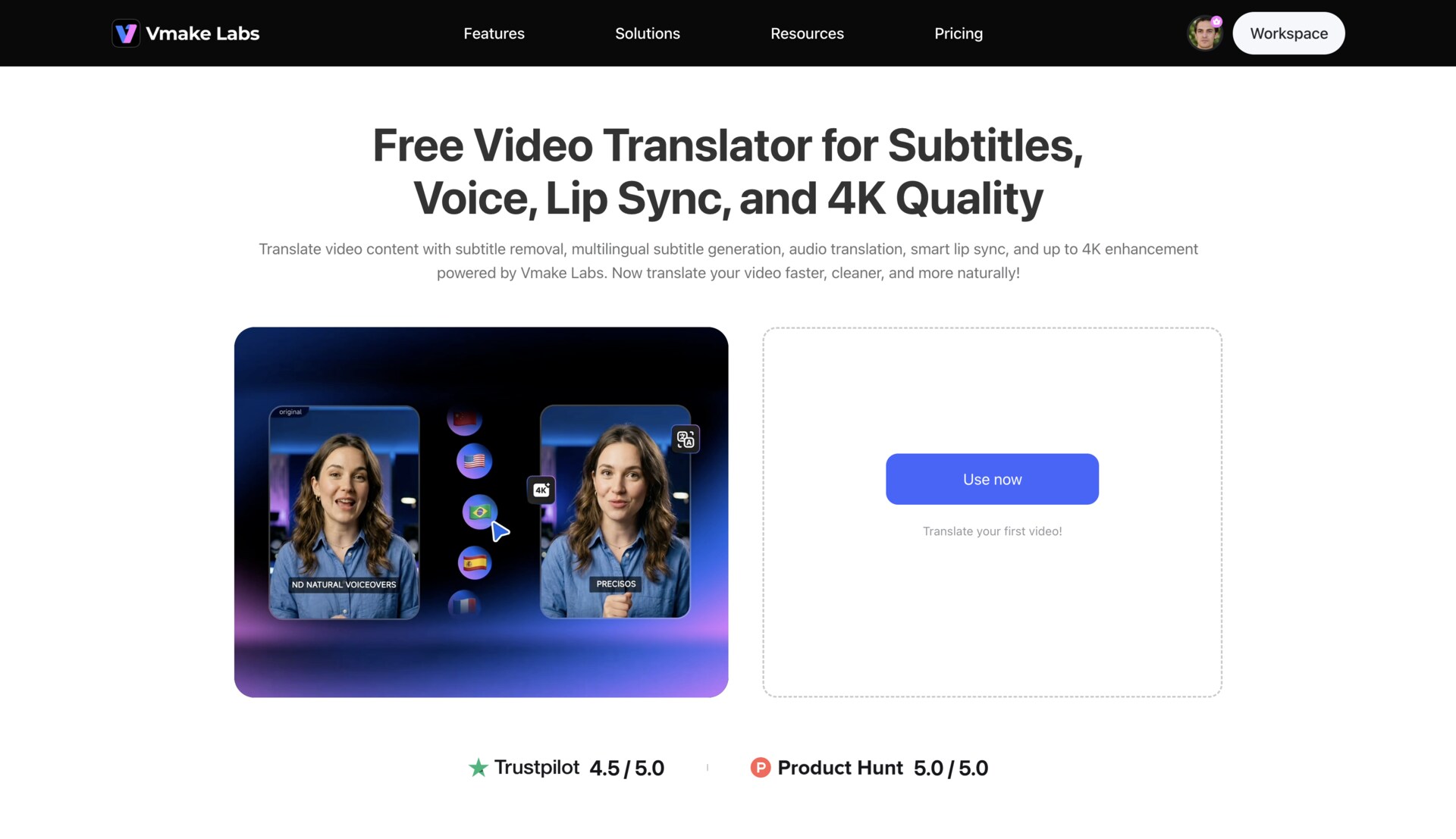
Vmake Labs Video Translator serves as a comprehensive tool designed for generating multilingual content seamlessly. Instead of manually handling transcription, translation, voice recording, subtitle editing, and lip synchronization separately, creators can localize videos directly within a single platform. This streamlined environment removes the technical barriers typically associated with audio replacement. Users upload their media, choose a target language, and let the artificial intelligence process the complex synchronization tasks automatically.
Key features of Vmake Labs Video Translator
-
AI-powered video transcription: The system extracts spoken words accurately from the uploaded media file. This eliminates the manual effort of typing out dialogue before the translation phase begins. Starting with a highly accurate video and audio to text conversion ensures the foundation of the localized script is flawless.
-
Multi-language video translation: Creators can convert their content into 14 different languages, including Spanish, French, and Japanese. This wide selection enables brands to reach diverse international markets effortlessly.
-
AI dubbing with natural voices: The platform offers realistic voice generation to replace the original audio track. Timbre synchronization ensures the newly generated voice closely resembles the original speaker's unique tone.
-
Intelligent AI lip synchronization: Visual mouth movements are automatically adjusted to match the new spoken words perfectly. An AI lip sync video prevents the jarring visual disconnect common in traditional audio replacement.
-
Flexible subtitle editing and export: Users retain full control over on-screen text, with options to remove original text or add newly translated captions. This dual capability ensures maximum accessibility for all viewers regardless of their viewing environment.
-
4K video enhancement after translation: The software improves visual clarity alongside the audio processing. Enhancing resolution guarantees the final localized media maintains a premium, professional appearance.
-
Modular editing features for post-processing: The system allows creators to turn on specific features only as needed. This flexibility ensures projects remain efficient without forcing unnecessary processing steps.
How to create an AI dubbed video with Vmake Labs
-
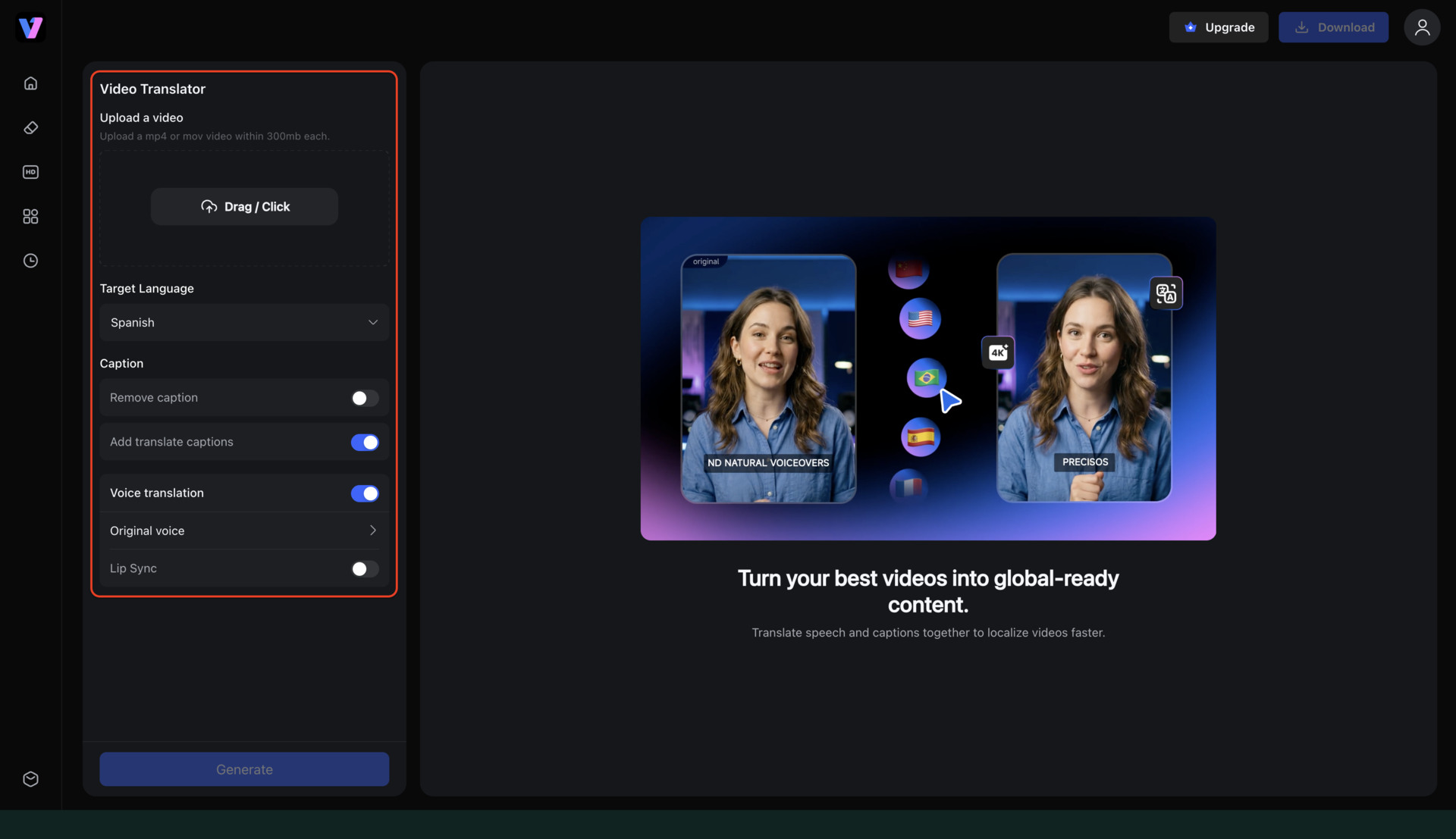
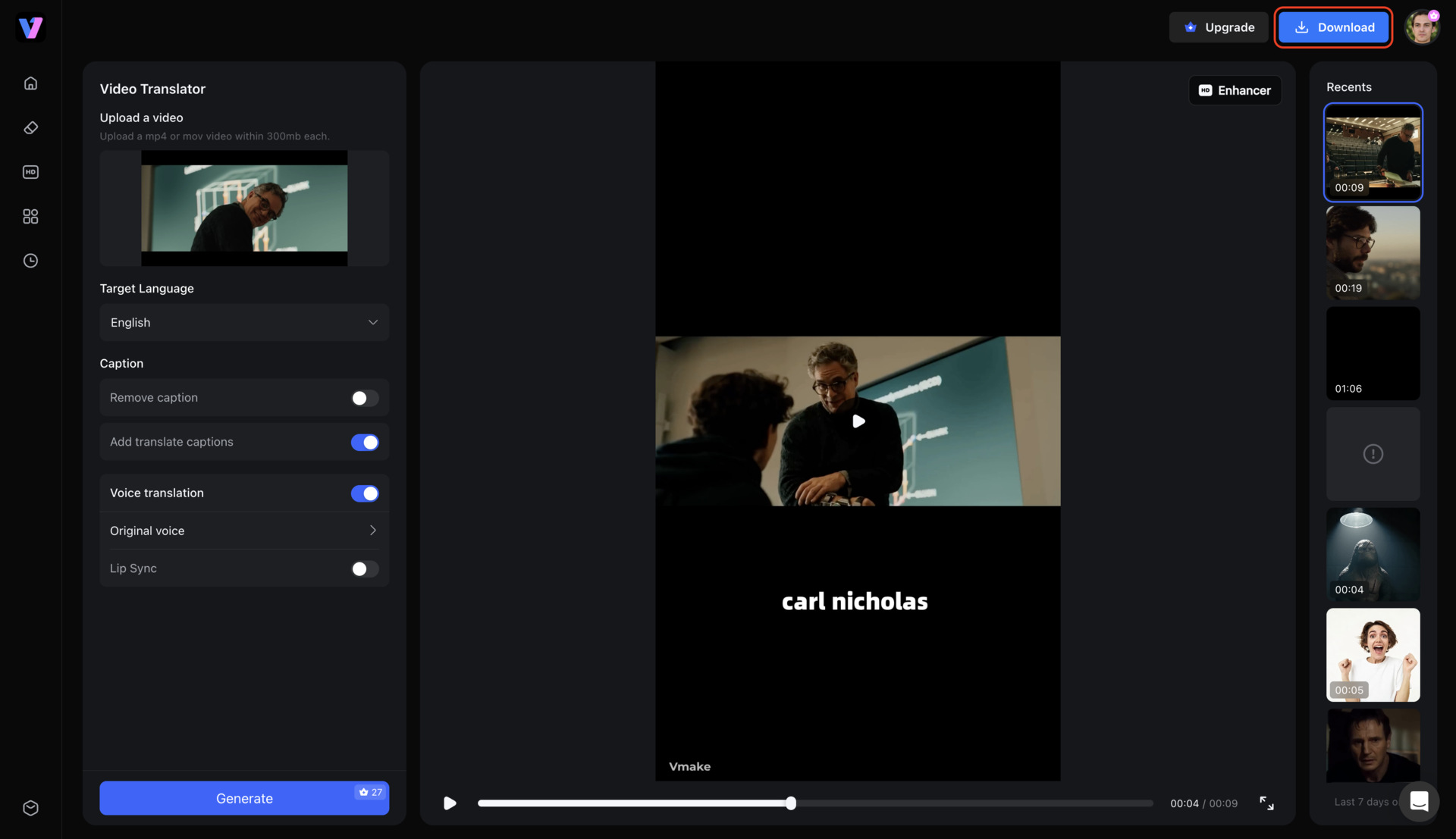
Step 1: Upload your media and set the target language:
Launch the Vmake Labs Video translator and upload your source video directly from your device. After the file successfully loads, select your preferred output language from the available menu options. The platform conveniently supports major file types, allowing you to seamlessly process MP4, MOV, M4V, 3GP, and AVI formats.
-
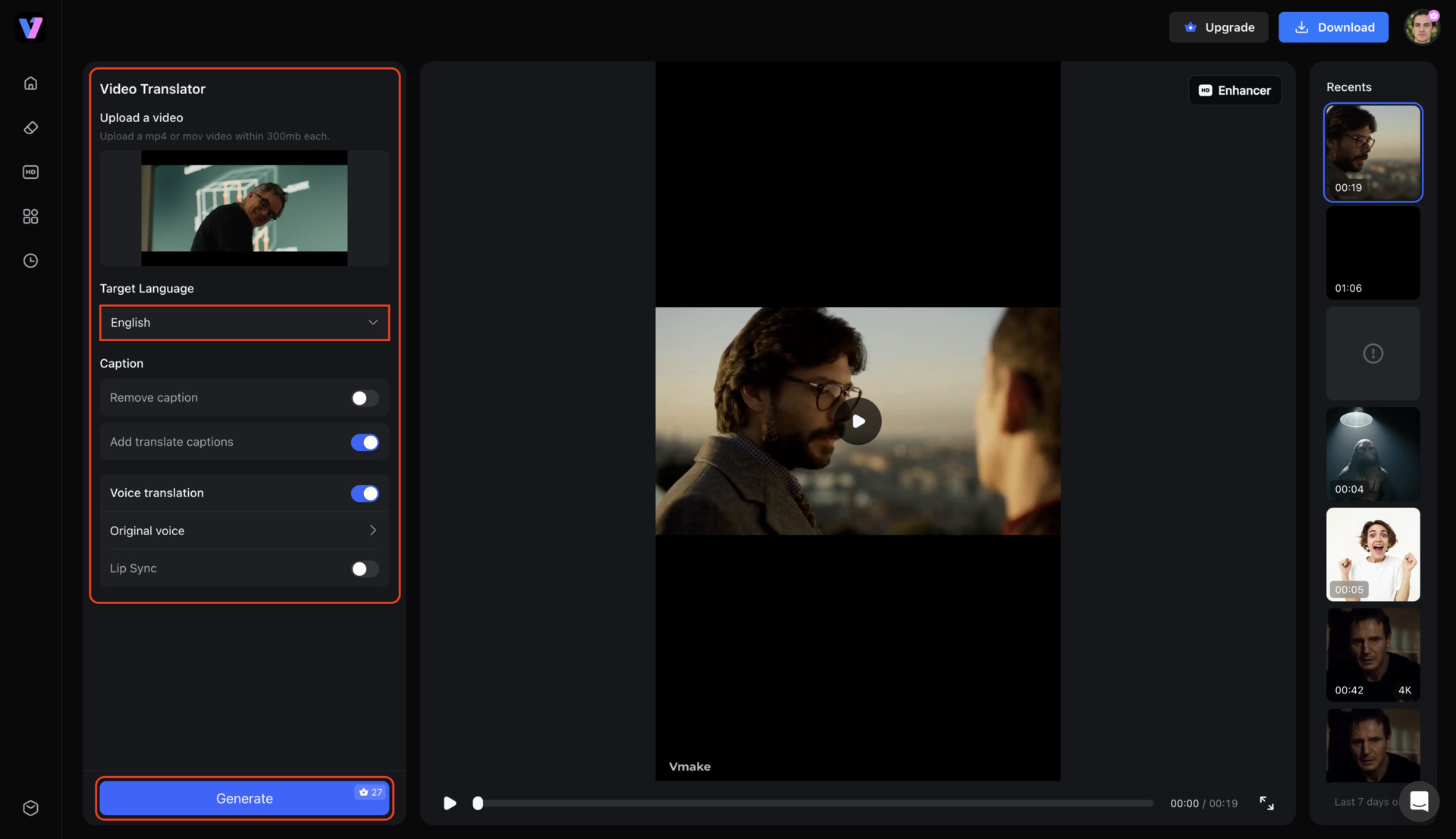
Step 2: Customize your translation settings:
Configure your project by selecting the exact localization features required for your final video. You can easily enable voice translation, activate lip synchronization, adjust the vocal tone, or generate fresh subtitles. Furthermore, the system provides an option to completely remove existing on-screen text before applying the newly translated captions.
-
Step 3: Generate and export the final video:
Click the generate button to initiate the automated processing of your selected modifications. Once the rendering is complete, preview the results to confirm that the audio quality and subtitle accuracy meet your project standards. You can then export the localized file, complete with AI-generated dubbing, precise lip synchronization, and up to 4K video enhancement.
Tips for creating natural-sounding dubbed videos
-
Match lip timing: Ensure the translated script length closely mirrors the original speech duration. This strategy prevents awkward pauses or rushed dialogue from disrupting the natural pacing of the scene.
-
Preserve emotional tone: Select a generated voice profile that matches the exact energy of the original speaker. Consistent emotional delivery keeps the audience engaged with the narrative and prevents the localization from feeling robotic.
-
Use native voice actors: When utilizing manual workflows, prioritize hiring talent native to the target region. Native speakers naturally incorporate local dialects and subtle inflections that resonate authentically with the audience.
-
Adapt cultural references: Modify local jokes, idioms, or pop culture mentions so they make sense to the new target demographic. Direct literal translations often confuse foreign viewers and break the immersion of the content.
-
Review audio consistency: Check the final audio mix to ensure the new vocal track blends smoothly with background music and ambient sounds. Proper mixing prevents the new voices from sounding like they were artificially placed over the video.
Conclusion
Understanding what is dubbing opens doors to a truly global audience. Traditional studio methods provide high quality but often demand significant time and budget. The shift toward artificial intelligence offers unprecedented speed and affordability for localization projects. Embracing modern solutions like Vmake Labs Video Translator merges translation, audio replacement, and visual synchronization into one efficient workflow. By utilizing these advanced tools, creators maintain the visual integrity of their original content while speaking directly to viewers worldwide in their native languages.
FAQs
What does dubs mean in anime and foreign films?
It refers to replacing the original Japanese or foreign vocal track with a new language recording. This technique allows international viewers to enjoy the animation and action sequences without constantly reading text at the bottom of the screen.
What does dubbed mean in movies?
In cinema, this indicates that the actors' original voices have been substituted with voices speaking an entirely different language. The new actors strive to match the emotional intensity, breathing patterns, and volume of the original on-screen performance.
What is the difference between dubbing and subtitles?
The former replaces the actual audio track entirely so viewers hear the dialogue spoken in their own language. The latter keeps the original foreign audio intact but displays translated text on the screen for the viewer to read.
What does English dubbed mean?
This phrase specifically denotes that a foreign piece of media has been recorded over with English-speaking voice actors. It is highly popular for international shows and films entering the United States or United Kingdom entertainment markets.
Does AI lip sync improve dubbed videos?
Yes, the technology actively adjusts the speaker's mouth movements to match the newly generated audio track seamlessly. This innovation eliminates the distracting visual delay between hearing a spoken word and seeing the lips form the corresponding shape.

You May Be Interested
AI Dubbing vs Traditional Dubbing: Which Is Better
Video Color Correction vs. Color Grading: What's the Difference?
Best AI Video Translator Tools in 2026: Compare Features, Accuracy & Pricing
Best Subtitle Translation Tools in 2026 Compared