Why OpenAI is Shutting Down Sora: What Happened and Best AI Video Alternatives
 Ken DawsonMarch 25, 2026
In early 2024, the tech world experienced a collective jaw-drop. OpenAI unveiled Sora, a text-to-video diffusion model capable of generating breathtaking, hyper-realistic, minute-long scenes from simple text prompts. From wooly mammoths charging through snowy meadows to cinematic cityscapes, it felt like the future of video production had arrived overnight.
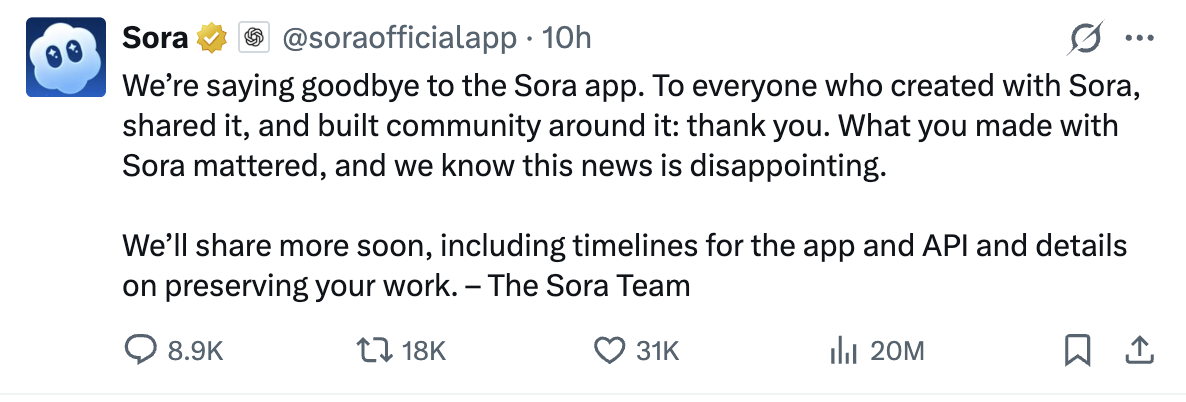
However, OpenAI recently announced on its official X account that the Sora app and API services will gradually shut down. This news marks the end of an era for the famous text-to-video tool. While the initial demos of woolly mammoths and cinematic cities amazed the world, the journey for Sora is now coming to a close. The team is currently working on a timeline to help users preserve their work before the platform goes offline.
 In this guide, we'll break down exactly what happened to Sora AI behind the scenes, separate the facts from internet fiction, and provide you with a curated list of powerful, readily available Sora AI alternatives that you can start using today to scale your brand's visual content. If you're looking for the best AI video tools in 2026, your wait ends right here.
Why OpenAI is Shutting Down Sora?
To understand the current state of Sora, we have to look past the shiny promotional videos and dive into the technological and logistical hurdles involved in bringing a revolutionary AI tool to the masses.
The Initial Hype vs. The Harsh Reality
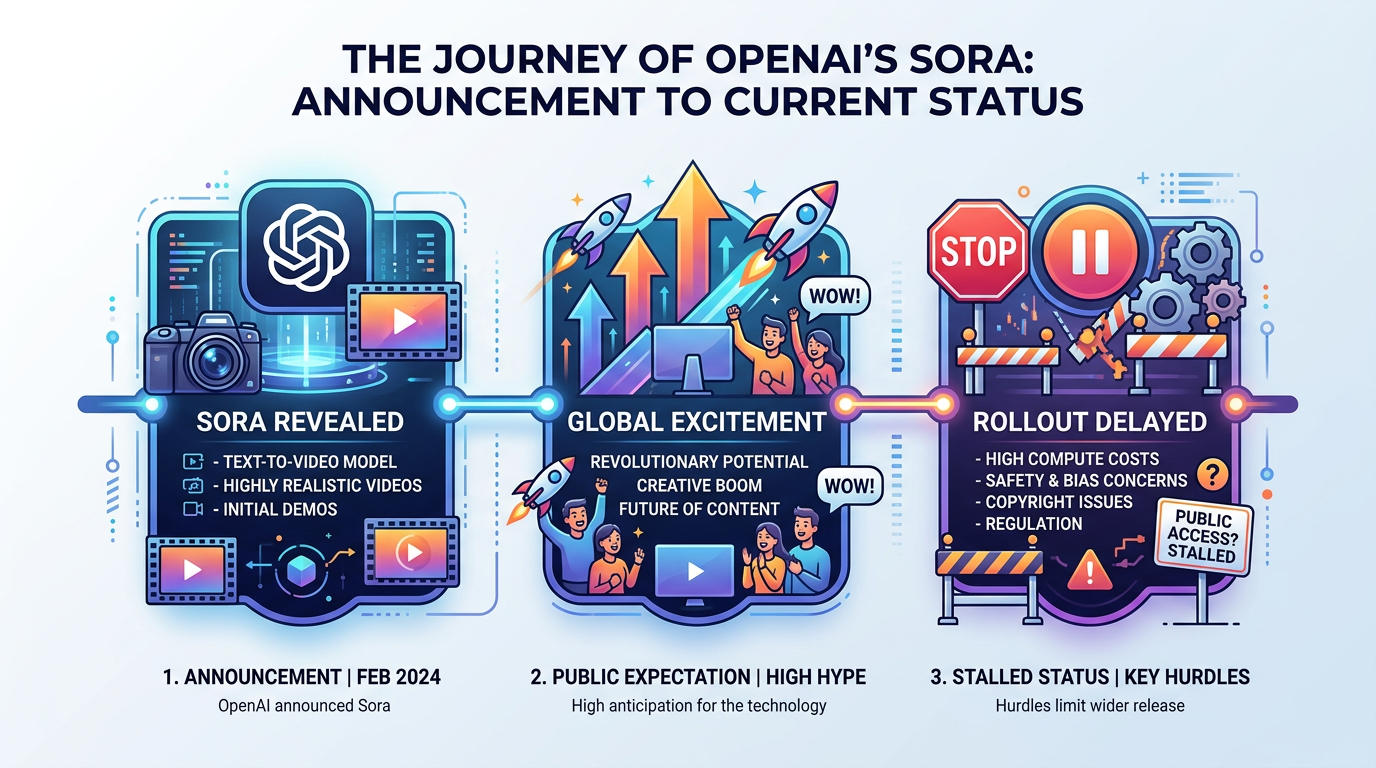
When OpenAI introduced Sora, it was framed as an imminent release. The demos were flawless, showcasing complex camera motion, multiple characters, and vibrant textures. The public expectation was that this would be a ChatGPT-style release—accessible to anyone with an internet connection within a few weeks or months. However, tech demos to heavily curated audiences are vastly different from deploying a stable, consumer-facing software product. As the months dragged on with no release date in sight, people naturally began asking: what happened to Sora AI?
Compute Costs and Technical Roadblocks
One of the primary reasons behind the rumored shutdown or delay of Sora is the sheer computing power required to run a diffusion transformer model at scale. Generating high-fidelity, 60-second video at 1080p is not like generating a quick text response or a static image. It requires an astronomical amount of GPU power.
If OpenAI were to open Sora to millions of daily active users, the server load would be financially and technologically unsustainable under current hardware infrastructures. Offering an affordable subscription tier while burning thousands of dollars of compute per minute simply doesn't make business sense right now.
Safety, Copyright, and Regulatory Concerns
Beyond hardware, safety and legal concerns have likely forced OpenAI to hit the brakes. The anxiety surrounding deepfakes, especially in major global election years, is at an all-time high. A tool as powerful as Sora could easily be weaponized to create hyper-realistic political misinformation.
Furthermore, video platforms and studios have raised massive red flags regarding the training data used to build these models. Facing mounting copyright lawsuits from the creative industry, OpenAI has had to tread incredibly carefully to avoid catastrophic legal and regulatory consequences.
Top AI Video Alternatives to Sora You Can Use Right Now
Fortunately, the AI ecosystem has exploded in the wake of Sora's delay. If you are looking for a powerful alternative to Sora OpenAI, here are the top platforms dominating the market.
1. Vmake: The Ultimate AI Video Generator for Brands and Creators
For brands, marketers, and e-commerce sellers, Vmake stands out by focusing on what actually drives results today: UGC-style video content.
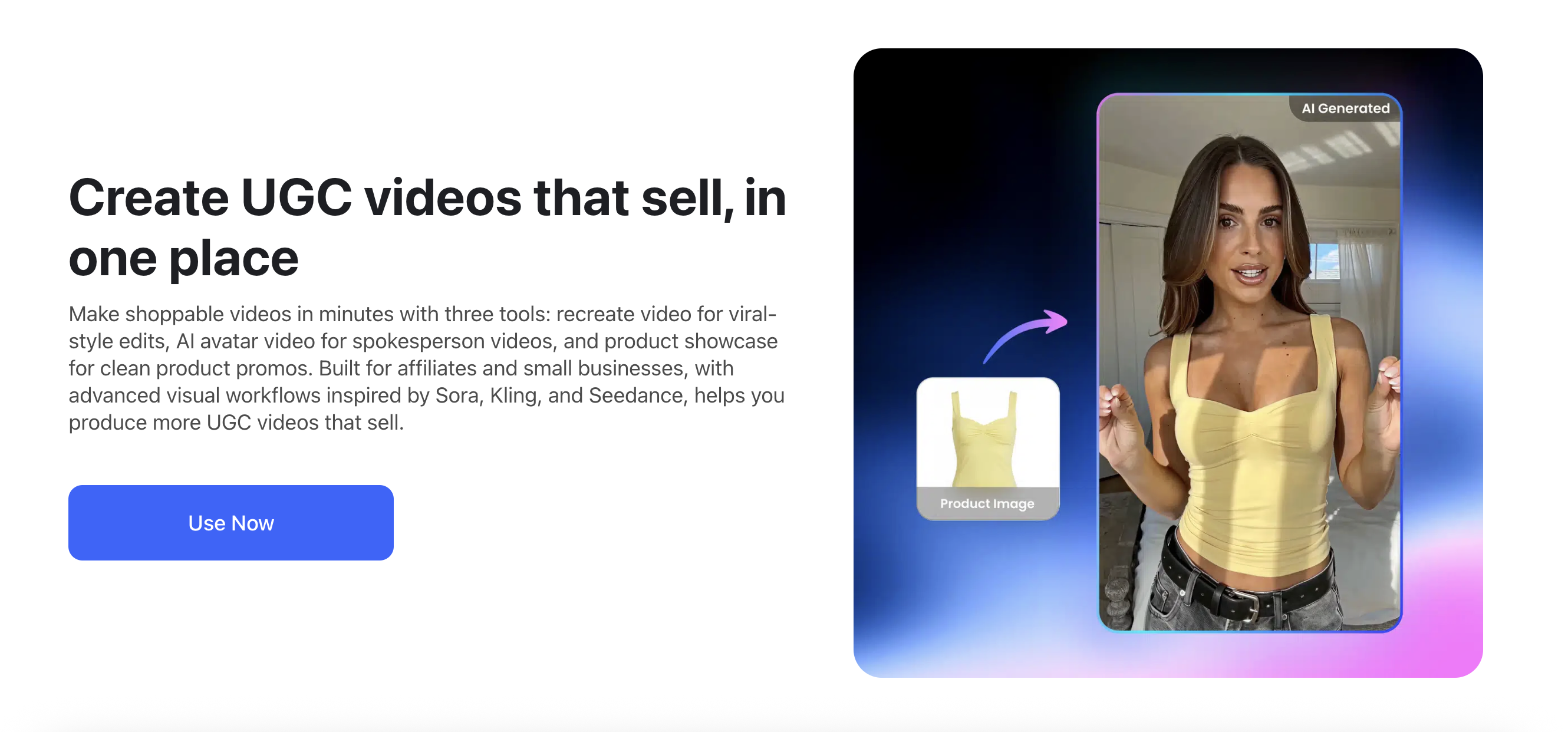
Instead of relying purely on cinematic text-to-video generation, Vmake UGC Video Generator helps you instantly create natural, human-like videos that feel authentic and platform-native. This is especially critical for TikTok, Instagram Reels, and YouTube Shorts, where raw, relatable content consistently outperforms overly polished visuals.
Key strengths:
- Turn product ideas or scripts into ready-to-publish UGC videos
- Generate content that mimics real user behavior and storytelling styles
- Skip filming, actors, and complex editing workflows entirely
If Sora represents the future of cinematic AI, Vmake represents what actually works right now for growth and monetization.
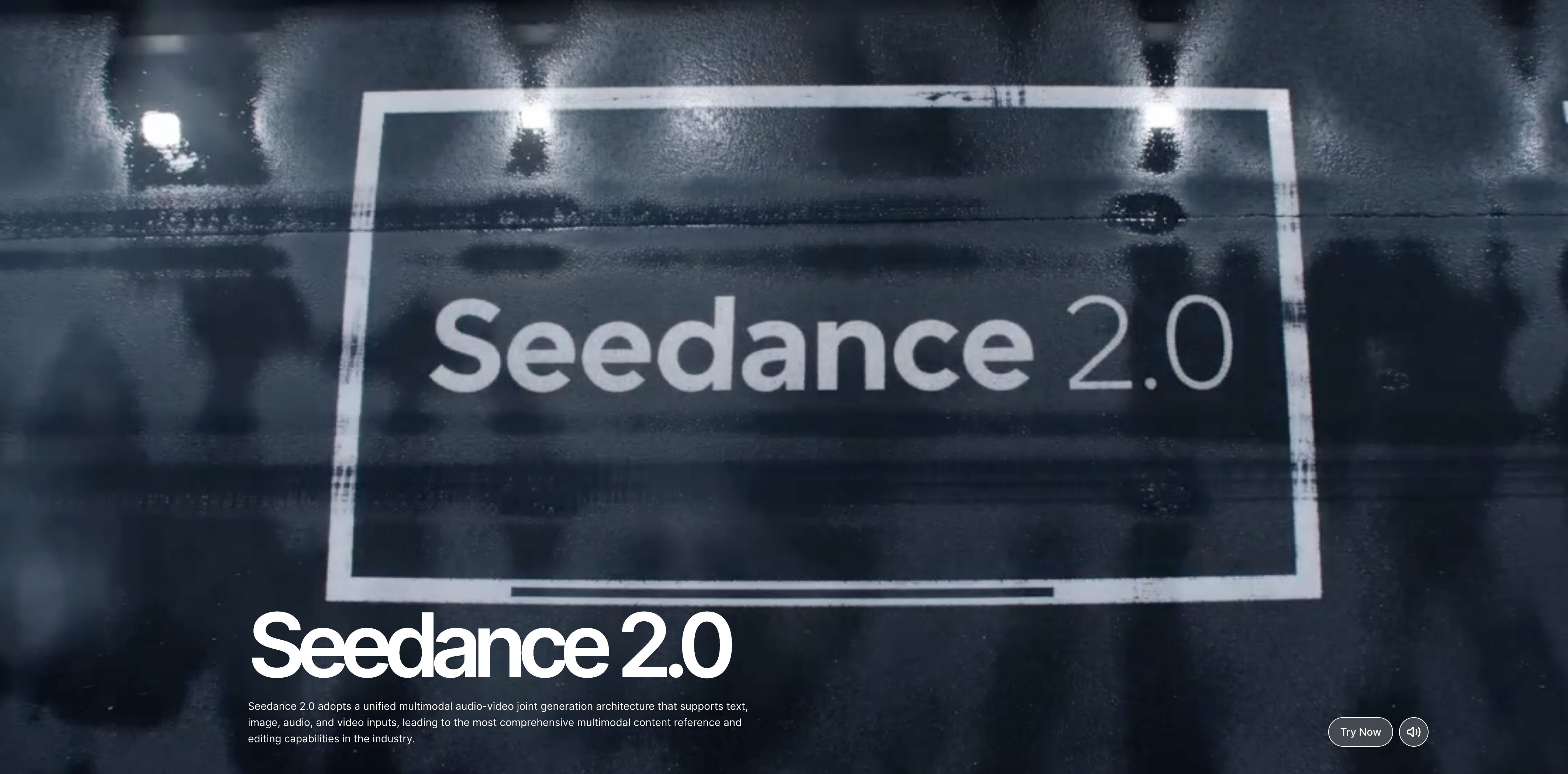
2. Seedance 2.0: Accessible and Fast Text-to-Video Generation
Seedance 2.0 has quickly gained traction as one of the most practical text-to-video tools available today. It focuses on speed, accessibility, and prompt accuracy, making it ideal for creators who need quick iteration.
Key strengths:
- Fast rendering speeds for rapid content testing
- Strong prompt understanding for creative control
- Lower cost compared to heavy models
While it may not match Sora’s experimental realism, it wins where it matters most: usability and availability. Seedance 2.0 is a powerful tool and currently delivers the most stable performance for users based in Mainland China.
3. Google Veo 3.1: High-End AI Video for Advanced Use Cases
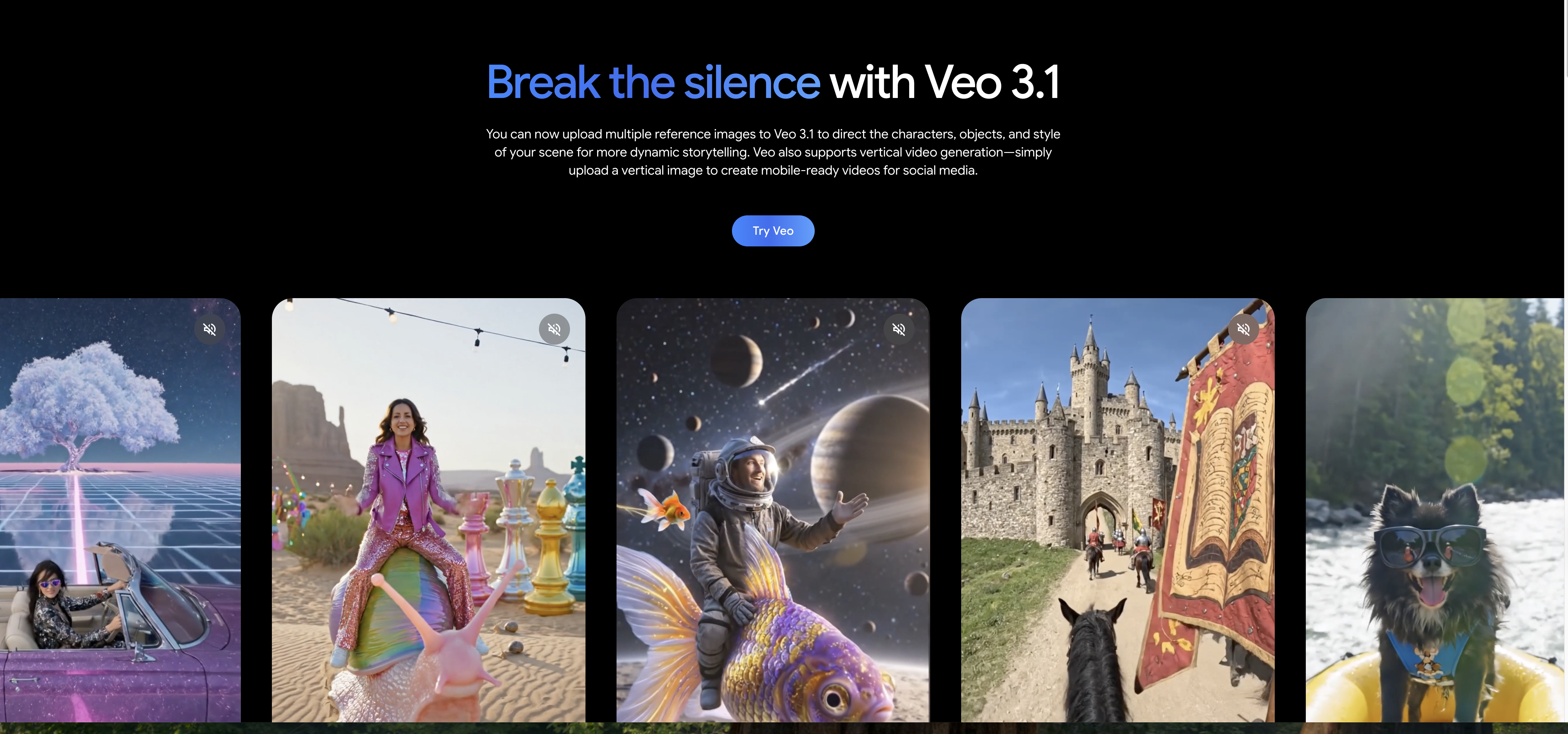
Google Veo 3.1 represents the cutting edge of AI video generation, offering highly detailed outputs and advanced scene understanding.
Key strengths:
- Strong cinematic quality and realism
- Advanced control over motion and storytelling
- Backed by Google’s large-scale AI infrastructure
However, similar to Sora, access can be limited, making it more suitable for enterprise or high-end creative use cases rather than everyday content production.
4. Kling AI 3.0: Long-Form Consistency and Physics Realism
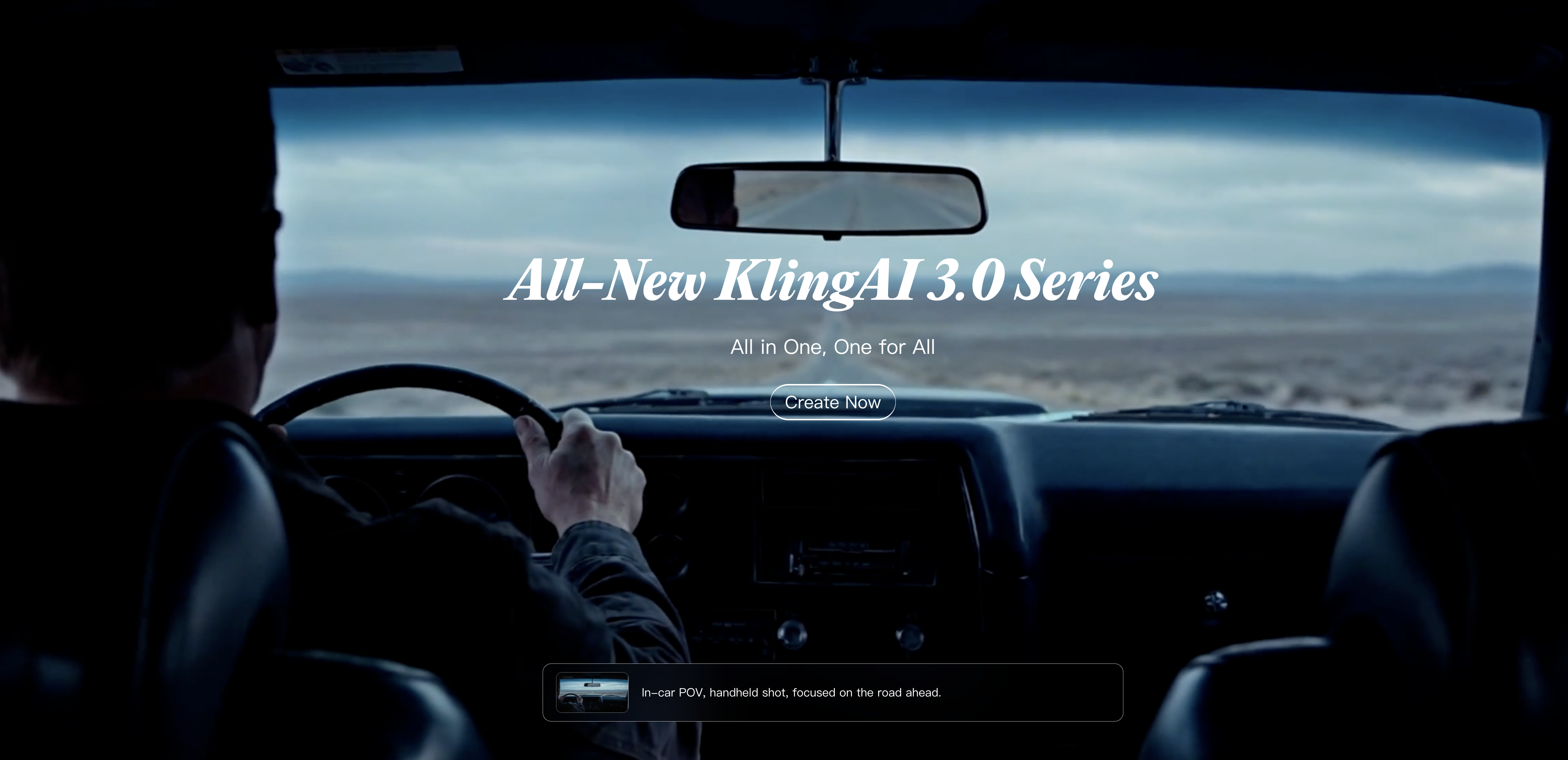
Kling AI 3.0 continues to push boundaries in longer video generation and realistic motion simulation. It has become a strong contender, particularly in global markets.
Key strengths:
- Better temporal consistency across longer clips
- Realistic physics and motion behavior
- Rapid iteration driven by active development
Kling is especially appealing for creators who want more stable multi-scene outputs, rather than short experimental clips.
Comparison Table: Which One Should You Choose?
|
Feature
|
Seedance 2.0
|
Google Veo 3.1
|
Kling AI 3.0
|
Vmake
|
|
Max Quality
|
2K Cinematic
|
1080p / 4K Pro
|
1080p
|
4K+ (Upscaled)
|
|
Control
|
12 Reference Inputs
|
High Prompt Logic
|
Motion Brush
|
Chat-based Editing
|
|
Audio
|
Native SFX
|
Professional Score
|
None
|
AI Voiceover/Music
|
|
Best Use Case
|
Character Consistency
|
Brand Reliability
|
Complex Physics
|
Refining/Upscaling
|
Bonus: How Vmake Video Enhancer Perfects Your Sora Alternatives
-
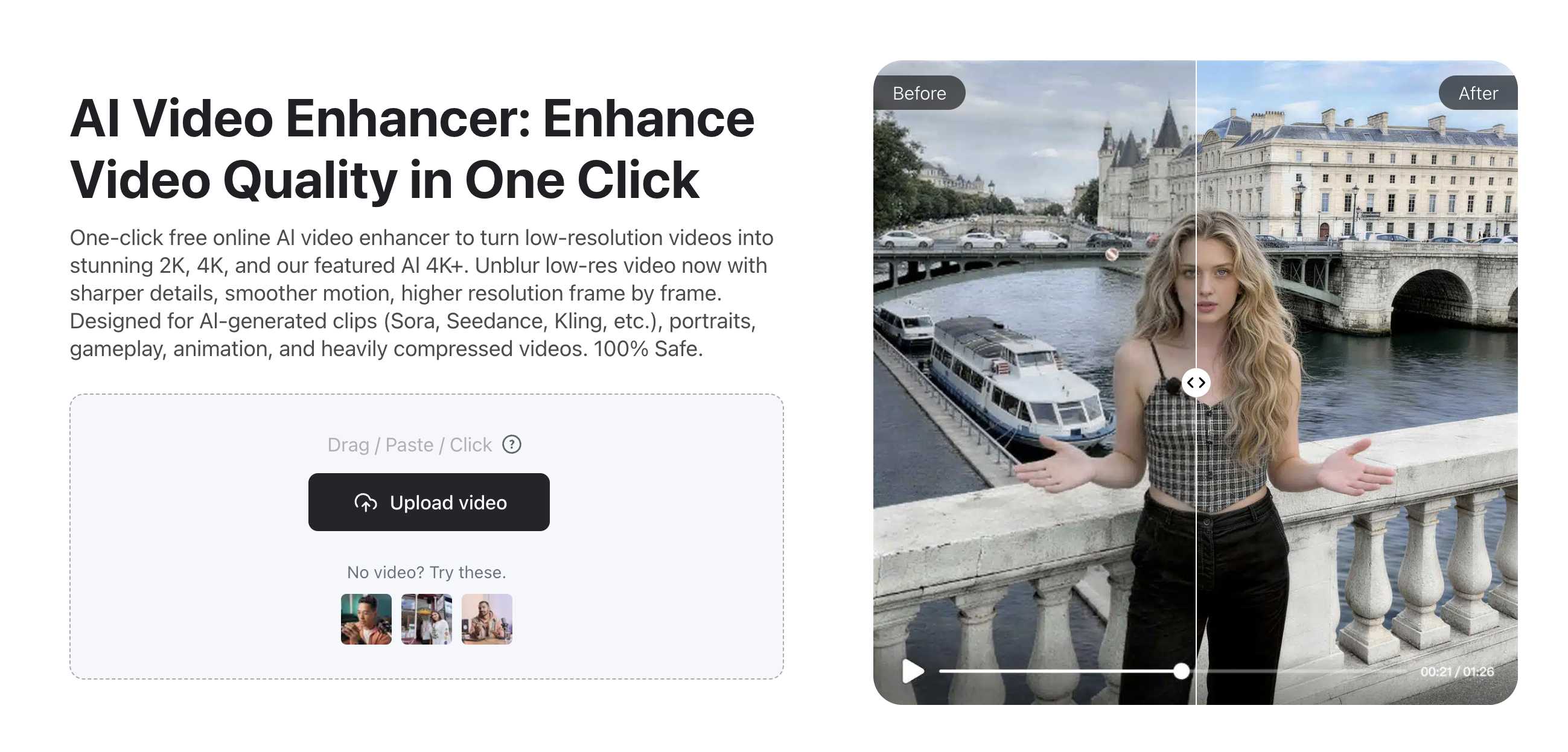
AI 4K+ Upscaling: Most generators still output "soft" video. Vmake AI video enhancer reconstructs skin pores and fabric textures to make AI footage pass for real film.
-
De-AI Mode: Specifically tuned to remove the over-smoothed, "plastic" look of generative AI, adding back organic grain and sharpness.
- Semantic Motion Repair: If a Seedance clip has a slight hand glitch or eye flicker, Vmake identifies the anatomical structure and repairs the frames automatically.
Frequently Asked Questions (FAQ)
Will OpenAI's Sora ever be released to the general public?
While OpenAI has not officially stated that Sora will never be released to the public, growing evidence suggests that its initial rollout will be highly restricted. Due to heavy computational demands and strict safety regulations, it will likely be available only to enterprise organizations or API partners for the foreseeable future, rather than everyday consumers.
What is the best AI video tool for e-commerce and marketing right now?
For seamless integration into e-commerce workflows, Vmake is an industry standout. It provides tailored features like product AI background generation, image-to-video animation, and high-fidelity product rendering that generalized tools struggle to match consistently.
How does Vmake differ from other AI video generators on the market?
Unlike generalized cinematic text-to-video platforms (like Runway or Luma), Vmake prioritizes brand and product applications. It bridges the gap between raw AI video generation and practical commercial utility, ensuring your end product is ready for social media ad campaigns, product listings, and online storefronts without a steep learning curve.
Conclusion
The rumor mill surrounding OpenAI shutting down Sora might feel like a letdown to tech enthusiasts, but it's a blessing in disguise for businesses. It forces us out of the waiting room and into the vast, actively growing ecosystem of current AI video tools 2026 has to offer.
The AI video revolution isn't coming—it is already here, and it's driving massive results for those brave enough to adopt it today. Instead of waiting for tomorrow's promises from OpenAI, take control of your creative output now.
Ready to transform your content strategy and elevate your brand's videos? Stop waiting and start creating. Try Vmake today and experience the future of commercial AI video generation for yourself.
You May Be Interested
Seedance 2.0 vs Sora 2: Which AI Video Generator Wins in 2026?