Brand Guidelines Examples: 15 Inspiring Brands to Follow
Explore brand guidelines examples from leading companies and learn how to build consistent visuals, colors, fonts, and social content with Vmake Labs for your brand across social campaigns today.

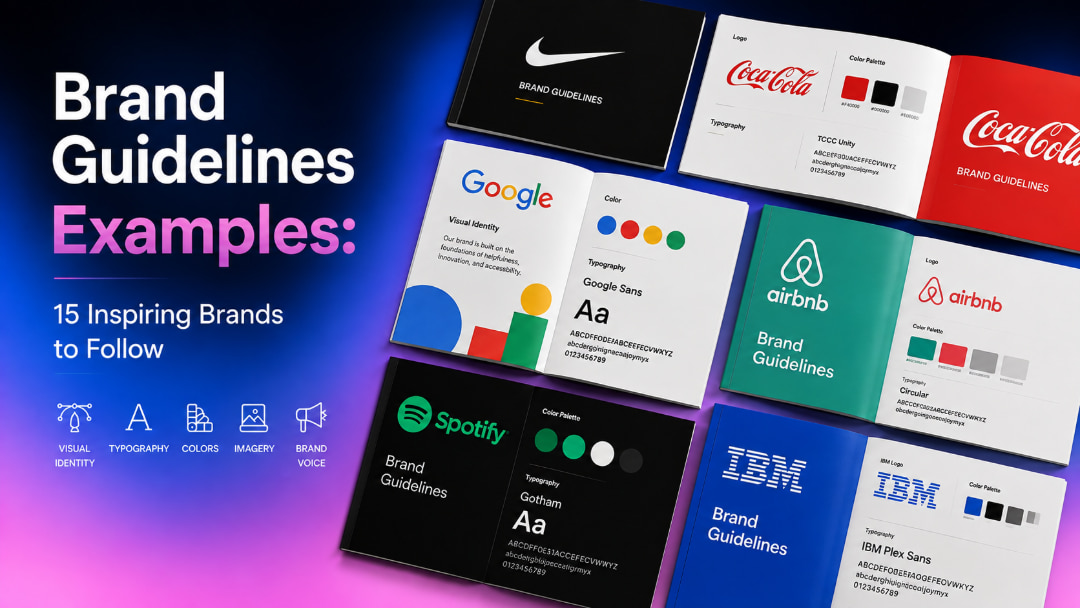
A strong brand is more than a logo. It includes recognizable colors, typography, imagery, messaging, and tone. Brand guidelines bring these elements together, helping teams maintain consistency across websites, social media, advertisements, packaging, presentations, and other customer touchpoints while keeping the brand clear, professional, memorable, and instantly recognizable.
15 brand guideline examples from well-known companies
The best brand guidelines don't just tell designers what logo to use. They translate a brand's identity into actionable guidelines for typefaces, colors, photography, layouts, messages, and applications. Here are some examples of the consistency that big brands maintain.
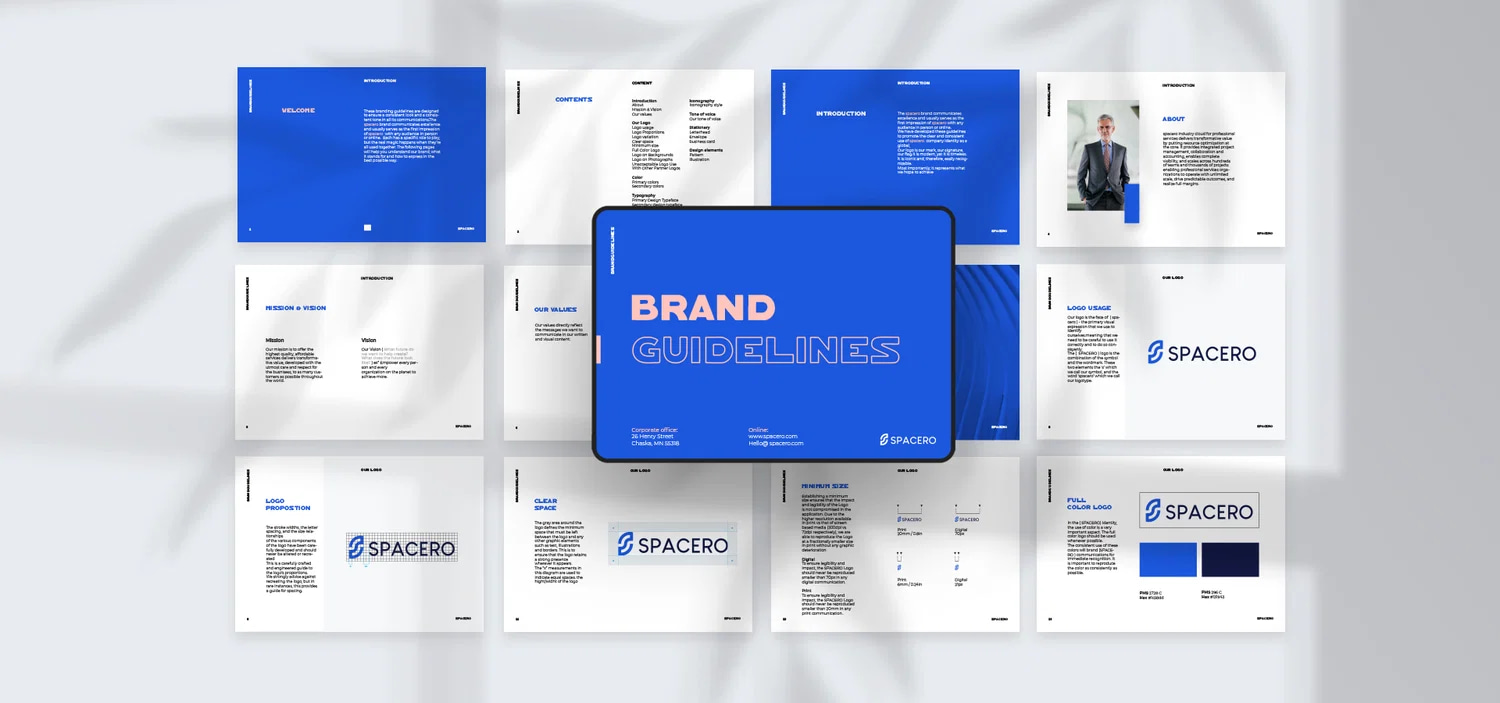
Technology and digital brand guidelines
-
IBM: IBM's brand guidelines offer a defined visual system with consistent typography, logo conventions, colors, layouts, and digital design concepts.
-
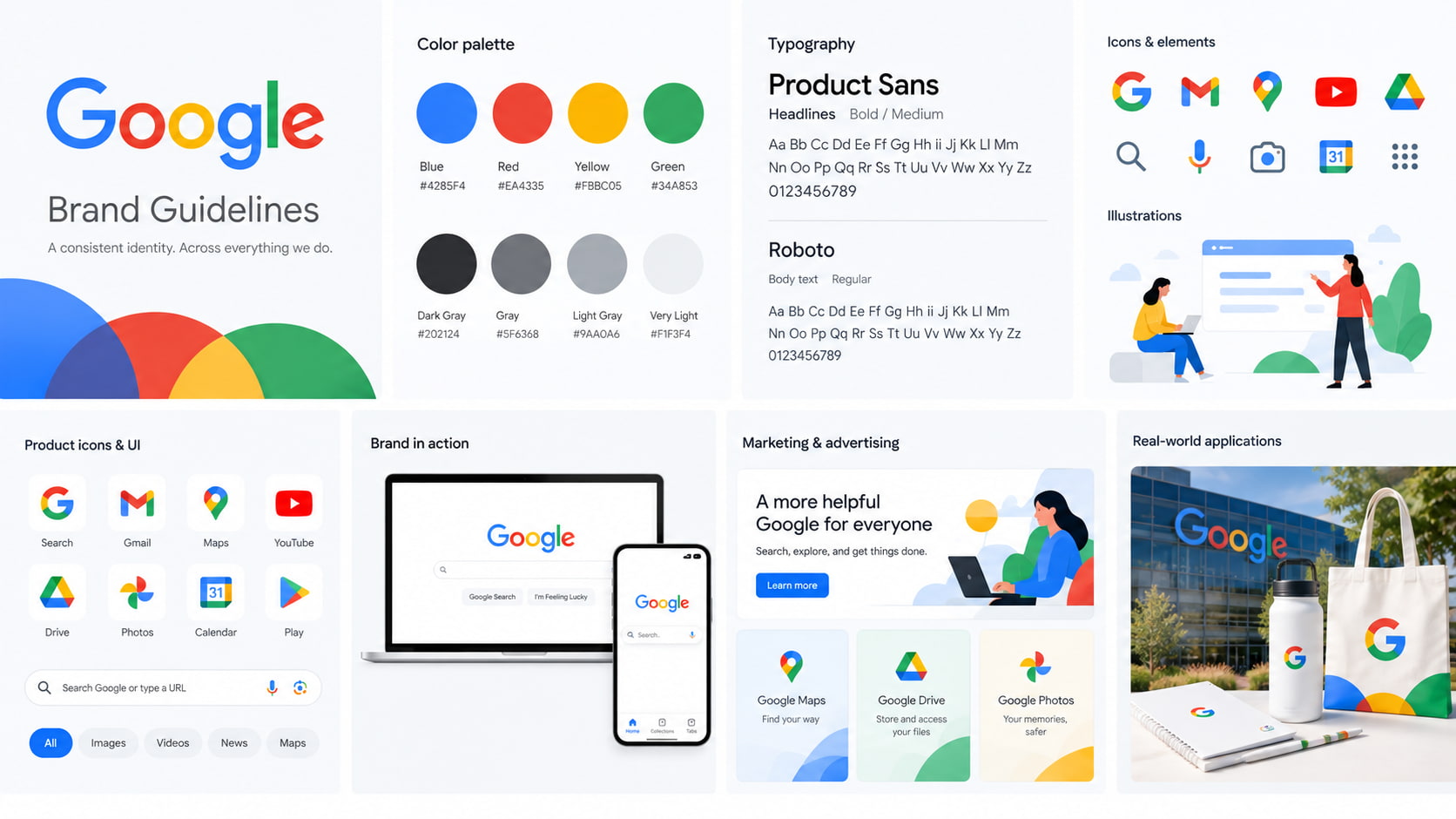
Google: Google's products are instantly recognizable because of uniform colors, font, icons, illustrations, and visual features.
-
Microsoft: Microsoft has strong brand regulations to ensure uniformity in its products, services, websites, interfaces, and marketing materials.
-
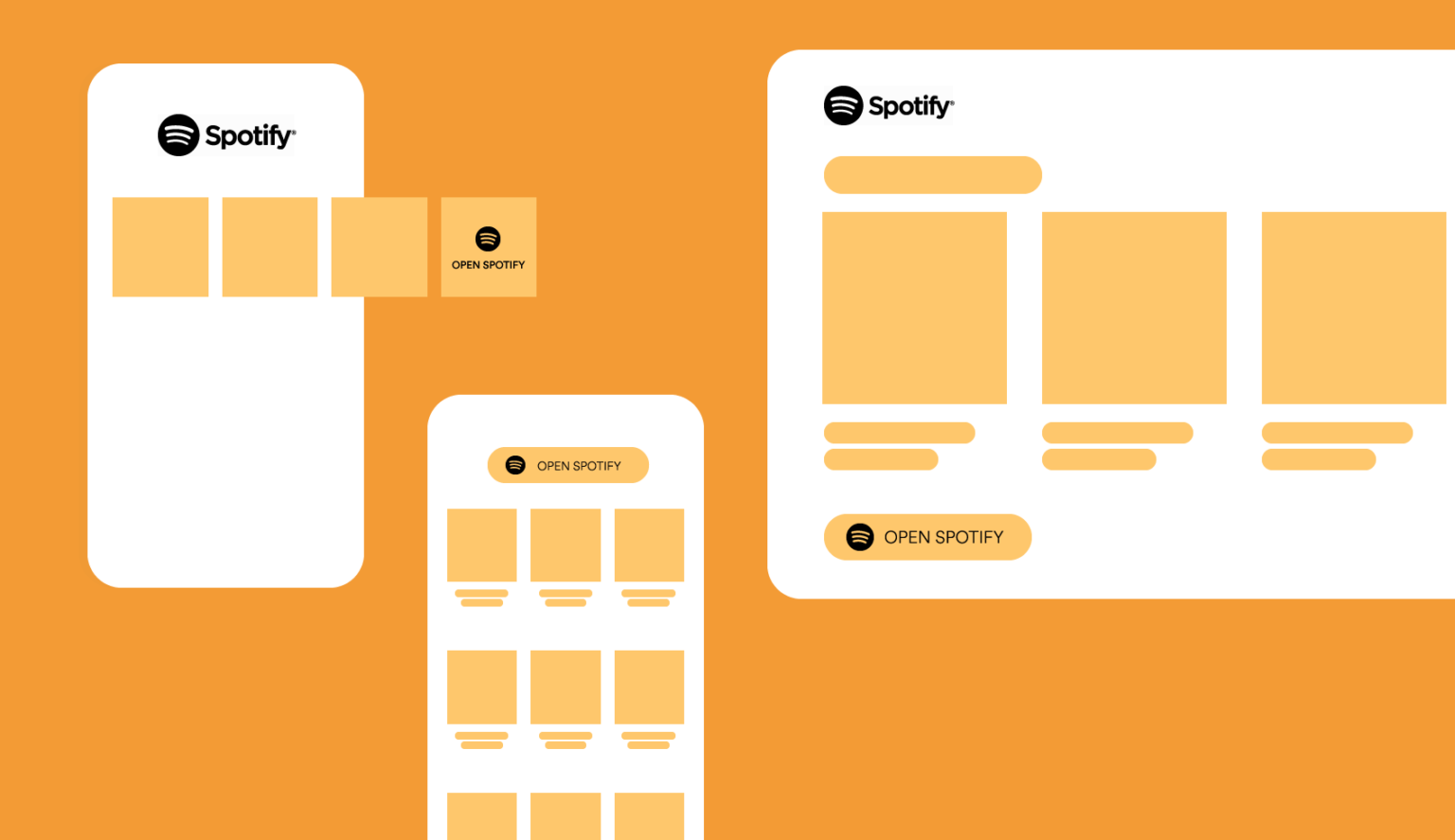
Spotify: The visual identity of Spotify draws on its unique colors, bold writing, distinctive images, album artwork, and digital-first visual style.
-
Adobe: Adobe unifies its creative products, platforms, marketing campaigns, and other brand assets with a consistent visual framework.
Consumer and lifestyle brand guidelines
-
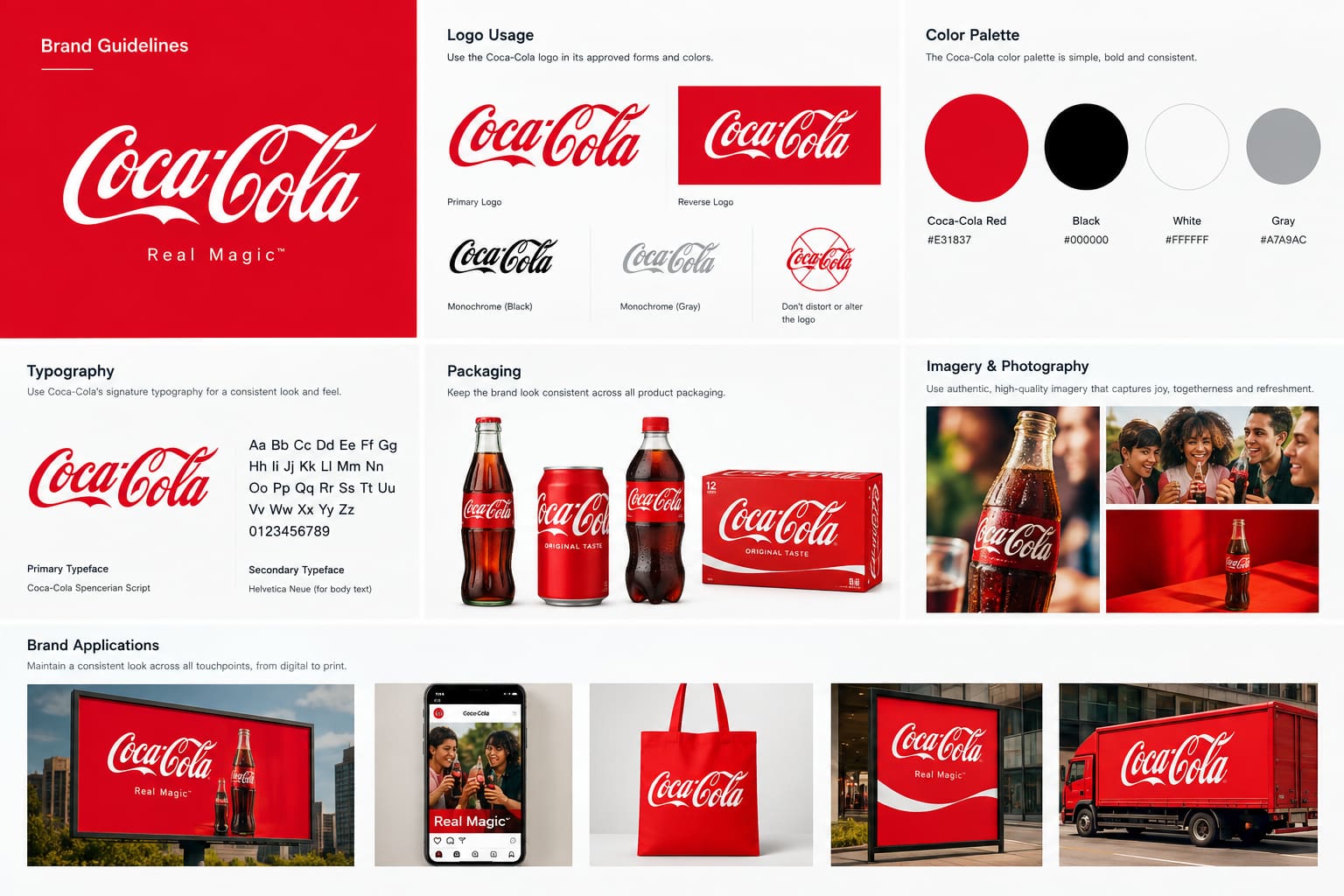
Coca-Cola: Coca-Cola's iconic red, logo treatments, typography, packaging, and storytelling all come together to deliver a consistent global presence.
-
Nike: Nike makes its brand distinctive with one simple logo, excellent typography, photography, messaging, and powerful visual storytelling.
-
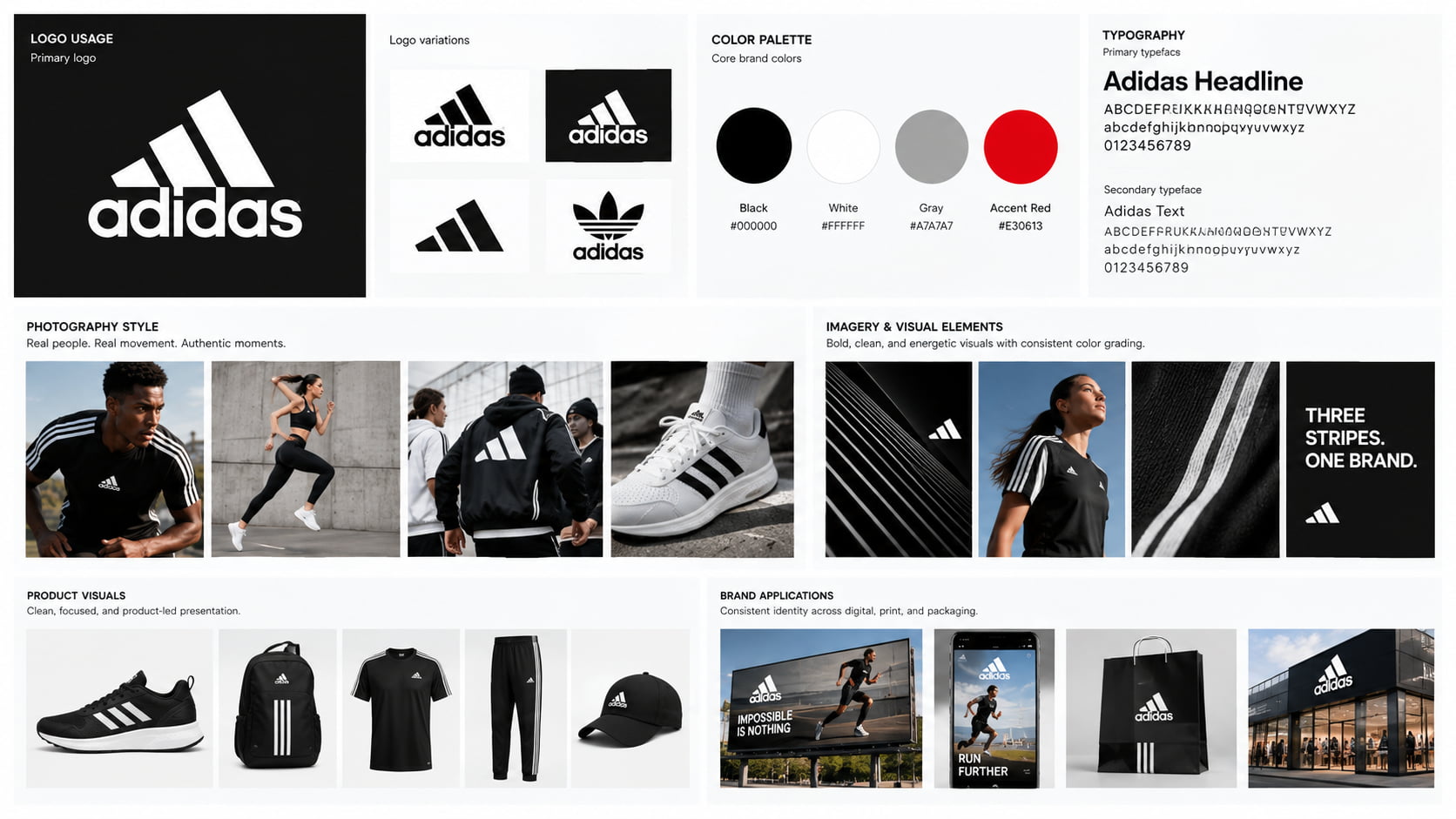
Adidas: The Adidas brand uses many versions of the logo, but the font, colors, photography, and product visuals stay consistent across all brand experiences.
-
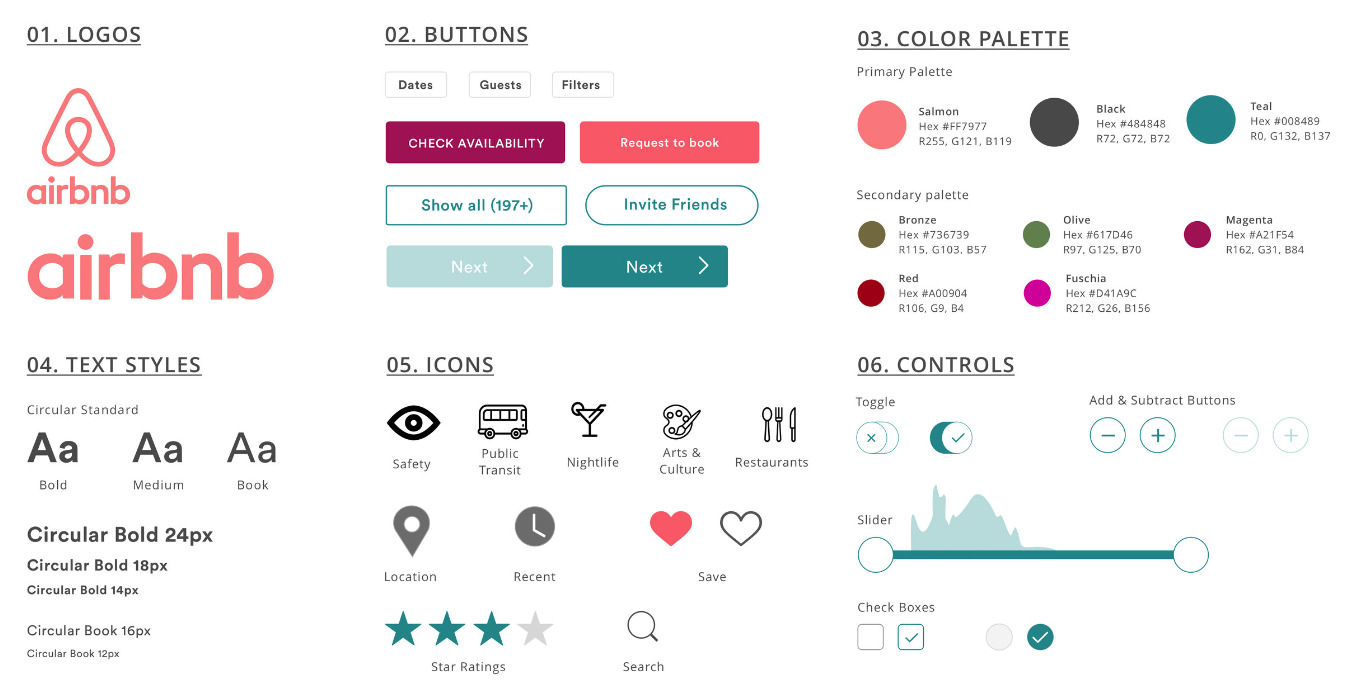
Airbnb: The logo, photography, typography, colors, graphics, and digital design come together to create a friendly and familiar identity.
-
Mailchimp: Mailchimp is playful with pictures, colors, typography, personality, and friendly communication.
Entertainment, media, and global brand guidelines
-
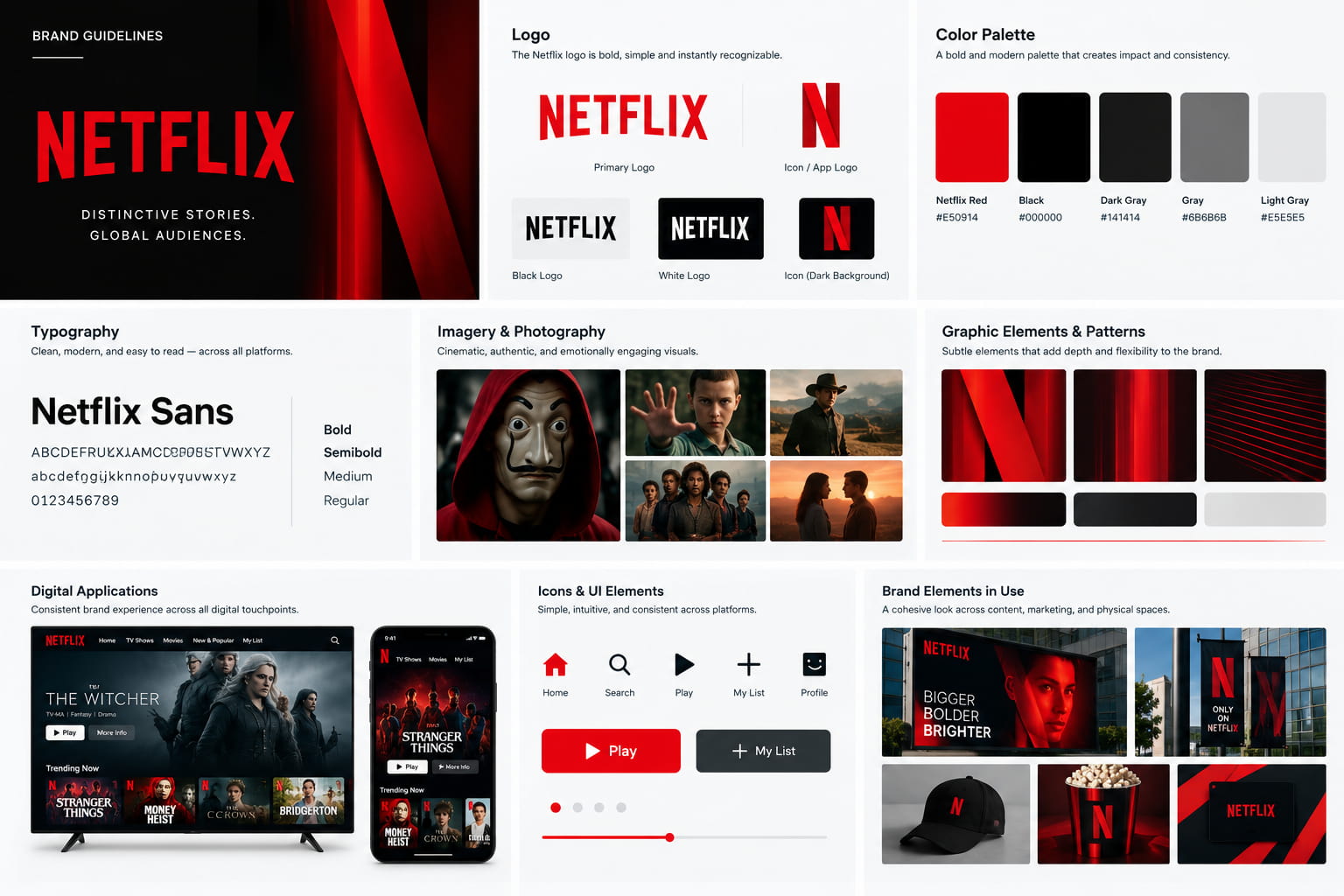
Netflix: Netflix uses its logo, colors, typography, images, and flexible digital brand elements to build a distinctive identity.
-
NASA: NASA has extensive requirements for logo usage, fonts, colors, layouts, and applications to ensure uniformity for many purposes.
-
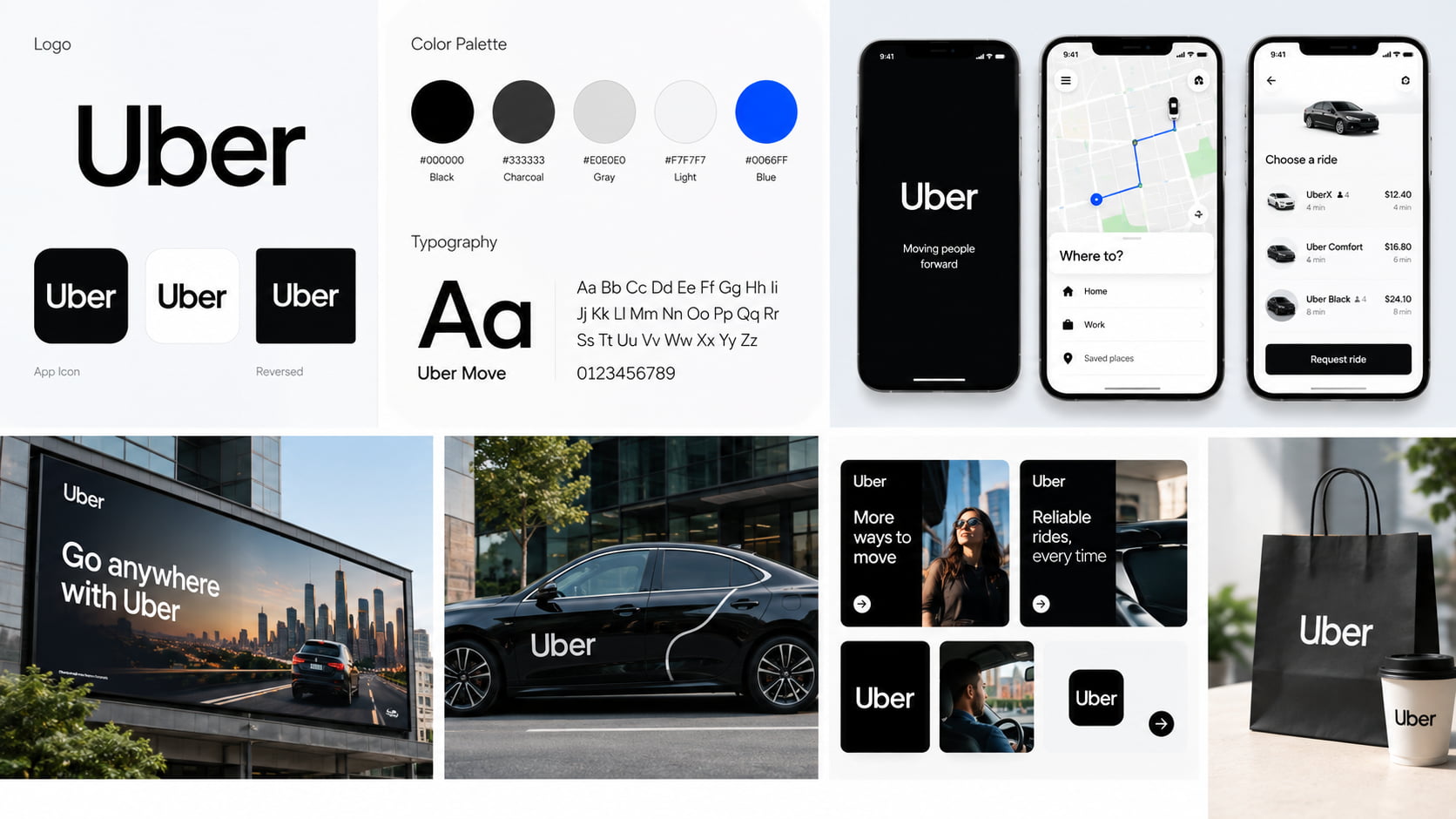
Uber: Uber's identity system delivers a uniform experience throughout the app, website, advertising, transportation services, and other user touchpoints.
-
Instagram: Instagram's social-first brand mixes its distinctive logo, gradient hues, typography, icons, and digital visual language.
-
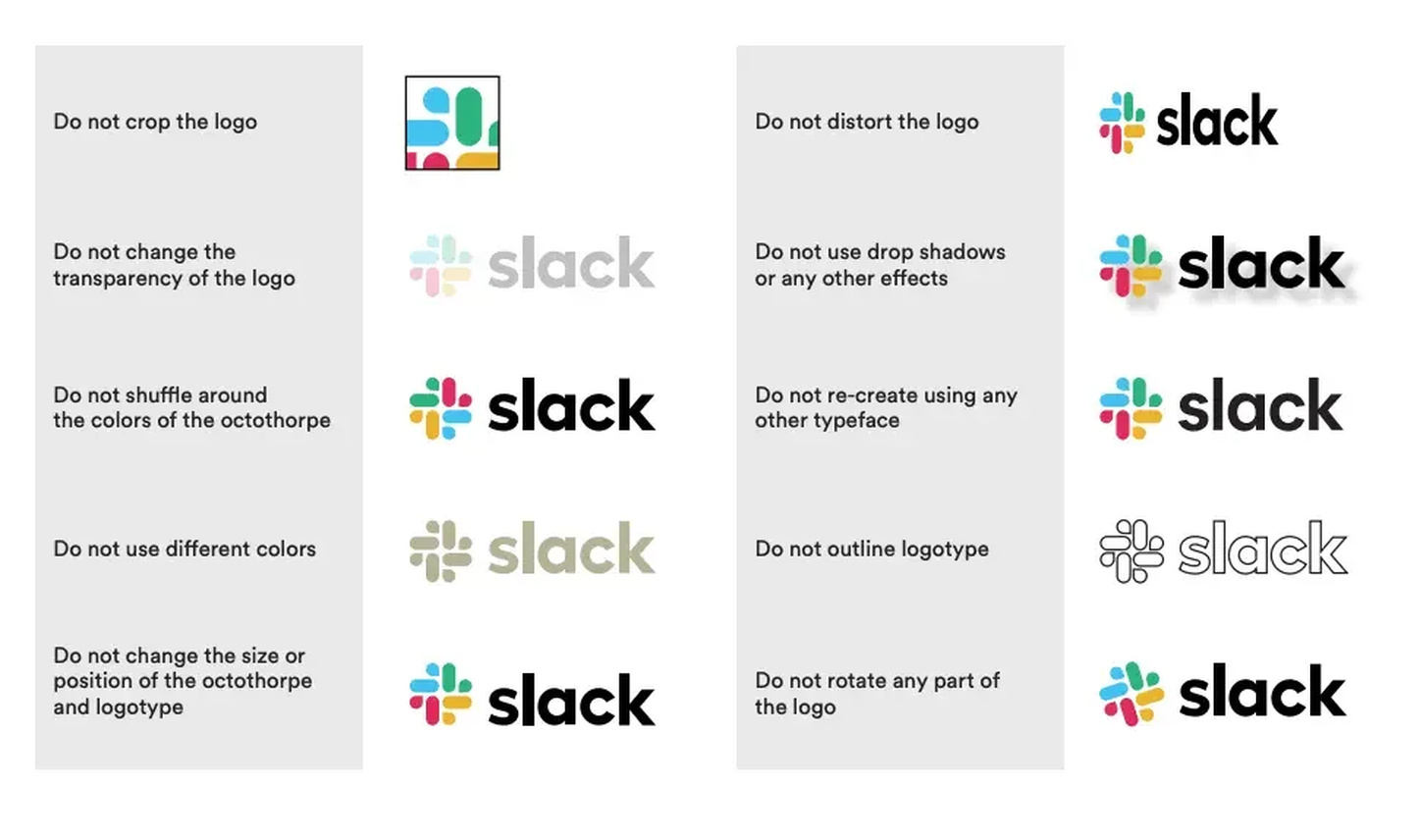
Slack: Using its logo, colors, graphics, icons, and typography, Slack creates a nice and consistent digital brand experience.
What makes these brand guidelines examples effective?
The company's consumers are somewhat different, but the intent behind their policies is similar: to take the guessing out of it. A good brand guide teaches individuals what the brand should look and sound like, but doesn't stop them from making something unique.
Clear logo usage rules
A logo is not an ordinary graphic that can be enlarged, recolored, stretched, or placed anywhere. Clear criteria define permissible versions, spacing, sizing, backdrops, and improper uses. IBM, for example, specifies clear space around its 8-bar logo and provides rules for approved colors and backgrounds.
Consistent colors and typography
Colors and typefaces form much of a brand's visual personality. A good guideline would specify main and secondary colors, give color values, and describe where each color goes. Typography standards might include font families, weights, hierarchy, sizing, spacing, and digital applications. For example, IBM's design system has a defined type scale based on IBM Plex.
Defined imagery and graphic elements
Visuals, such as photography, graphics, symbols, patterns, and shapes, should have a clear direction. This can include preferred image composition, lighting, subject handling, drawing style, icon usage, or visual do's and don'ts. Without these rules, two designers can follow the same logo and colors yet produce completely different-looking materials.
Consistent branded voice
Brand consistency is not only visual. The words a company uses also shape how people perceive it. A brand guide can explain whether communication should feel friendly, formal, playful, direct, technical, or conversational. It can also include preferred terminology, sentence style, messaging principles, and examples of what to avoid.
How to create your own brand guidelines
You don't have to go out and create a 100-page branded book right away. Build your guide around the most common parts of your team and then grow the guide as your brand evolves.
-
Know your brand: Know your objective, audience, personality, positioning, and values.
-
Document your logo rules: Show approved logo versions, minimum sizes, clear space, backgrounds, and incorrect examples.
-
Choose your brand colors: Choose your primary and secondary colors and note the HEX, RGB, CMYK, or other applicable values.
-
Develop typography guidelines: Select your main typefaces, secondary fonts, weights, sizes, and hierarchy.
-
Determine your images and graphic style: Talk about photography, illustration, symbols, patterns, forms, and other visual aspects that work for your business.
-
Define your branded voice and tone: Define how your brand should communicate across websites, emails, social media, and advertising.
-
Add real-world applications: Examples show how the guidelines function in practice, using social postings, websites, ads, packaging, presentations, or product pages.
Online and social media brand guidelines examples
Today's brand guidelines should not be limited to printing brochures and traditional advertising. Your brand might be on Instagram, TikTok, YouTube, websites, email campaigns, digital ads, mobile interfaces and ecommerce pages all in the same week.
Online brand guidelines examples
Online rules may include website layout, digital typography, buttons, icons, colors, images, responsive design, accessibility, and interactive aspects.
Social media brand guidelines examples
Social rules might include post templates, picture treatments, video styles, captions, hashtags, brand placement, thumbnail design, and platform variations.
Website and digital design guidelines
Digital guidelines should explain how your brand behaves on different screen sizes. Rules around spacing, navigation, graphics, buttons, typography, and component design can help keep things consistent from site to page.
Why social media guidelines matter
Social media changes fast; Therefore, teams routinely produce material on fast timelines. A practical approach provides creators with a shared visual and verbal foundation without requiring every post to appear the same.
Once you've set your brand rules, the next step is to apply them consistently throughout the visuals you develop. Every image, from images for social media to website assets, should use the same colors, style, and overall brand. AI technologies can speed this up by letting you take your established creative direction and turn it into on-brand images. That is where Vmake Labs can fit into your content workflow.
How to create on-brand visuals with Vmake Labs
Once you have your brand standards defined, you can utilize Vmake Labs to produce visual material that reflects your current brand colors, styles, and visual references. Leverage the AI image generator to bring your creative direction to life in new branded images, and then utilize the image enhancer to refine the final assets as needed. This can assist in creating consistent images for social media, websites, advertising, and other marketing materials.
Create on-brand visuals in 3 steps
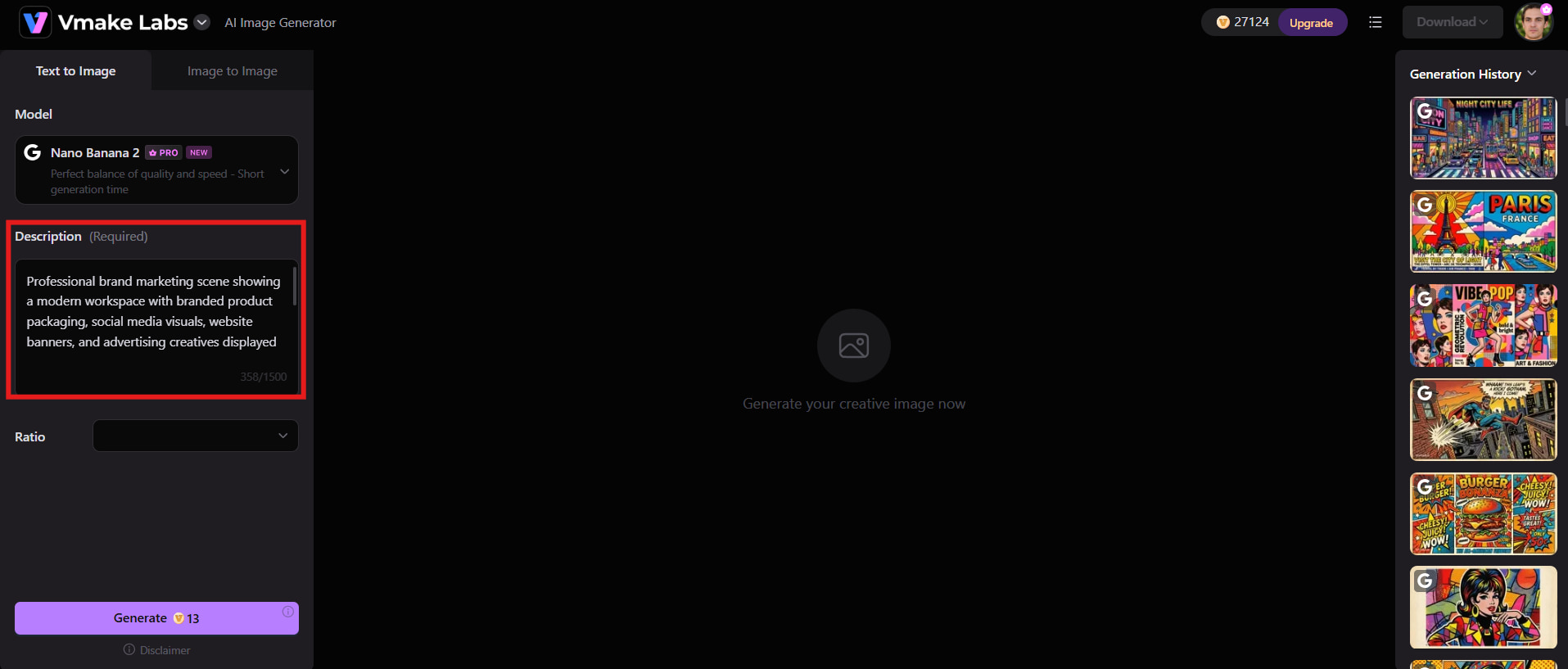
Step 1: Upload a reference image or enter a text prompt
Start with an existing brand asset, product image, or other visual reference. You can also write a prompt describing your brand colors, visual style, subject, composition, lighting, and overall creative direction.
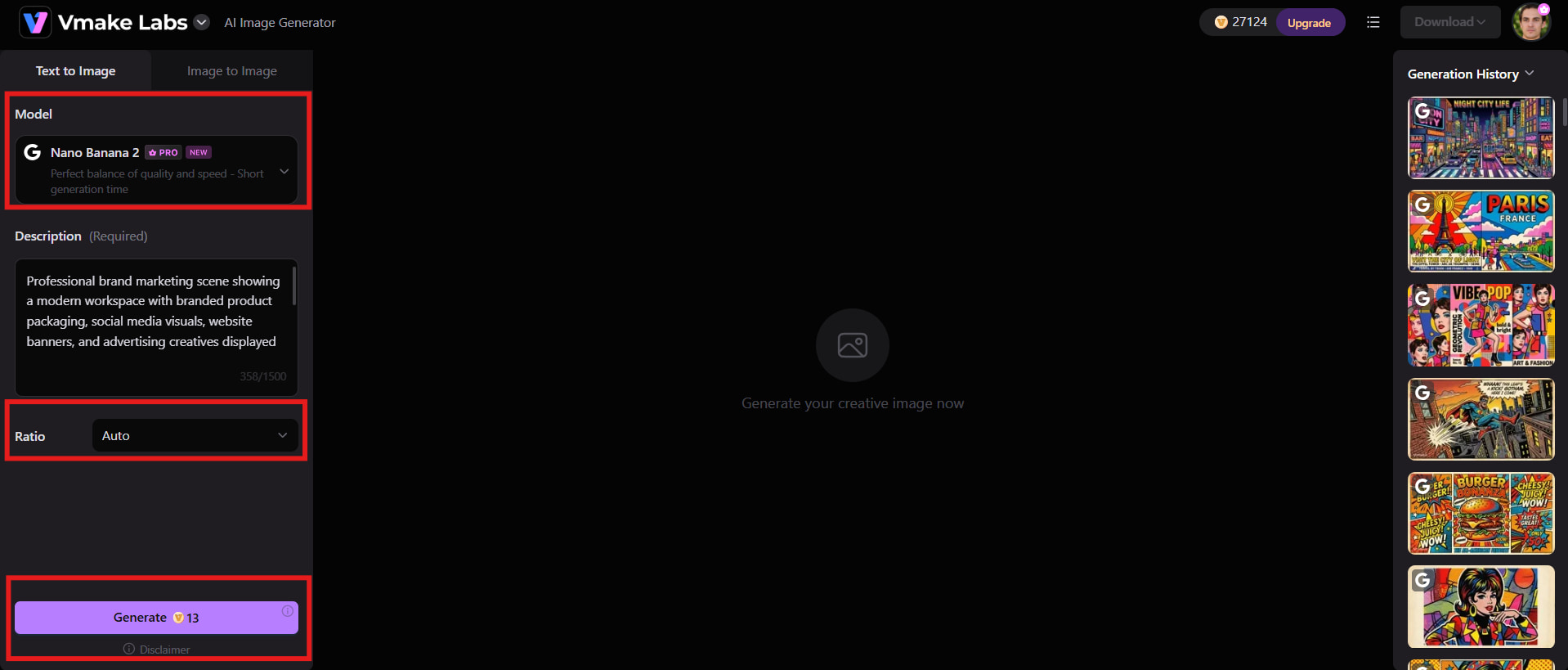
Step 2: Generate your on-brand visual
Choose an available AI model and aspect ratio, then generate the image. Review the result against your existing guidelines. Check whether the colors, composition, subject treatment, and overall visual style fit your brand's direction.
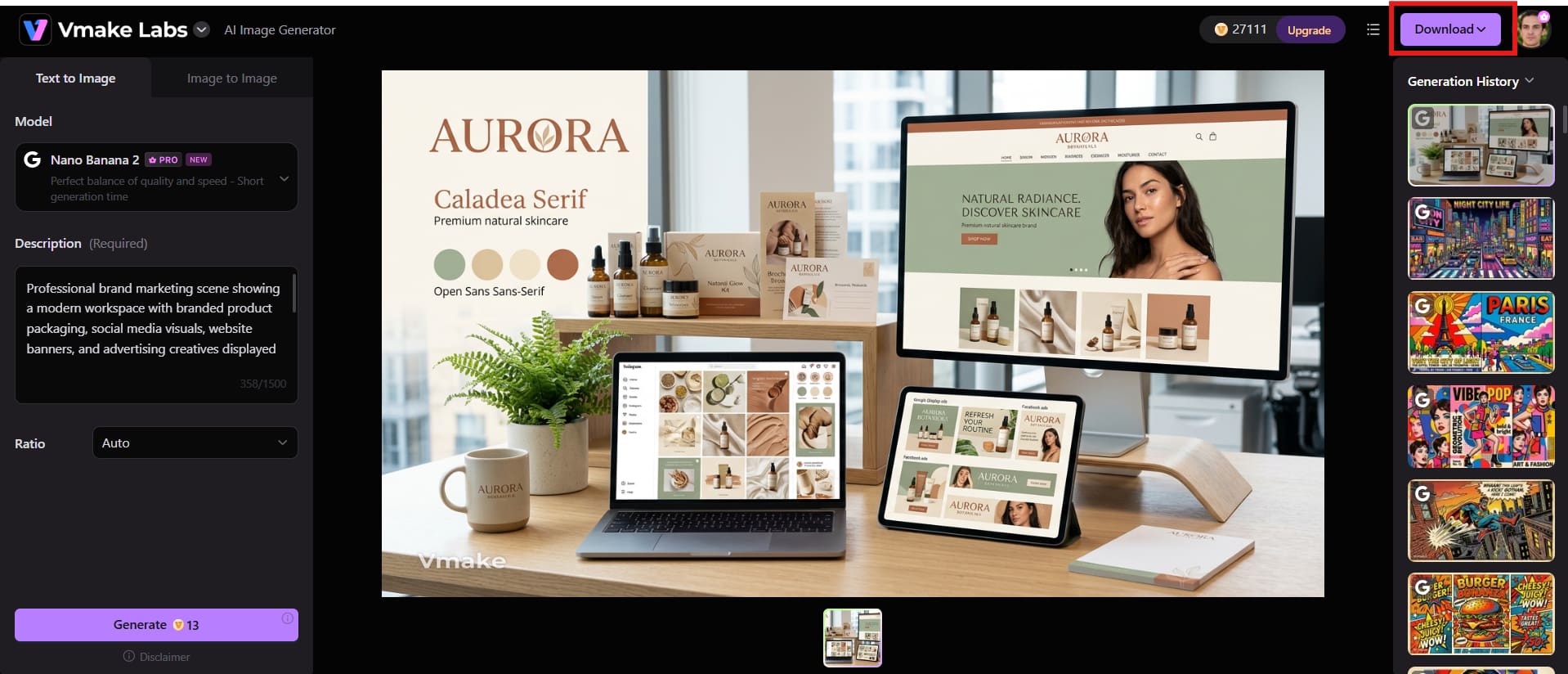
Step 3: Refine and download your visual
If the result needs adjustment, refine the prompt or reference direction and generate another version. Once the visual fits your requirements, download it and use it for suitable websites, social media, advertising, or marketing content.
Vmake Labs key features
-
Text-to-image generation: Create on-brand visuals from written concepts by describing your preferred brand colors, visual style, subject, composition, and overall creative direction. This makes it easier to turn brand ideas into fresh visuals for websites, social media, advertising, and marketing campaigns.
-
Image-to-image transformation: Use an existing brand asset, product image, or other visual as a reference for creating new branded content. This helps maintain the desired visual direction while exploring different creative variations from an existing asset.
-
Reference image support: Add visual references to guide the generated image's appearance, composition, colors, and overall style. Using relevant references can help create visuals that better align with established brand guidelines and creative requirements.
-
Multiple AI models: Choose from available AI models to explore different visual interpretations of the same creative concept. This gives you flexibility to experiment with different styles and find results that best match your brand's visual identity.
-
Flexible aspect ratios: Select an aspect ratio that fits the platform or marketing placement where the visual will be used. This helps create suitable visuals for social media posts, websites, advertisements, banners, and other digital channels.
-
Preview and download: Review the generated visual and make adjustments when necessary before selecting the final version. Once you're satisfied with the result, download the image and use it across your approved marketing materials.
Conclusion
Strong brand guidelines turn a collection of design choices into a recognizable identity. The examples from IBM, Google, Nike, Coca-Cola, Netflix, Slack, and others show how consistent logos, colors, typography, imagery, messaging, and applications strengthen recognition. You do not need to copy these brands. Instead, use them as inspiration to build rules that fit your audience and goals. Once your visual system is defined, tools such as Vmake Labs can help you create and prepare branded assets with an image converter for different digital channels.
FAQs
-
Why are brand guidelines important?
Brand guidelines help businesses maintain a consistent identity across every customer touchpoint. They define how logos, colors, typography, imagery, and messaging should be used. This consistency makes a brand easier to recognize, builds trust, and helps different teams create content that feels connected.
-
What should a brand guideline include?
A brand guideline should cover the essential elements that define your visual and verbal identity. This typically includes logo usage, color palettes, typography, imagery, graphic elements, brand voice, and tone. Tools such as Vmake Labs can then help create visual content that follows these established brand requirements.
-
How often should brand guidelines be updated?
Brand standards don't need to be updated on a regular timetable, but they should evolve with your business and visual identity. You can review them if you launch a new logo, product, audience, platform, or design system. Regular reviews also help to keep your guidelines relevant to current marketing needs.
-
What are online brand guidelines examples?
Online brand guidelines explain how a brand should appear across digital channels such as websites, apps, social media, and digital advertisements. Brands such as IBM, Google, and Microsoft demonstrate how typography, colors, imagery, logos, and digital components can work together. These guidelines help teams maintain consistency across different online experiences.
-
What should social media brand guidelines include?
Social media brand standards should detail how your identity translates to posts, videos, ads, captions, thumbnails, and other content relevant to a platform. They can pick colors, fonts, graphics, logo placement, visual styles, and tone of voice. Tools like Vmake Labs can then assist teams to produce visual content that conforms to this specified creative direction.
-
Can Vmake Labs help create consistent branded content?
Yes, Vmake Labs can enable branded content production with AI-powered image generation and picture-to-image workflows. You can utilize written prompts or reference photos to influence the desired visual style, composition, and creative direction. This can help facilitate the creation of new images for websites, social media, advertising, and other marketing avenues while staying within your existing brand rules.

You May Be Interested
Ultimate Brand Video Guide: Types, Examples & Best Tools

Who Is the Villain in Spider-Man: Brand New Day? Confirmed Characters & Top Fan Theories (2026)

How Funny Ads Boost Engagement and Increase Brand Recall?
How to Build a Brand on Social Media: Complete Guide (2026)
12 Logo Ideas & Prompts: Best Creative Brand Designs (2026)