
Why AI Lip Sync Matters for Video Translation
Learn how you can use the ai lip sync procedure to your advantage and improve your video translation. Create natural multilingual videos!

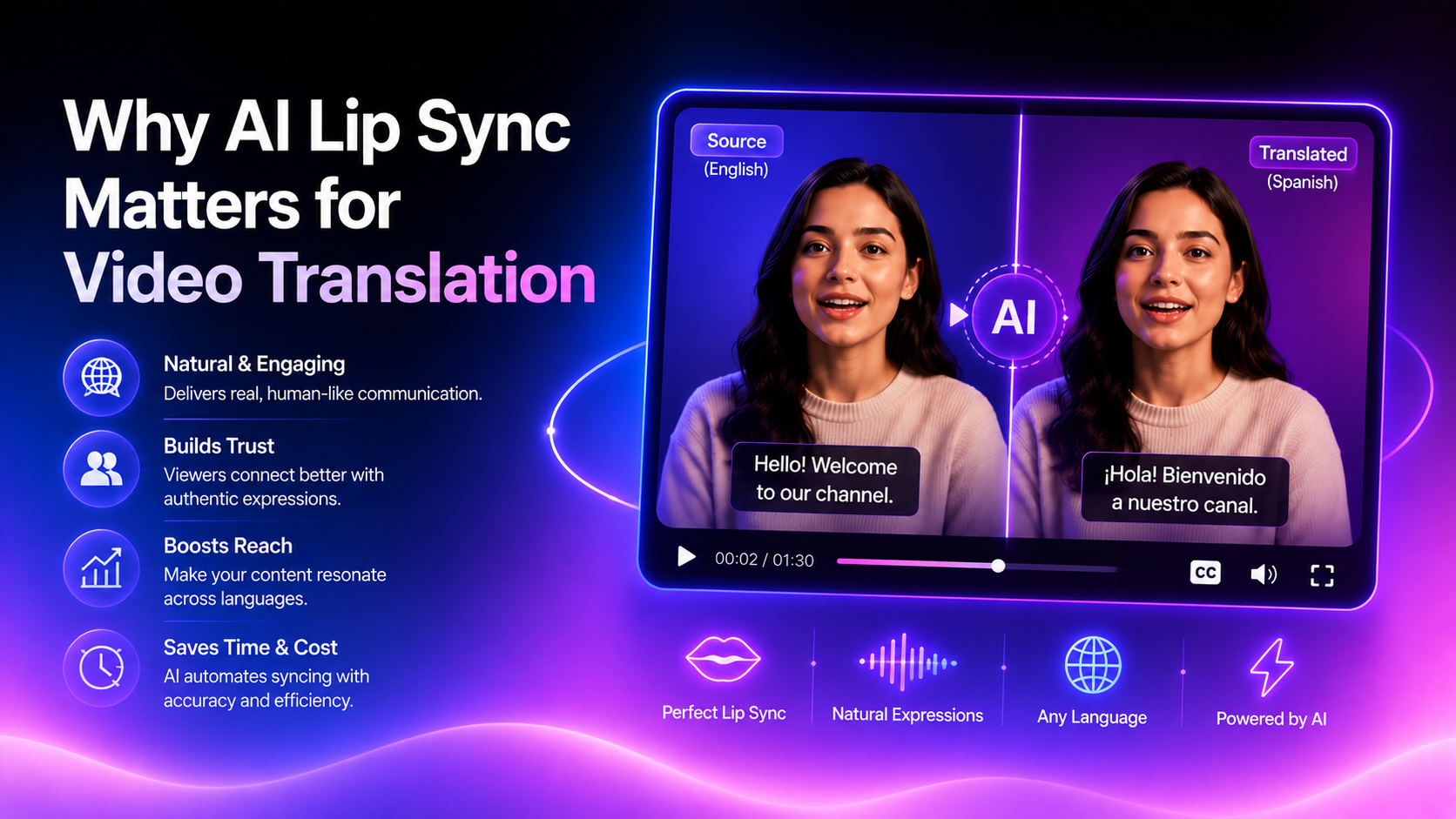
Video translation is the latest trend to get more global audiences. Businesses, media companies and creators are successfully using AI-powered translation and dubbing technologies. However, translating speech into another language is only one part. The real challenge is making translated videos look natural to viewers. Here, ai lip sync technology has become a game-changer.
You can’t just replace audio with a dubbed voice. Viewers notice when mouth movements do not match spoken words. It reduces trust and overall user engagement. Modern lip sync ai tools are the ultimate solution to gaining international exposure to your video content.
What Is AI Lip Sync?
Lip sync artificial technology automatically adjusts mouth movements in a video to match the spoken audio. Using the perfect translation and dubbing software is enough to create a realistic multilingual video production without requiring actors to re-record videos.
AI Lip Sync Explained
Traditional dubbing adds a translated voiceover over the original audio track. Here, the speaker's lips often move differently from the translated speech. Lip sync through AI channels uses advanced machine learning models to analyze facial movements. The result is a more natural viewing experience that feels native to the target audience.
How AI Lip Sync Technology Works
AI technology can process videos in multiple languages within minutes by automatically analyzing the original video, extracting speech and facial movement data, translating the dialogue, generating AI dubbing, synchronizing lip movements, and producing a fully localized version. This dramatically reduces production timelines compared to traditional localization methods.
Why Lip Sync Has Become Essential for Video Translation
Global audiences consume content from all over the world. People expect natural localized experiences, whatever type of video they may be watching. These could be educational videos, entertainment content, or even social media clips.
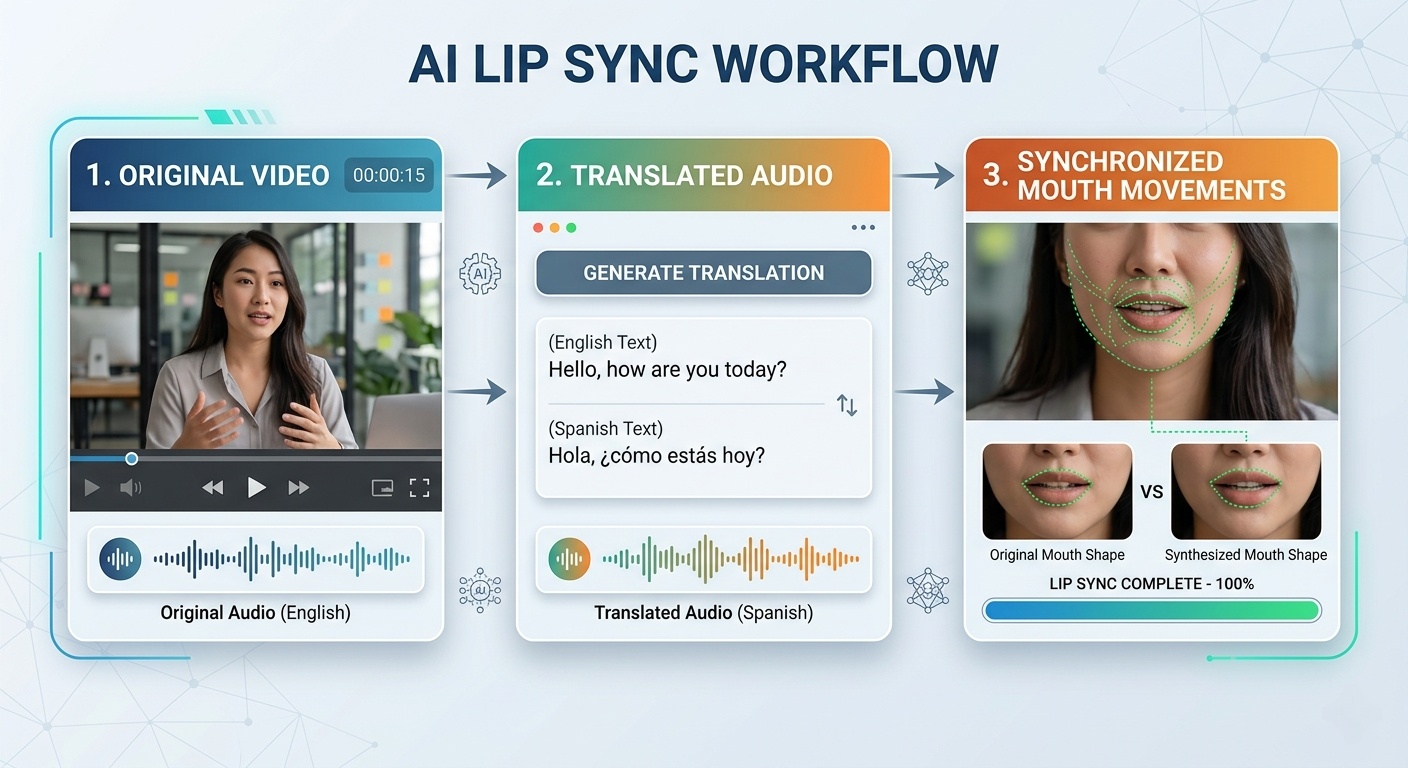
Poor synchronization make videos appear as unnatural. By contrast, synchronized translations help create wonderful viewer experiences. An AI lip sync workflow comes as:
Original Video → Translated Audio → Synchronized Mouth Movements
Why Dubbing Alone Isn't Enough
Dubbing has been in practice for quite some time now as a standard localization method. However, modern audiences expect more than translated audio.
The Problem With Mismatched Lip Movements
Viewers quickly notice the mismatched video content nowadays. It is natural for the human brain to connect speech with facial expressions. This disconnect can make content appear artificial, reducing its effect and reach.
How Poor Synchronization Affects Viewer Trust
Trust is important when it comes to viewers and content. If viewers think that a video is poorly localized, they may question its credibility and importance. A video that appears professionally synchronized feels more polished and worth watching.
Why Global Audiences Expect Natural-Looking Videos
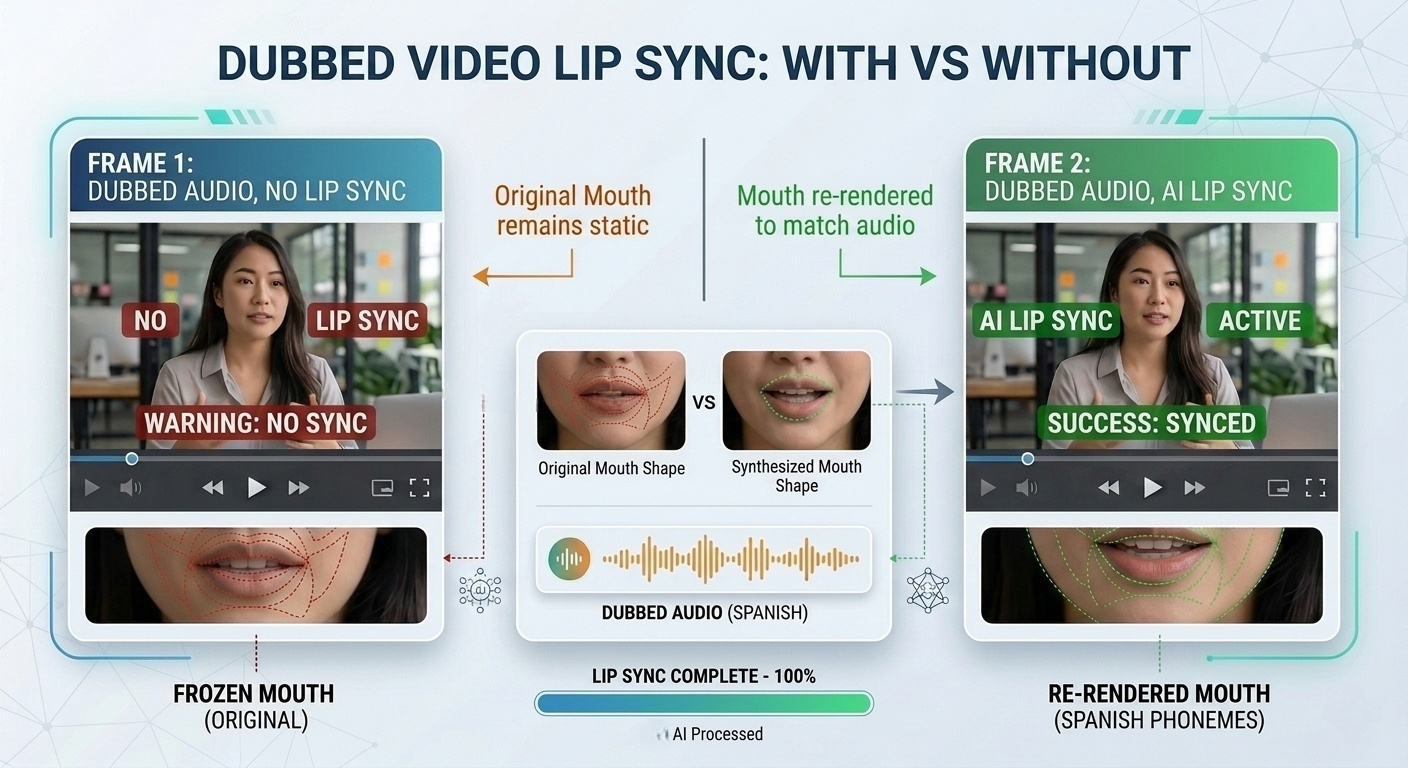
A side-by-side comparison of dubbed video with and without lip sync is shown below:
How AI Lip Sync Improves Video Translation
Lip synchronization provides numerous benefits beyond aesthetics.
Creates More Natural Viewing Experiences
Natural lip synch allows viewers to focus on the content rather than noticing the translation process. When mouth movements match speech patterns, videos feel authentic and truly engaging.
Increases Viewer Engagement and Retention
Audience engagement increases when content feels natural and easy to consume. Well-localized videos encourage viewers to watch longer, improving retention rates.
Makes Multilingual Videos Feel Native
One of the best lip sync video ai solutions is their ability to create native-like experiences across multiple languages. The content feels specifically produced for each target audience.
Enhances Global Content Localization
Businesses or brands wishing to reach an international audience need efficient localization workflows. No need for costly manual editing. Organizations are also able to deliver consistent brand messaging to audiences worldwide.
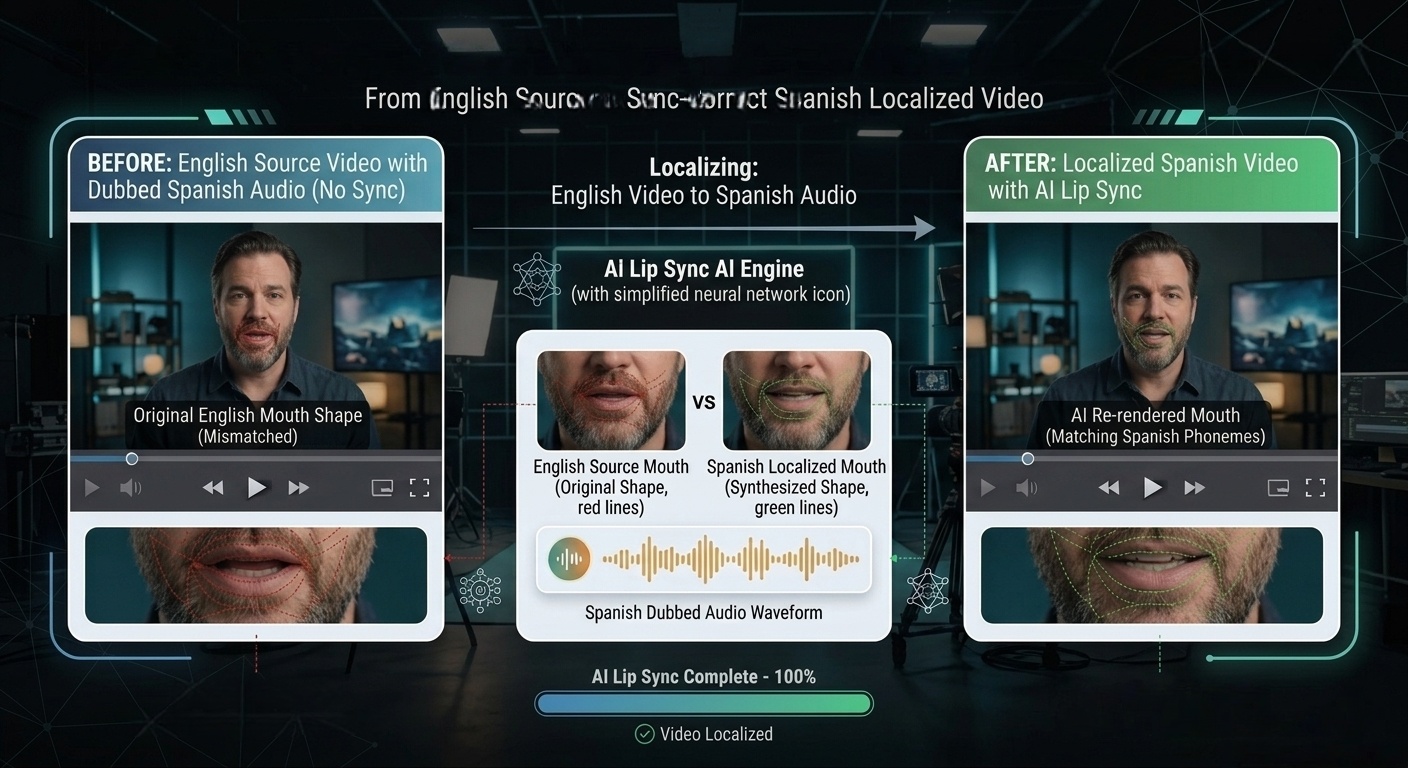
Before-and-after Localization Example is shown here:
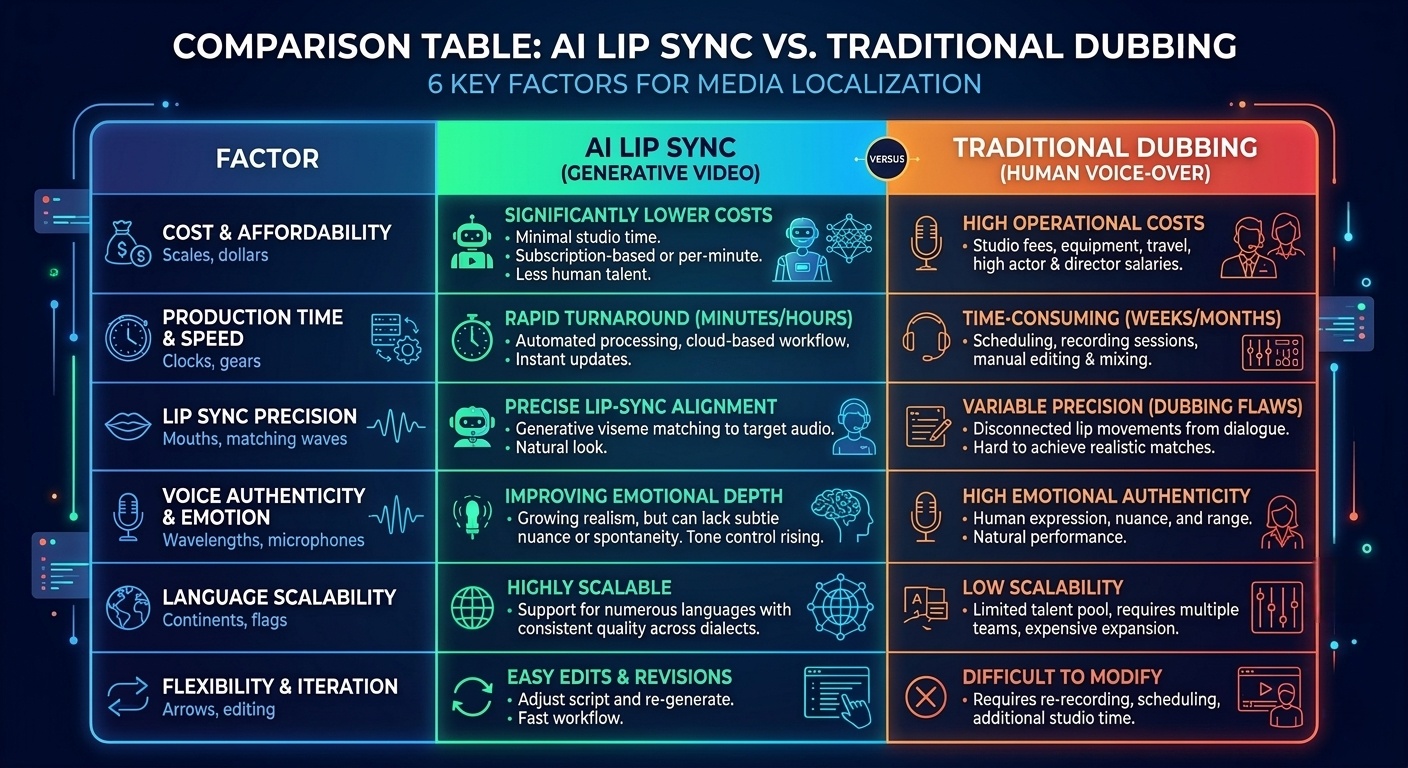
AI Lip Sync vs Traditional Dubbing
Both approaches work well in different scenarios, but AI-powered synchronization offers greater advantages.
Production Time:
Cost and Scalability:
Language Expansion Potential:
Viewer Experience Comparison:
Best Use Cases for AI Lip Sync
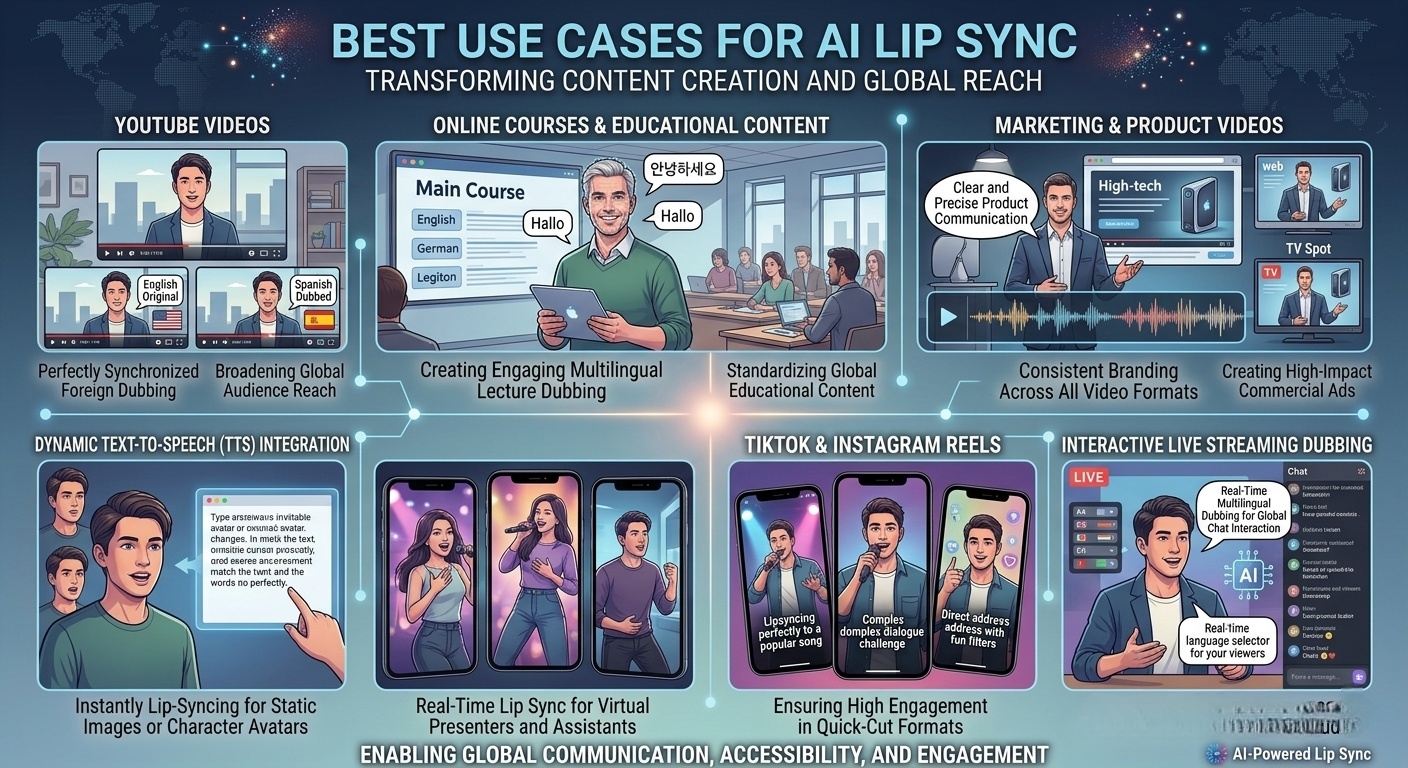
Many industries use AI lip sync to create synchronized multilingual video production.
YouTube Videos
Online Courses and Educational Content
Marketing and Product Videos
TikTok and Instagram Reels
Common challenges of AI Lip Sync
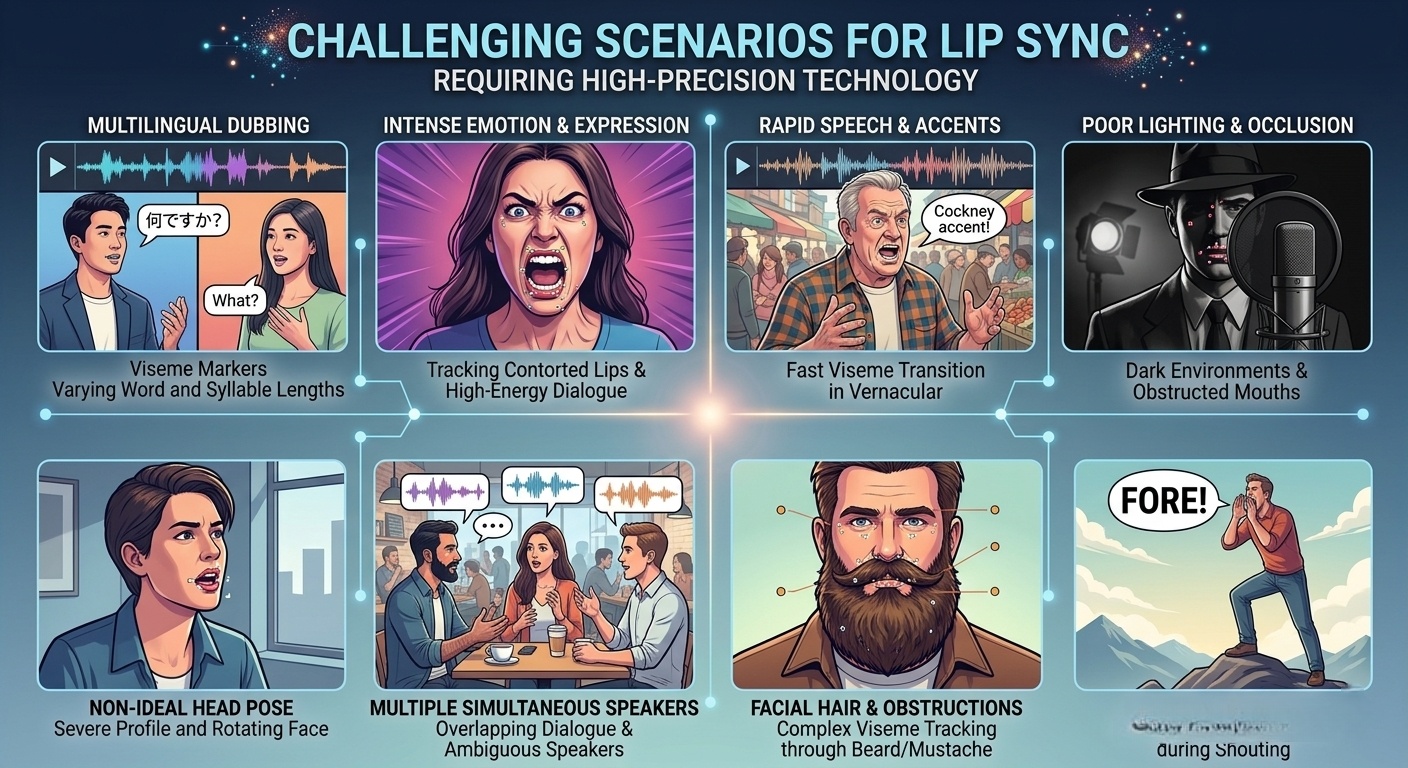
The advancement in technology doesn’t mean that challenges are missing. These exist:
Complex Facial Movements
Videos featuring rapid facial expressions, head turns, or unusual camera angles are often more difficult to synchronize accurately. These movements leave less time for AI to match lip shapes with translated speech, which can occasionally reduce synchronization precision.
Fast Speech and Timing Issues
Rapid speech creates additional challenges because the translated dialogue may be longer or shorter than the original. AI systems must carefully adjust pacing and timing to keep the new audio aligned with the speaker's mouth movements while maintaining natural delivery.
Multiple Speakers in One Video
Group conversations are more complex because the AI must correctly identify each speaker, switch between multiple faces, and synchronize lip movements independently. Frequent speaker changes or overlapping dialogue can make this process even more challenging.
Language-Specific Pronunciation Differences
Every language has unique pronunciation patterns and mouth movements. Some translated phrases require very different lip shapes or speaking rhythms, making it more difficult to achieve perfectly natural lip synchronization across all languages.
Some examples of challenging lip sync scenarios are shown below in an image:
Create Lip-Synced Translated Videos with Vmake
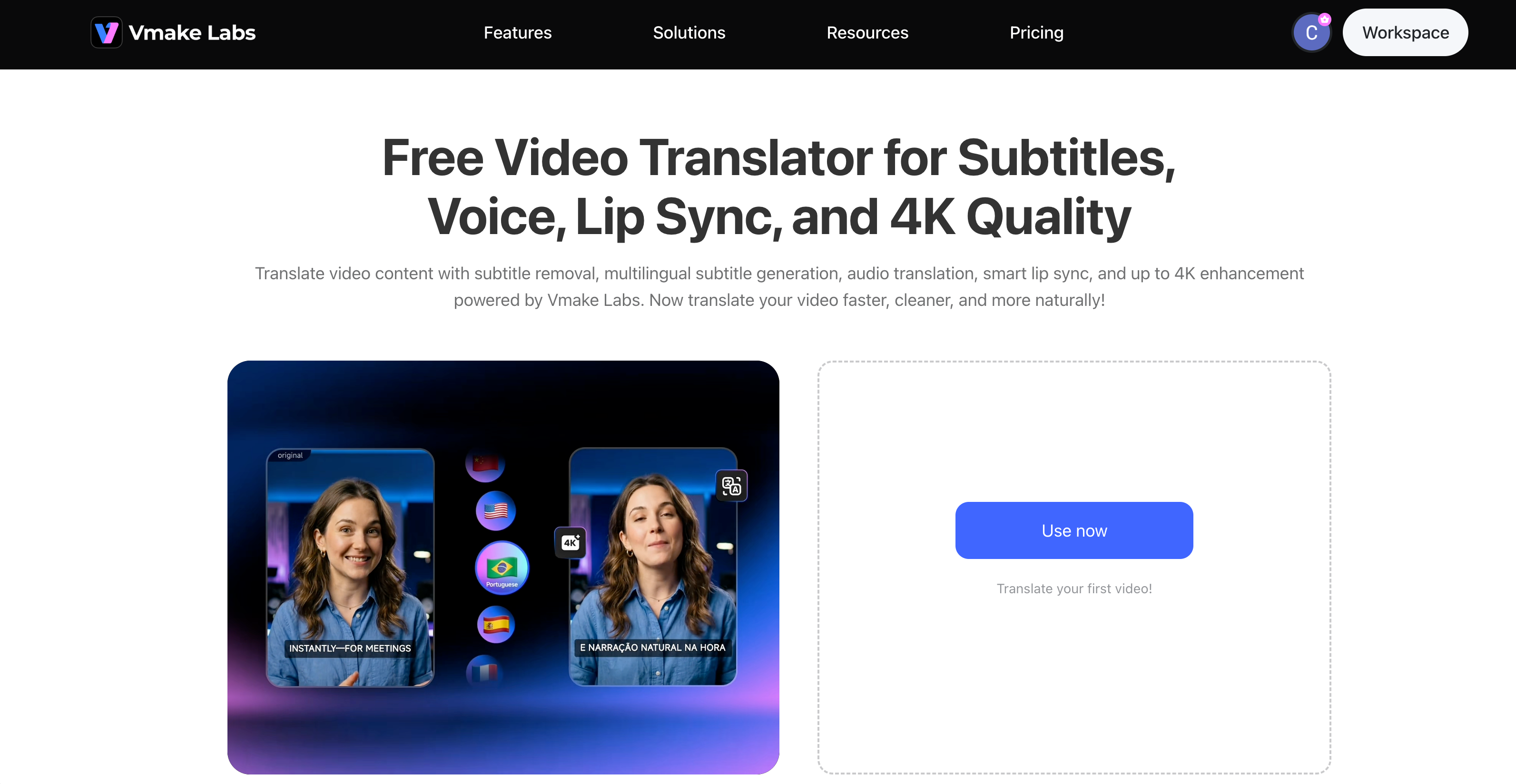
Creators who need a superb localization workflow can use Vmake AI video translation platform to automate translation, dubbing, and synchronization processes. Now you can translate video content without redesigning the whole content with subtitle adjustment per your content needs. The output is a translated video that is cleaner and more natural. Thus, it’s an all-purpose video translator with a user-friendly interface.
Key Features:
Accurate Video Translation for Multiple Languages: Vmake automatically transcribes and translates spoken content into English and dozens of other languages. This helps creators localize videos quickly without manually creating subtitles or translations.
Natural AI Dubbing Options: In addition to subtitles, Vmake can generate dubbed audio using AI voices. Users can select from different voice styles to create a more natural viewing experience for international audiences.
Smart Lip Sync Technology: The platform includes AI-powered lip sync that aligns translated speech with the speaker's mouth movements. This helps dubbed videos appear more realistic and reduces the mismatch often seen in traditional voiceovers.
Flexible Subtitle Controls: Users can edit generated subtitles, adjust their appearance, or remove existing captions before exporting the final video. This provides greater control over the localization process.
High-Quality 4K Export: Unlike some video translation tools that reduce video quality during processing, Vmake supports exports in up to 4K resolution, making it suitable for professional content, marketing videos, and YouTube publishing.
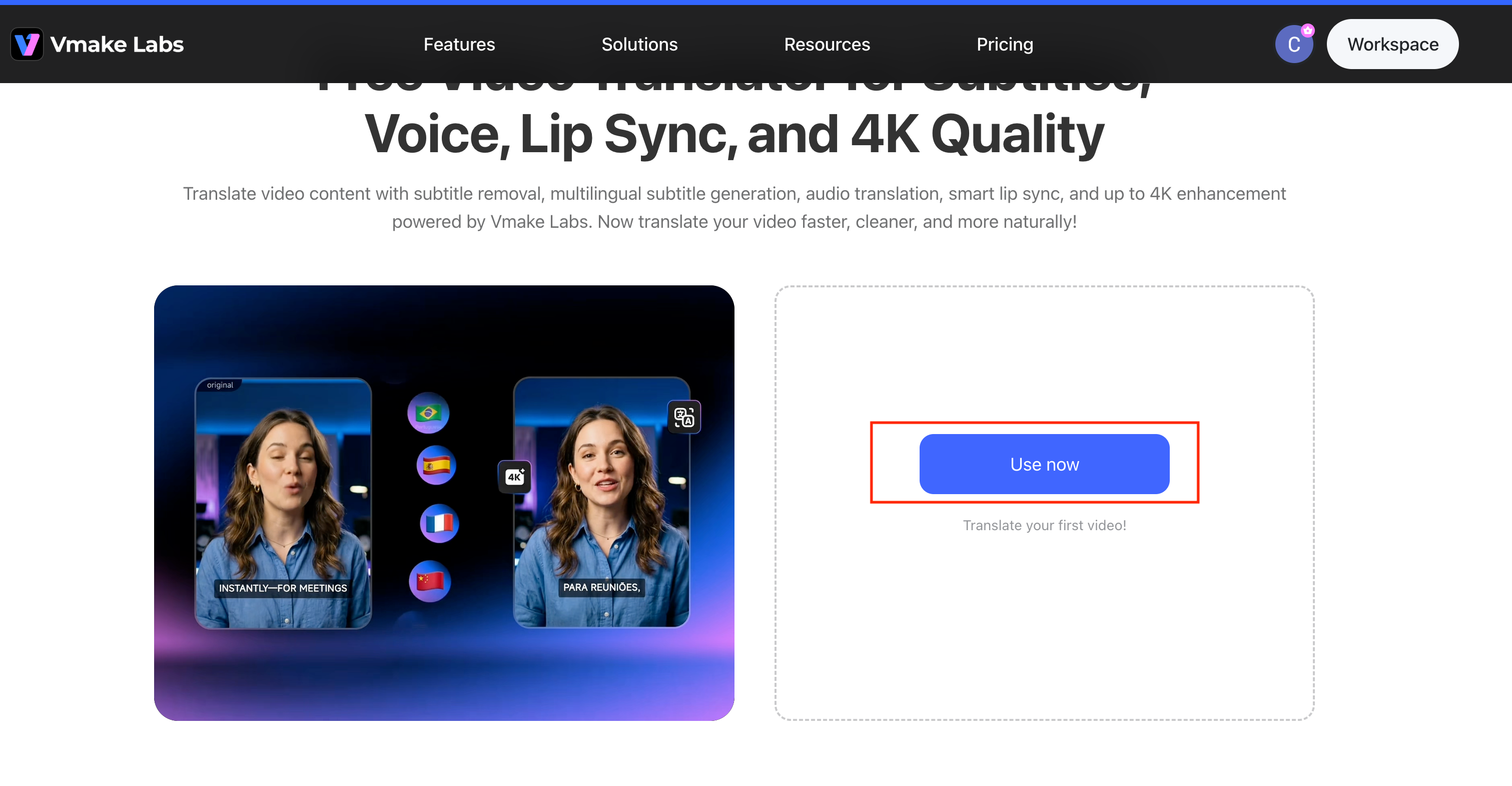
Step 1:Upload Your Video
Start translating your videos now!
First, upload your original video file to the Vmake platform. Click the “Use now” option for this purpose.
Step 2:Generate AI Translation and Dubbing
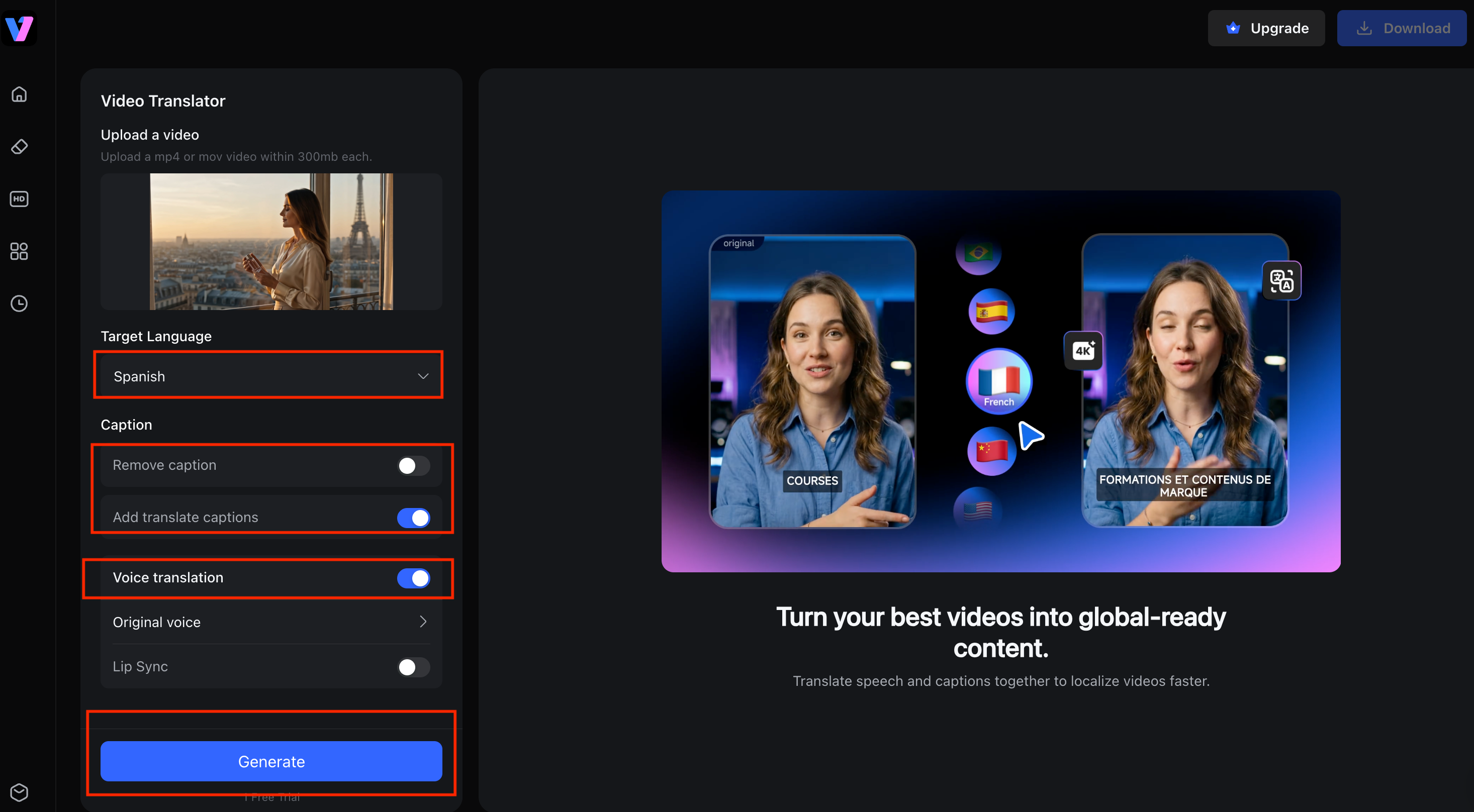
The system automatically transcribes speech, translates content and generates high-quality dubbed audio. You get 2 “Caption” options, one “Voice translation” option and one “Lip Sync” option.
Step 3:Export a Fully Localized Video
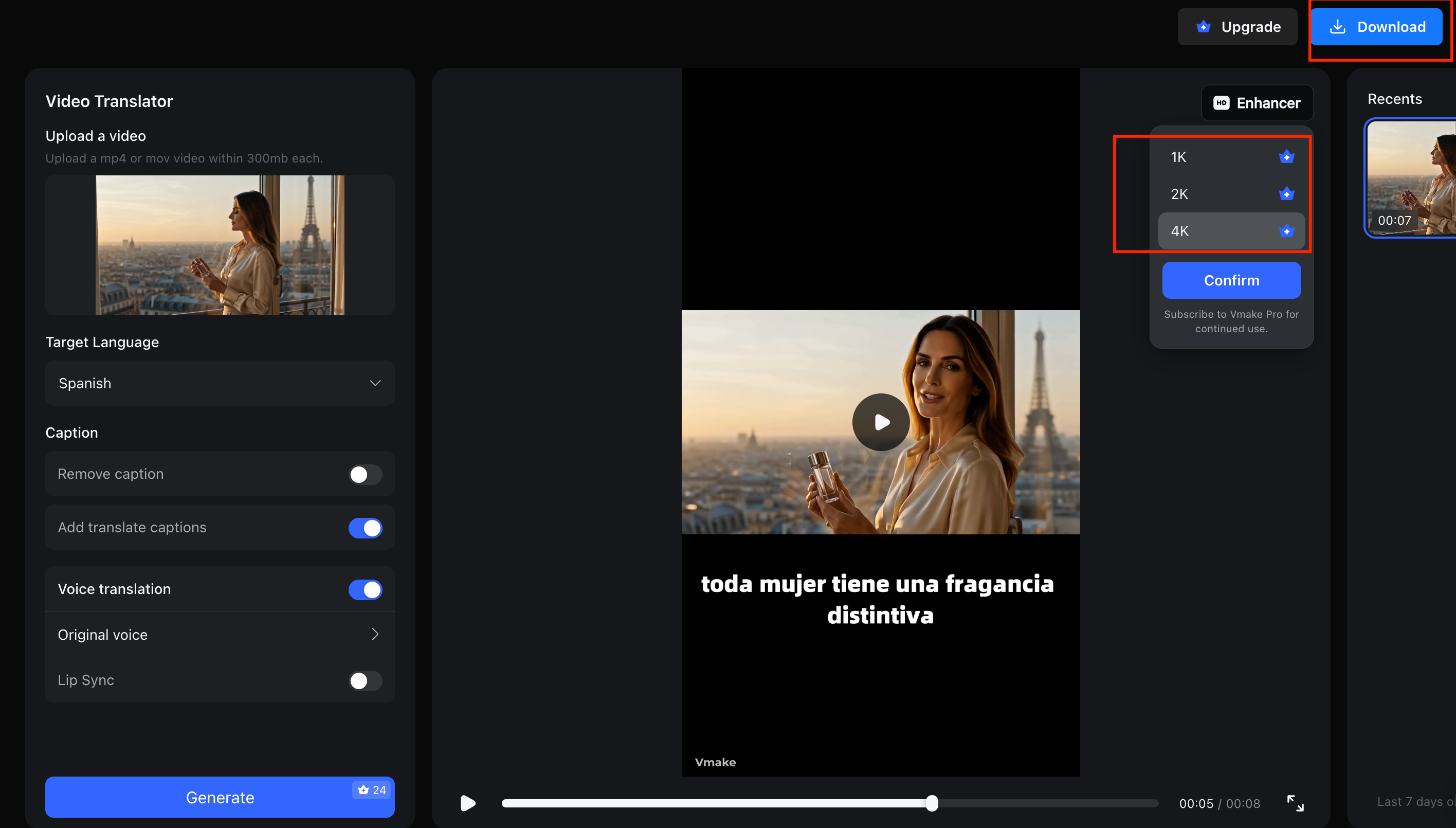
After the processing is complete, users can export a fully localized version to publish it across global platforms. The generated output carries an enhancement of up to 4K quality.
FAQ
What is AI lip sync?
AI lip sync is a technology that helps align a speaker's mouth movements with audio. The whole process is quite automatic. The AI analyzes the audio file and maps the phonetic sounds, generating fluid, realistic facial movements.
How does AI lip sync work?
AI lip sync uses machine learning to analyze audio. It automatically animates or generates a speaker's mouth movements, so they match the spoken words perfectly. The output matches the translated audio. This process replaces tedious, manual frame-by-frame animation or motion capture by completing the process in minutes.
Why is lip sync important in video translation?
Lip sync helps create a realistic feeling, viewer trust, engagement, and overall localization quality. It also helps ensure that the speech matches visible mouth movements.
Can AI automatically synchronize mouth movements?
Yes. Modern AI systems can automatically analyze video footage, generating synchronized mouth movements that align with translated speech.
Is AI lip sync better than traditional dubbing?
Yes. It is because AI lip sync provides a more immersive experience, as viewers see mouth movements matching the translated language.
What is the best AI lip sync tool?
The best tool is the one that combines translation, dubbing, and synchronization in a single workflow. It largely depends on your project and budget. It also matters for what purpose you are using this AI tool. You can be animating photos, translating videos, or generating full-body avatars.
You May Be Interested
Best AI Video Translator Tools in 2026: Compare Features, Accuracy & Pricing
How to Translate a Video Online for Free in 3 Simple Steps (2026 Guide)
How to Translate YouTube Videos to Any Language: 4 Easy Methods in 2026
Top 20 Captions to Make Your YouTube Shorts Go Viral
