How AI in Advertising is Transforming Digital Marketing Strategies
Discover how AI in advertising is reshaping digital marketing. Explore practical use cases, inspiring brand examples, and see how Vmake helps you effortlessly create stunning social media ad campaigns.

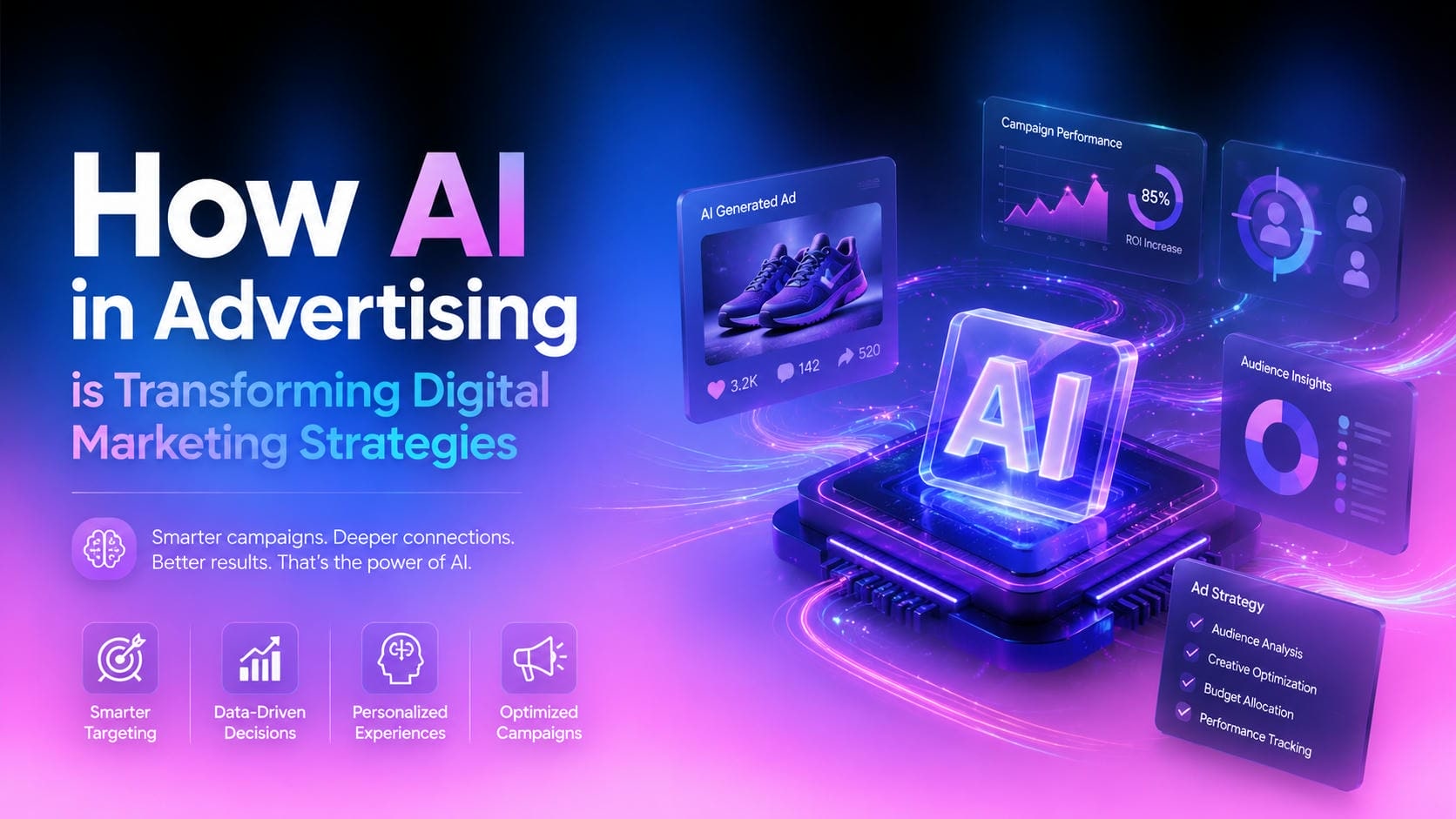
The landscape of digital marketing is shifting rapidly, and AI in advertising is leading the charge. By leveraging smart algorithms, brands can automate ad creation and optimize targeting, driving unprecedented campaign ROI while streamlining production workflows effortlessly for modern creators.
What is AI in advertising, and why does it matter?
At its core, it means plugging smart algorithms and deep data analytics directly into how you build, target, and launch ad campaigns. If your team wants to scale content without burning out, grasping the actual, real-world advantages of this technology is absolutely essential. Predictive tools parse massive audience datasets in a split second, meaning your ad budget lands right in front of people ready to buy. Look closely at modern social media video automation, which pinpoint precision and rewrites engagement while cutting out hours of tedious manual editing.
Practical use cases of AI in digital advertising
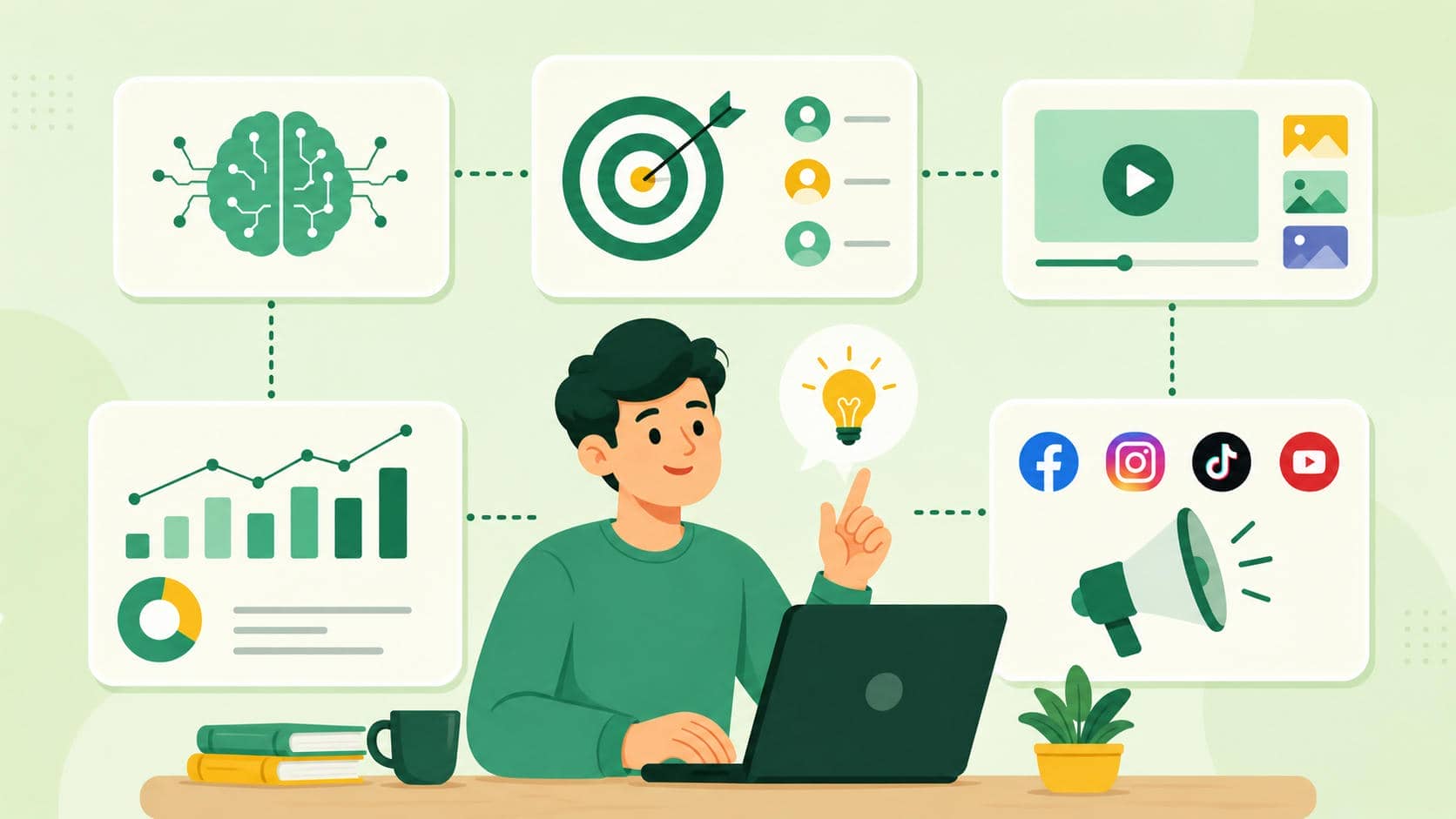
Modern brands are moving past manual processes and utilizing machine learning across their entire marketing funnel. Here is how AI is used in advertising actively to streamline complex tasks and maximize campaign performance.
|
Use Case |
Implementation Strategy |
Business Impact |
|---|---|---|
|
Social Media Video Generation |
Convert text or product images into 15-second promo videos via Vmake. |
Lowers production costs; capitalizes on trends instantly. |
|
Programmatic Media Buying |
Use Intelligent Mode algorithms to bid on digital ad space in real time. |
Minimizes ad waste by targeting only high-intent users. |
|
Predictive Campaign Analytics |
Analyze historical data to forecast top-performing assets and copy. |
Removes guesswork from A/B testing; maximizes campaign ROI. |
|
Dynamic Ad Personalization |
Sync ad networks with user databases to auto-shift copy and imagery. |
Boosts audience engagement and reduces Cost Per Acquisition (CPA). |
|
Automated Copy & Localization |
Scale core campaign themes into hundreds of regional ad translations. |
Accelerates global rollouts with market-targeted messaging. |
While each of these applications delivers measurable value, AI-powered video advertising has emerged as one of the most impactful opportunities for modern marketers. Instead of relying on lengthy production cycles, brands can now generate product demonstrations, social media ads, UGC-style content, and localized campaign videos at scale. This allows marketing teams to respond faster to trends, test more creative variations, and maintain a consistent content pipeline across multiple channels with significantly fewer resources.
Inspiring AI in advertising examples from top brands
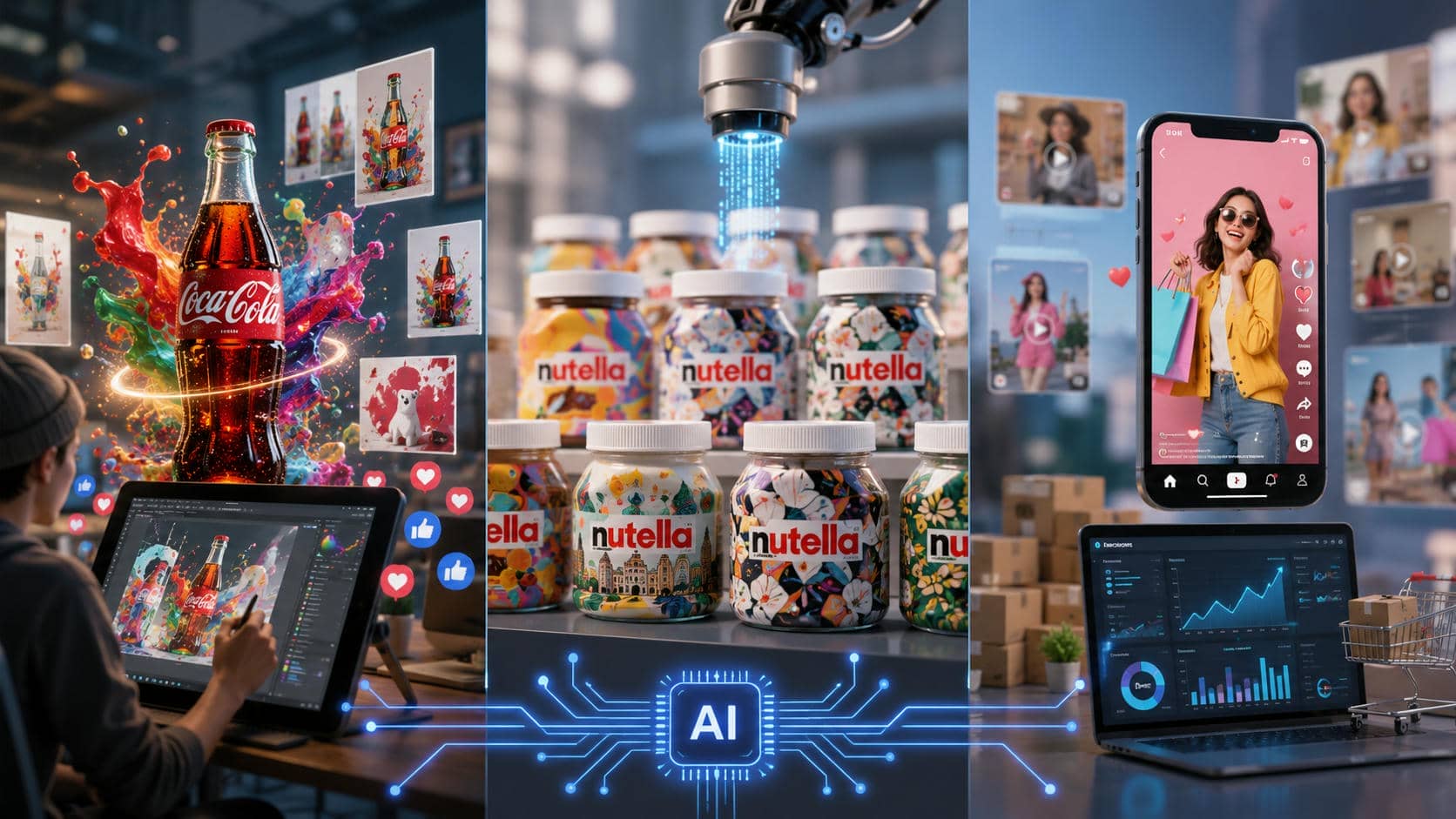
Seeing is believing: Let's look at a few prominent AI in advertising examples where major brands successfully integrated artificial intelligence into their workflows.
-
Coca-Cola's "Create Real Magic": The beverage giant launched an interactive campaign allowing digital artists to use automated generation tools to design custom ad assets with iconic company imagery. This concept blurred the line between traditional corporate marketing and user-generated art, sparking widespread engagement as fans flooded social media with their own creations.
-
Nutella's Unique Packaging: Nutella used an automated algorithm to spit out seven million completely custom packaging designs, ensuring no two jars on shelves were identical. This single move triggered a massive collector's frenzy globally, turning everyday grocery shopping into a competitive treasure hunt that completely cleared out retail stock in a single month.
-
E-commerce Trend Videos: Independent online stores are increasingly turning to automated video software to quickly churn out short social media ads featuring trending sounds and synthetic backdrops. Avoiding heavy agency retainers keeps these small businesses incredibly nimble in a fast-moving market. This fast-paced adaptation relies heavily on modern e-commerce asset creation platforms to deliver high-quality visuals on demand.
Steps to get started with AI in advertising
Shifting your media plan toward automated systems doesn't require throwing out your current strategy overnight. Taking a gradual, structured approach lets you mix automated software into your daily operations without breaking active campaigns.
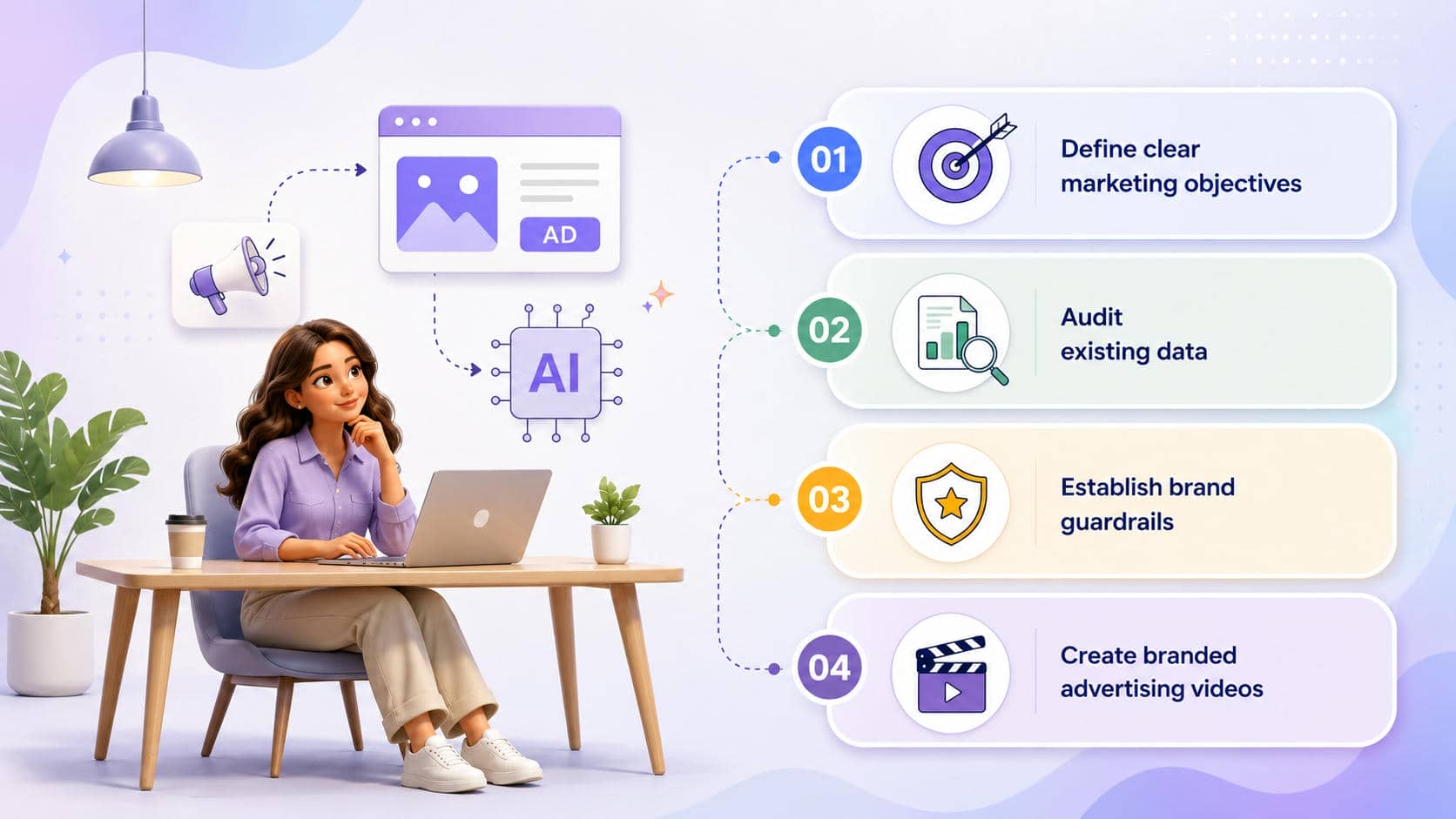
Step 1: Define clear marketing objectives
Start by tracking down the worst bottleneck holding your team back. If you are spending days sorting through spreadsheets, focusing on programmatic media tools makes the most sense. Pointing out these exact operational friction points stops you from wasting money on tools you do not need.
Step 2: Audit existing data
Intelligent models heavily rely on quality inputs to produce accurate, high-performing outputs. Ensure customer databases and historical campaign tracking metrics are thoroughly cleaned and structured before syncing them with predictive analytics software. Organized datasets prevent algorithms from learning harmful biases or making flawed bidding decisions.
Step 3: Establish brand guardrails
Set firm stylistic boundaries right inside your automated software from day one. Doing this helps you bypass the usual traps of AI in marketing and advertising, like boring copy variations or unexpected data compliance issues. Strict oversight ensures your distinct corporate identity never gets watered down by automated outputs.
Step 4: Create branded advertising videos
Moving from text to multimedia requires reliable rendering software. Marketing teams can streamline visual production by using specialized platforms to automate creative workflows:
-
For a pure product video showcase, turning static merchandise images into studio-quality clips eliminates the need for expensive physical sets.
-
When aiming to capture immediate attention, marketers can clone viral video formats to replicate high-performing advertising frameworks effortlessly.
-
If a brand requires a human touch without the overhead of hiring live talent, deploying a custom AI avatar acts as an efficient digital spokesperson.
Vmake serves as a primary example of this integrated ecosystem. This automated UGC video generator streamlines social media content creation for digital brands through an intuitive asset workspace. Let's step close to this UGC generator and learn more about a modern advertisement campaigns:
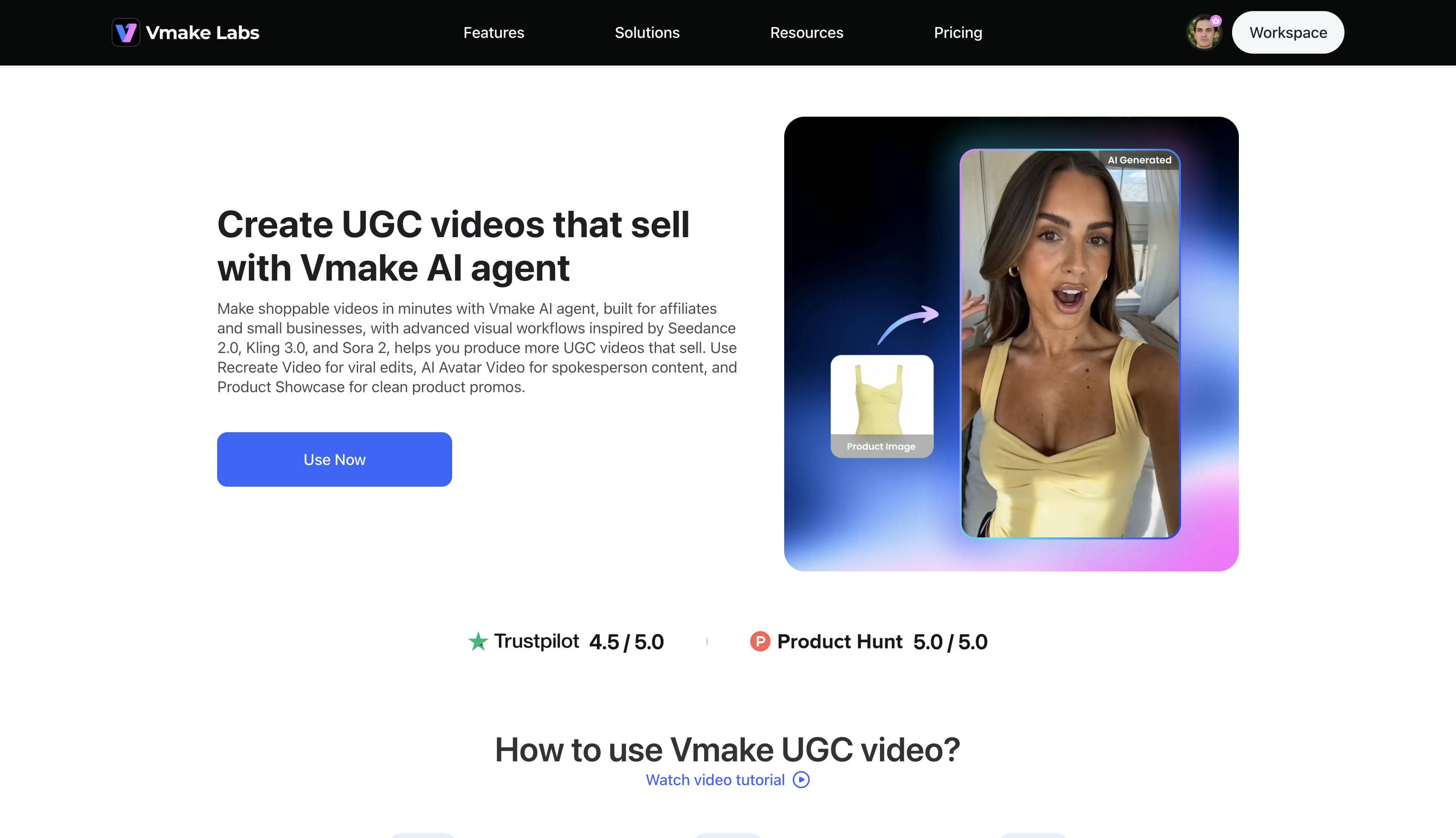
Select the "Product showcase" option
Open the Vmake platform and navigate to the "Product showcase" workspace. From there, instantly upload a primary product image or import an asset directly from a link to begin.
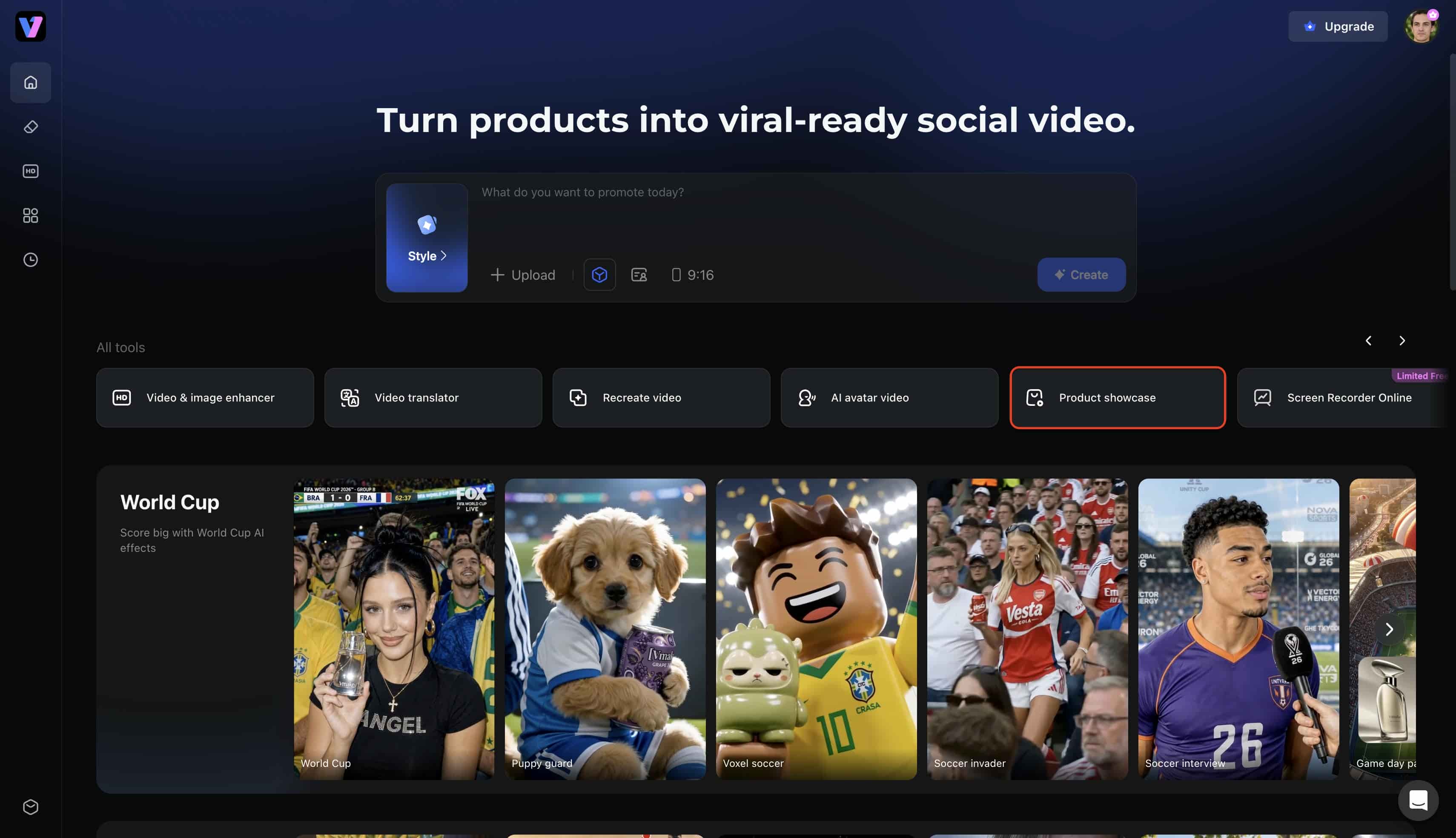
Step 2: Enter product details to configure the ad campaign
Inside the configuration menu, utilize the "Describe your ideal video" text box to provide a comprehensive prompt detailing the exact visual style of the commercial. Next, establish the audio framework by toggling the voiceover option, selecting an appropriate language, and typing out the specific spoken script.
Pro Tip: Toggle on the "AI template" feature to auto-inject dynamic captions and humanlike camera motion. In the same menu layout, choose your engine to match your goals: use Sora 2 for synced audio-video tracks, Kling 3.0 Omni for precise subject consistency, or Seedance 2.0 for smooth, rich details with rapid rendering speeds.
Step 3: Render and export the final advertisement
Once the campaign parameters are firmly established, simply click on "Generate" to initiate the rendering engine. The platform will rapidly compile the customized commercial asset without requiring any manual editing. Upon completion, download the high-resolution video directly to a local device for immediate distribution across active advertising networks.
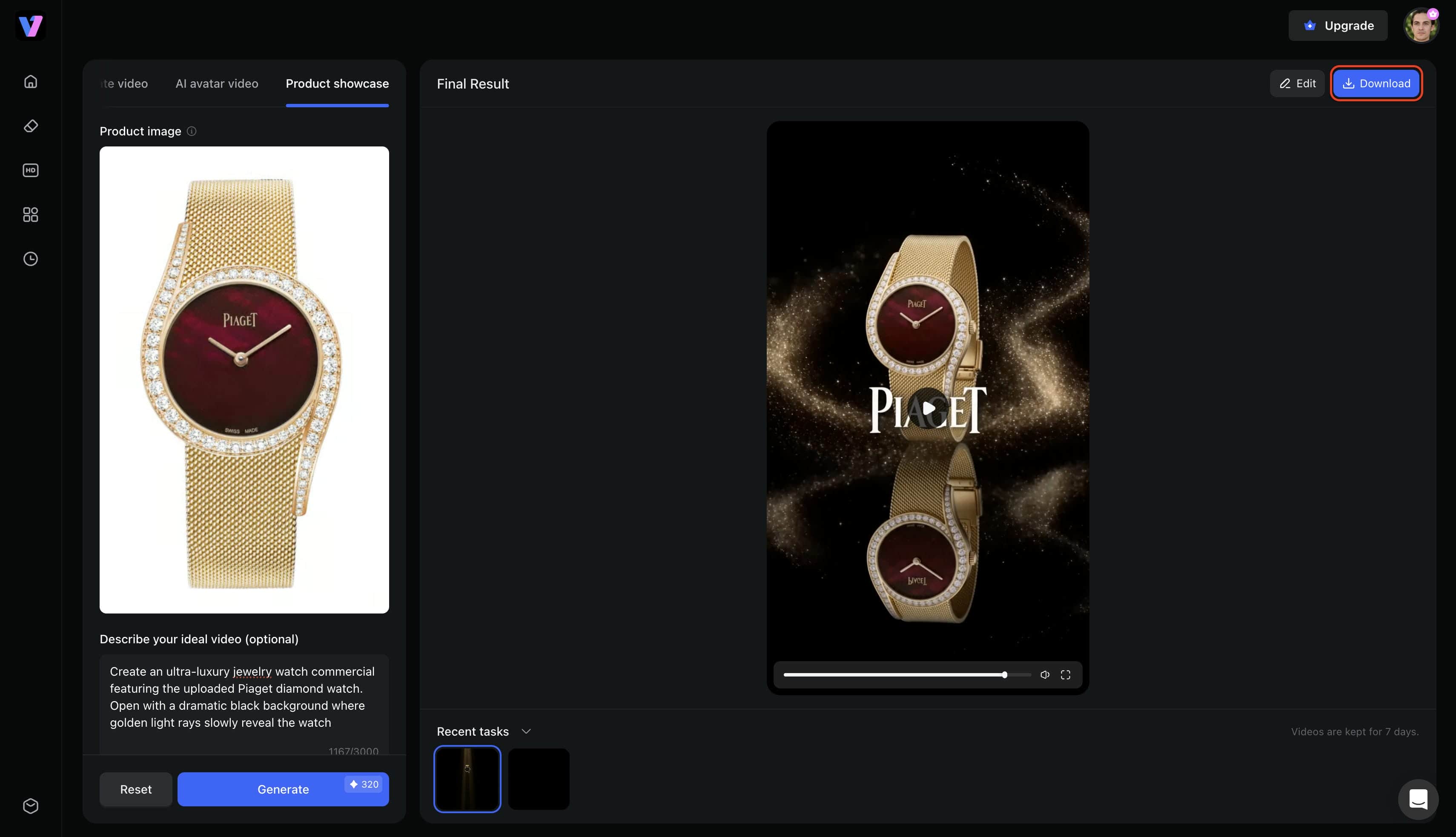
Final result:
Overcoming challenges of AI in marketing and advertising
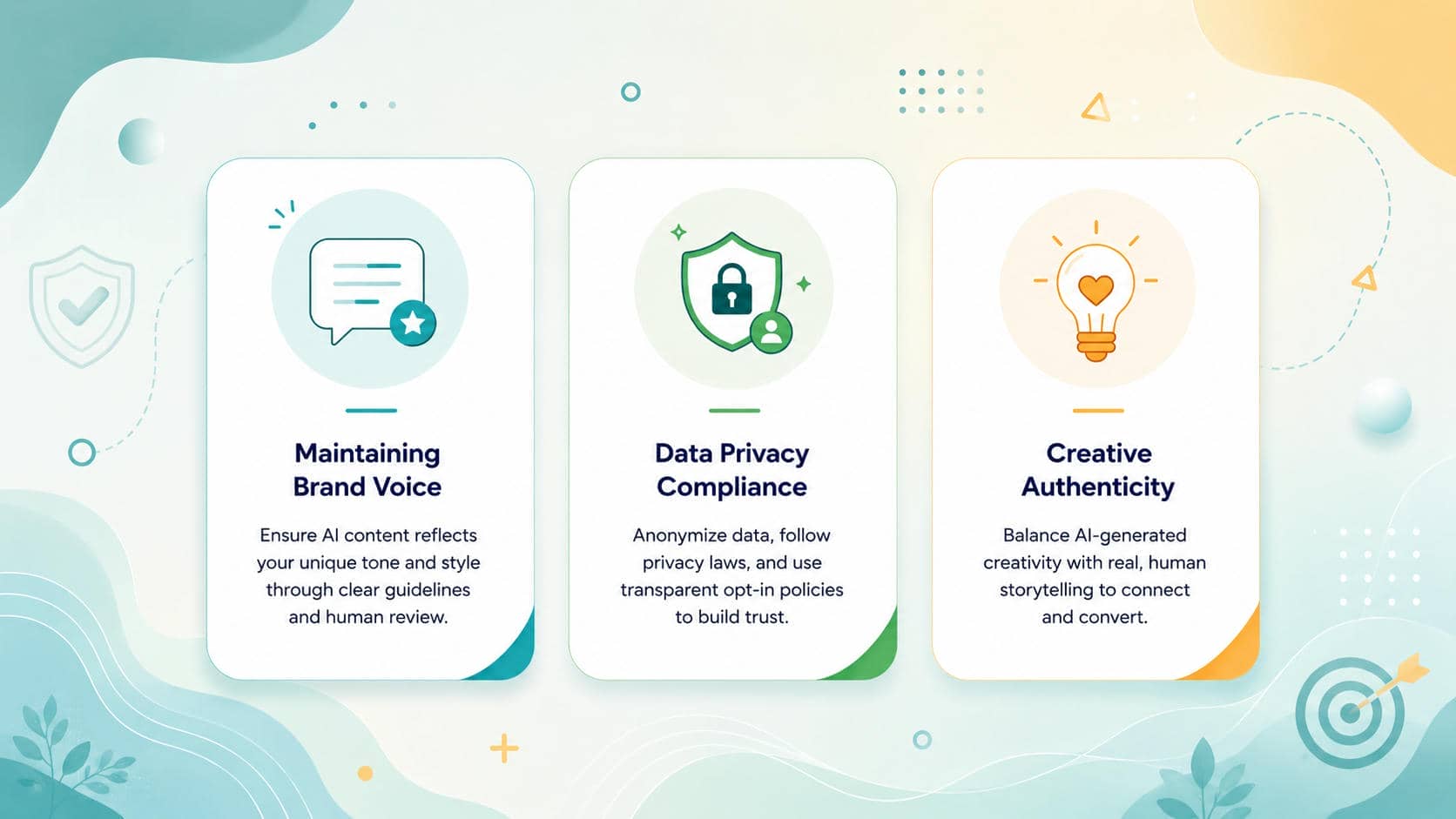
Bringing automation into your workflow definitely speeds up production. However, moving too fast without oversight introduces a few stubborn hurdles. Marketers still have to actively protect their brand's integrity and keep consumer trust intact.
-
Maintaining Brand Voice: Left to their own devices, algorithms usually spit out incredibly generic copy. To prevent your messaging from sounding flat, you have to feed these models hyper-specific context about your established style guidelines. Having a real person review the final draft is still the only reliable way to catch weird, off-brand tone shifts.
-
Data Privacy Compliance: Feeding behavioral data into targeting models gets complicated quickly due to strict regional privacy laws. You have to guarantee that all customer information is fully anonymized and locked down before running a campaign. Transparent opt-in policies further protect companies from unforeseen regulatory penalties.
-
Creative Authenticity: While plenty of marketing teams successfully play around with surreal concepts or animated characters, hitting the right stylistic sweet spot is absolutely vital. Brands have to find a natural balance between computer-generated novelty and real, human-centered storytelling to build high-converting TikTok UGC ads that actually strike a chord with viewers. If your content library feels totally robotic and disconnected, everyday consumers looking for a real human relationship will just swipe away instantly.
Conclusion
Ignoring smart algorithms in modern campaigns is no longer an option; it is a baseline survival requirement for digital marketing teams. Programmatic media buying cuts down budget leakages instantly, while tools like Vmake completely wipe out the traditional bottlenecks of video asset creation. Pushing the heavy lift of production onto automated platforms lets creative teams reclaim valuable hours to build high-level strategy. Staying flexible means staying ahead. Moving toward these workflows guarantees a brand keeps its competitive edge.
FAQs
What is the main role of AI in advertising?
AI takes over tedious, everyday campaign mechanics. It actively handles automated real-time bidding, tracks shifts in consumer data, and builds tailored ad layouts for specific viewer segments. Doing this saves substantial chunks of marketing capital while keeping delivery precise.
Will AI replace advertising agencies?
Agencies aren't going anywhere. Instead of wiping out creative teams, these automated platforms act like junior assistants handling the tedious daily busywork. Algorithms simply cannot manufacture the raw emotional pull or high-level brand strategy that veteran human directors bring to a campaign.
How is AI used in advertising for small businesses?
Small businesses utilize machine learning to generate professional marketing videos quickly, write compelling ad copy, and automate their social media bidding. These accessible tools level the playing field against larger corporate competitors without requiring massive budgets.
Can AI predict which ads will perform best?
Yes, predictive analytics models evaluate historical engagement data and consumer behavior patterns to forecast how new creatives will likely perform. This capability significantly reduces the financial risks associated with traditional A/B testing methods.
Is AI-generated video good enough for social media ads?
The recent quality jump is staggering. Modern rendering engines push out crisp 4K clips that seamlessly blend right into organic Instagram and TikTok feeds. Brands rely on them constantly to jump on fast-moving internet trends overnight or demonstrate products without ever booking a physical studio.
You May Be Interested

Grok AI Video Generator Review: Features, Pricing, and Pros & Cons
Avatar AI Video Maker for Business Advertising: Top Tools Compared
Best AI Avatar Tools for Business Growth (2026 Guide)