How Much Does YouTube Shorts Pay? Creator Earnings Breakdown
Discover how much YouTube Shorts pays creators, what 1 million views can earn, key monetization requirements, and proven ways to grow revenue faster with help from Vmake AI.

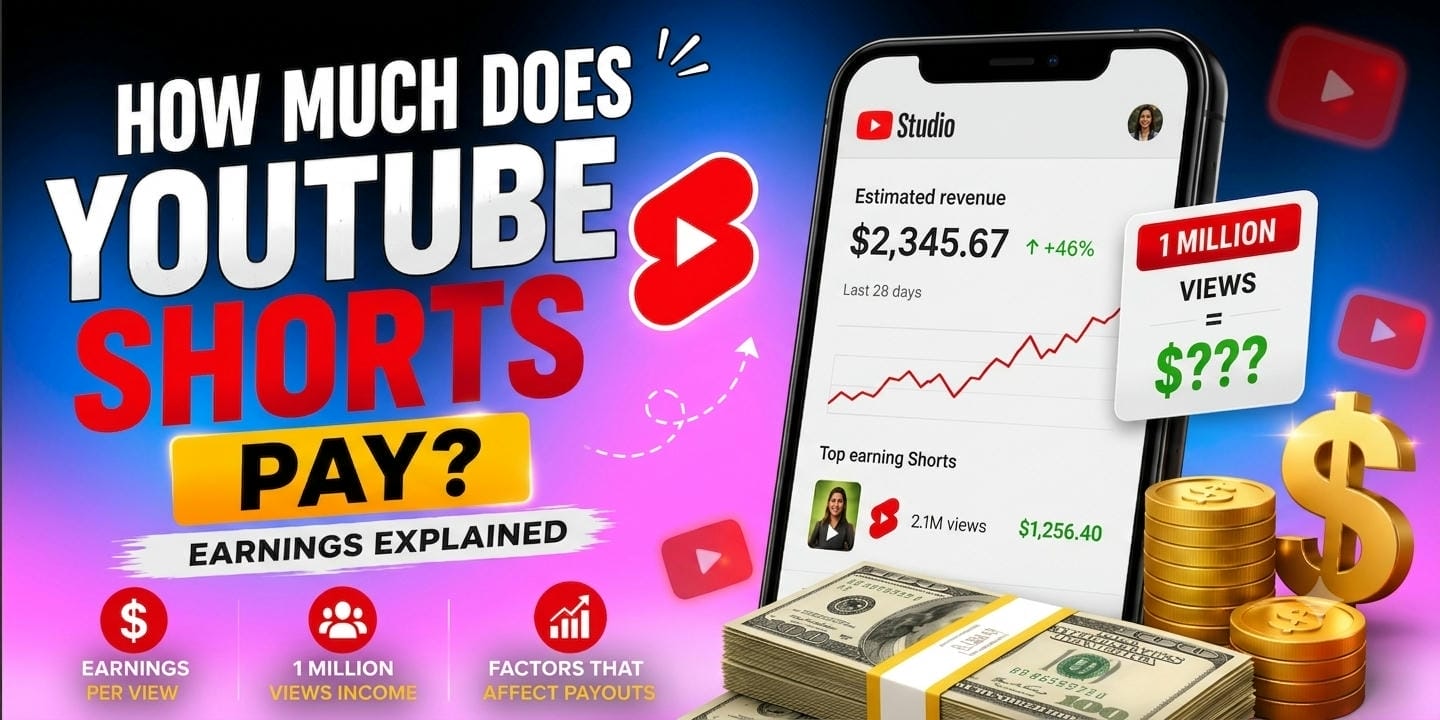
If you have searched for how much YouTube pays for shorts views, you will have come across a lot of different answers, because there is no fixed payout rate. Two channels can amass the exact same amount of views, but have completely different earnings for the month from a very chaotic shared advertising revenue pool.
Understanding the YouTube Shorts Revenue-Sharing Model
YouTube didn't always pay Shorts creators the way it does now. In the beginning, there was the Shorts Fund, a bonus program that rewarded selected creators each month. Some creators received decent payouts. Others received nothing. It felt inconsistent because, honestly, it was.
YouTube Partner Program
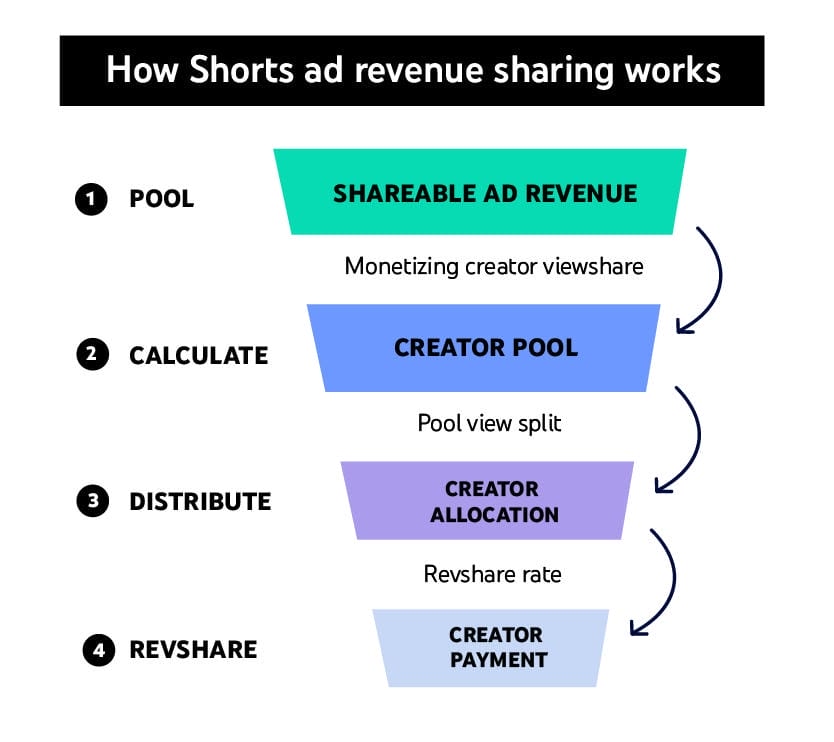
However, YouTube now has a revenue-sharing scheme via the YouTube Partner Program. Revenue from ads aired between Shorts goes into a communal pool and is split among eligible creators depending on view share. One reason rewards vary so greatly is that music license expenses are removed before creator earnings are computed. This is where a lot of creators do it wrong. Views matter, but they don't tell the complete story. Audience location, advertiser demand, and content style often influence revenues just as much.
Who Can Earn Money From YouTube Shorts?
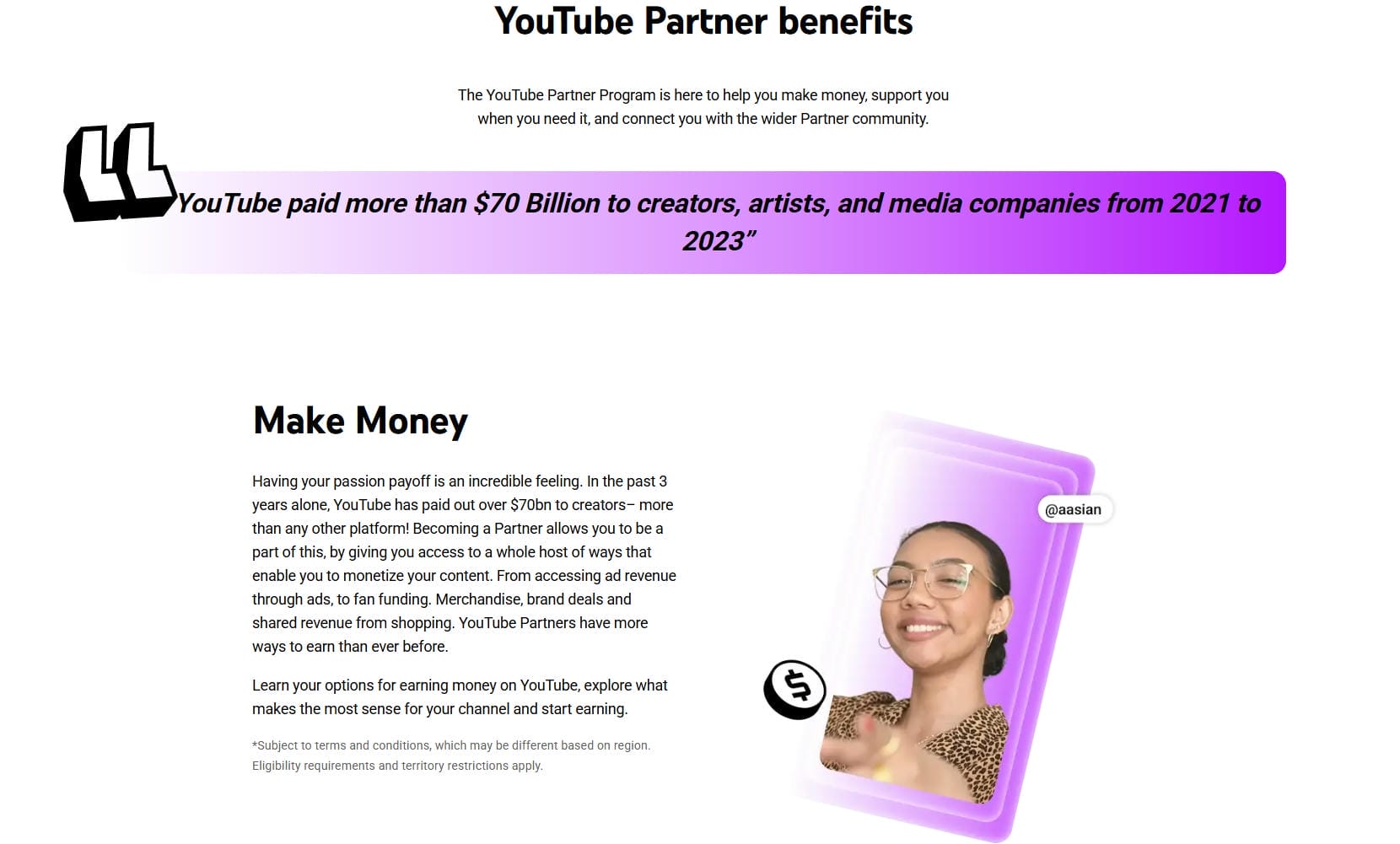
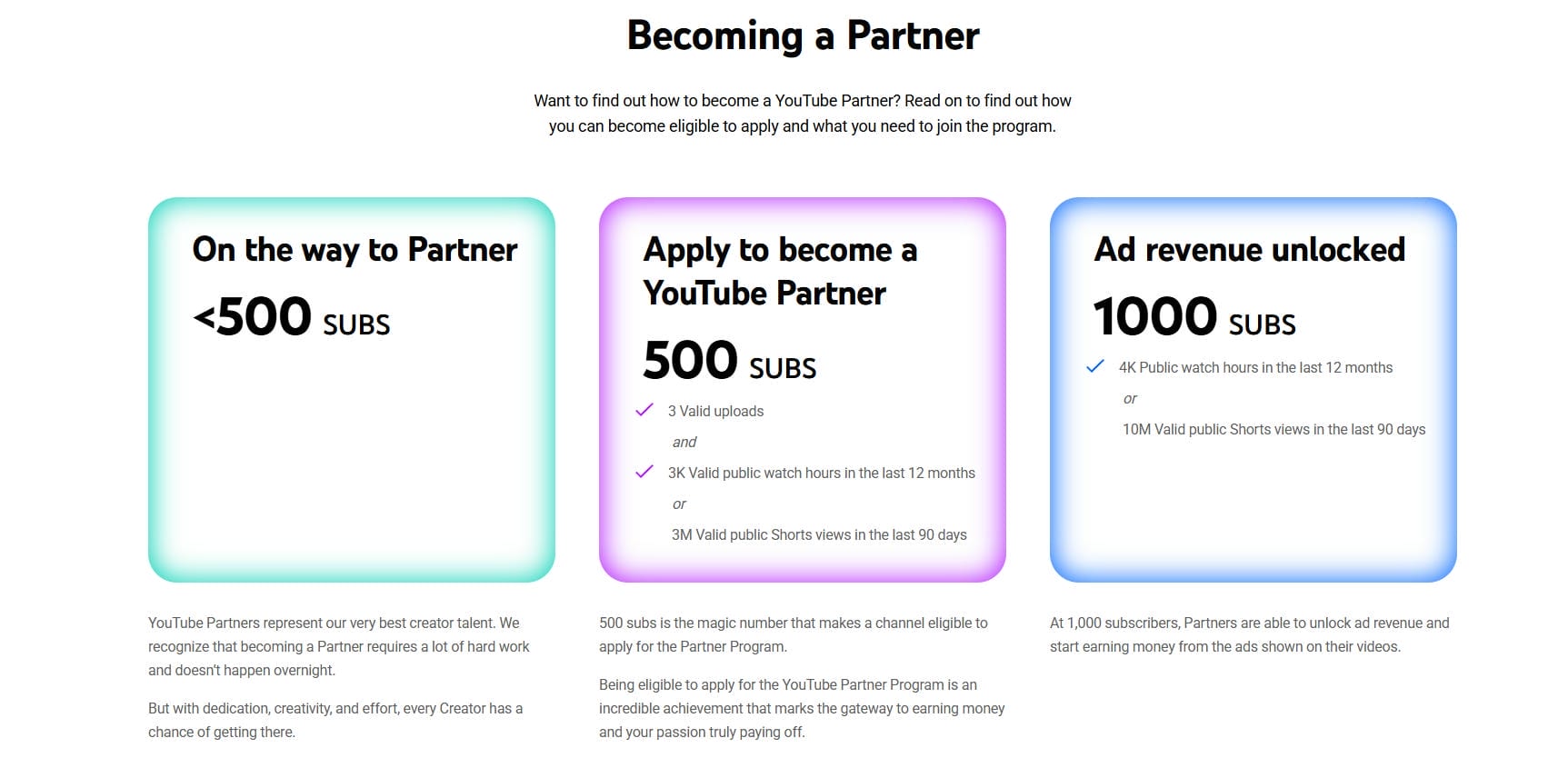
One thing catches many creators by surprise: you can rack up millions of views and still earn absolutely nothing. To receive Shorts revenue, you must unlock the YouTube Partner Program by hitting 1,000 subscribers alongside either 4,000 valid public watch hours within 12 months or 10 million valid public Shorts views within 90 days. Even after hitting these milestones, YouTube thoroughly reviews your channel for policy compliance before approving monetization—proving that while going viral gives you a head start, meeting strict eligibility criteria and guidelines always come first.
How Much Does YouTube Pay for Shorts Views?
If you've searched for how much YouTube pays for Shorts views, you'll have found a multitude of different answers because there is no fixed payout rate, meaning two channels can gather the exact same amount of views but have completely different earnings for the month from a very chaotic shared advertising revenue pool.
Average Earnings Per Thousand Views
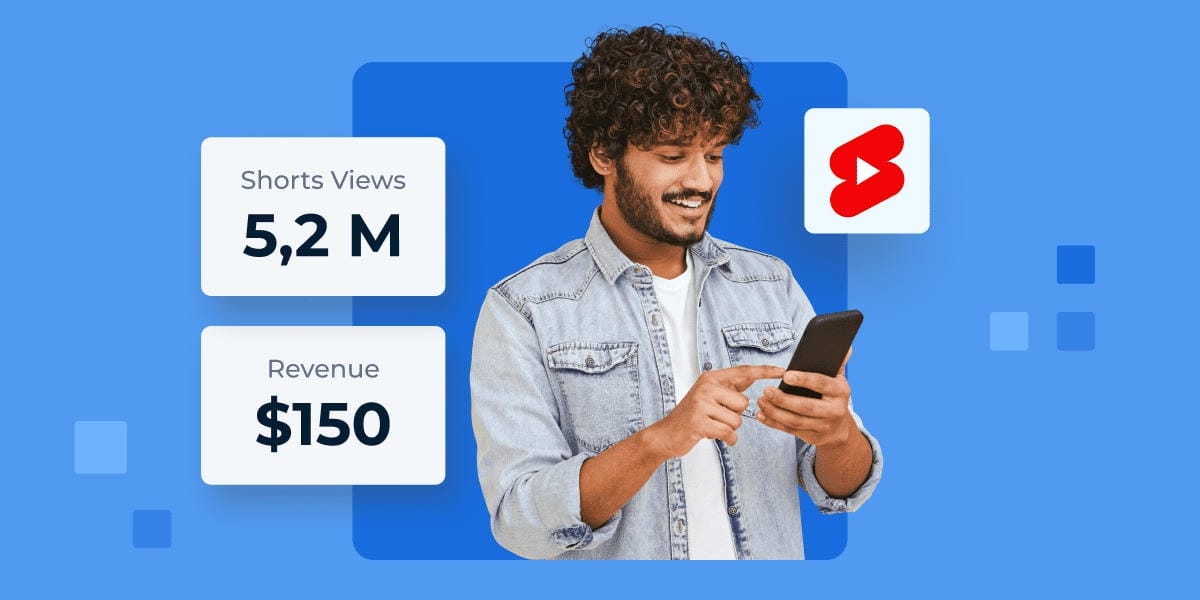
Expect pennies here. Most creators use RPM to estimate revenue, meaning earnings per thousand views and for Shorts, those numbers tend to be low. Many report RPMs between $0.01 and $0.30, though you won't see this if your audience lives outside major Western economies. People scroll quickly, creating fewer advertising opportunities. A million views help a channel grow, but the payout feels smaller than expected. This is the part most platforms hide behind the reach.
How Much Does YouTube Pay Per View on Shorts?
When asking how much YouTube pay per view on Shorts, individual views are worth a fraction of a cent. Reports suggest earnings work out to roughly $0.00001 to $0.0003 per view. Those figures aren't guaranteed, and frankly, they can plummet to zero if a viewer skips too fast. Audience location completely changes the outcome.
What Impacts Shorts Revenue Rates?
Advertisers pay more for viewers in the US, Canada, Australia, and the UK. Niche matters too. Business and finance content attracts stronger advertising budgets than entertainment. Finally, retention and watch patterns increase total views and revenue opportunities. The system has too many moving parts to predict accurately, leaving you wondering if anyone actually understands the algorithm.
Here's a breakdown of typical YouTube Shorts earnings based on the number of views you have:
|
Views |
Estimated earnings |
Key factors affecting earnings |
|---|---|---|
|
1,000 |
$0.01–$0.30 |
Audience location, niche, engaged views |
|
10,000 |
$0.10–$3.00 |
High-CPM regions, advertiser-friendly content |
|
100,000 |
$1–$30 |
Niche (tech/finance), viewer demographics, engagement |
|
500,000 |
$5–$150 |
Consistent posting, high engagement, niche content |
|
1 million |
$10–$300 |
High-CPM regions (US, UK), optimized content, high engagement |
How Much Does YouTube Shorts Pay for 1 Million Views?
Typical Earnings Range for 1 Million Views
According to creator surveys and industry estimations, one million views of YouTube Shorts can earn between $10 and $300, depending on viewer demographics, geography, and content specialty. A million views can get you a lot of publicity and new subscribers, but Shorts are more about audience growth than direct monetisation. That's why veteran producers are more concerned about steady success than one-off viral videos.
Comparing Different Creator Scenarios
Some audiences are worth more to advertisers than others, and that goes straight to the bottom line.
-
Entertainment Channels: Generally attract large audiences yet a large audience equals lower advertising revenues.
-
Educational Creators: The smaller, but engaged audiences might attract higher ad prices, because the viewers are actively searching for relevant information.
-
Business and Marketing Channels: Topics such as entrepreneurship, finance, and marketing tend to attract premium advertisers and larger payments.
-
Audience Location: Creators who have viewers located in countries like the US tend to earn more than those with audiences in countries with smaller advertising budgets.
Why Some Videos Earn More Than Others
You may have seen that creators with comparable opinions can make wildly different sums of money. Several things affect YouTube Shorts revenue.
-
Intended Users Demographics: The greater purchasing power in an audience , the more advertisers are willing to spend . So demographics of the viewers is important in terms of revenue.
-
Availability of Ad Inventory: Advertisements are seasonal. However, in peak shopping seasons, when more firms are vying for ad spots, earnings go up.
-
Viewer Retention and Engagement: The algorithm rewards videos that keep viewers engaged for longer durations and have higher engagement metrics, leading to greater reach and monetization opportunities.
Getting views is as hard as generating content, if not tougher. Tools like Vmake AI help speed up the process of creating UGC videos, allowing content creators more time to concentrate on content development and audience growth.
Meet Vmake AI: Create Shorts Faster and Scale Content Production
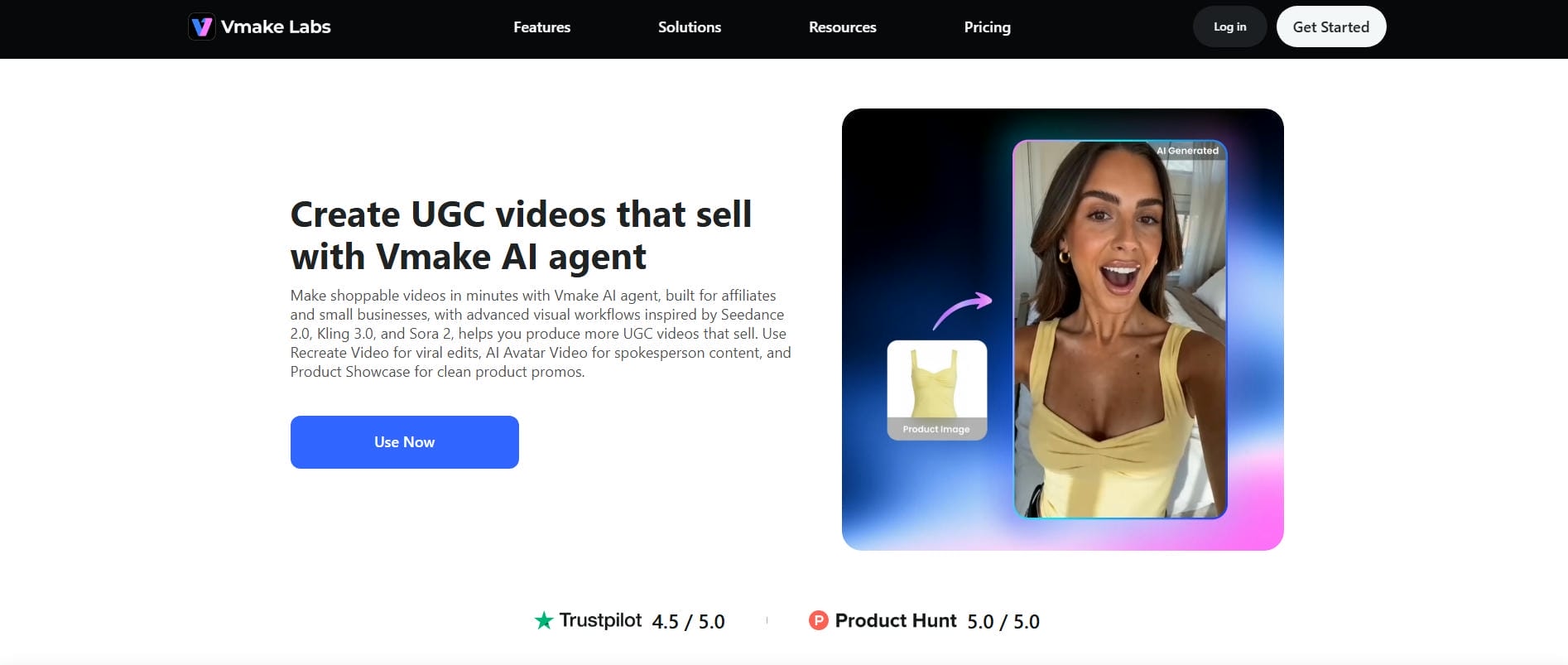
Vmake AI is a dedicated UGC video creation tool that helps affiliates and brands pump out high-converting YouTube Shorts at scale. Instead of wasting hours on manual editing, you can generate realistic, shoppable vertical clips in minutes from a single product image or link. The platform uses an AI agent to build your visual story, script, and music all at once. You can use "AI Avatar Video" for quick talking-head promos or "Recreate Video" to copy viral structures. It gets your content 80% there instantly, keeping your daily upload schedule alive while you focus on testing hooks.
Key features
-
Products showcase videos from existing assets: Turn product images, descriptions, and marketing materials into engaging product videos without filming new footage. It helps create polished showcase content quickly using assets you already have.
-
Viral-style ad creation for rapid testing: Creating multiple ad variations manually can be time-consuming. The Clone Viral Video tool helps generate videos based on proven advertising formats, making it easier to test different hooks, messaging angles, and creative concepts at scale.
-
AI avatars for spokesperson-style content: Produce creator-style and spokesperson-led videos without hiring actors or organizing a shoot. It generates realistic avatars and voiceovers, helping brands create UGC-style ads and promotional content with minimal production effort.
-
All-in-one video creation workflow: Generates scenes, syncs scripts, and adds music in one click, while offering video enhancement, auto-captions, and watermark removal. This complete setup eliminates external editing, so you can launch ready-to-use ads instantly.
How to Create YouTube Shorts With Vmake AI
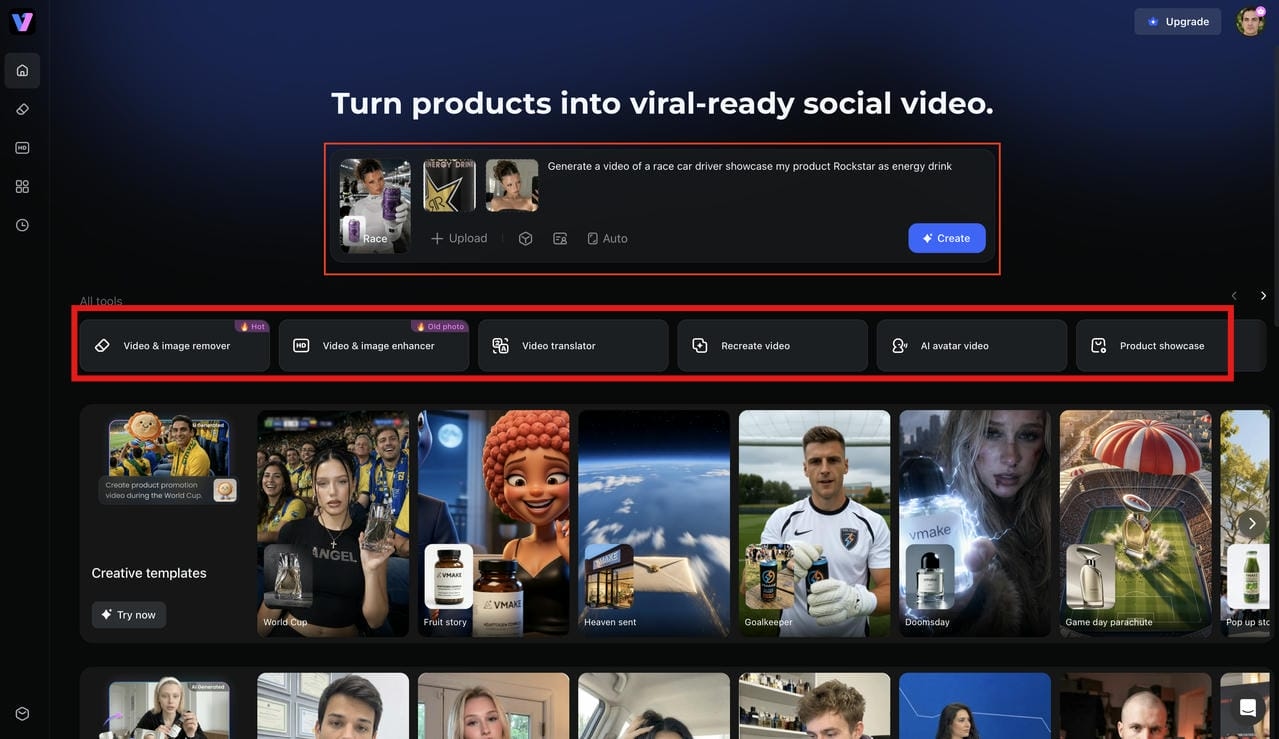
Step 1: Choose your UGC video workflow
Log in to Vmake, select the UGC video workflow that matches your content goal, like AI avatar video, product showcase, or recreate video, and upload your product image or URL. The platform automatically sets up the timeline based on your file, meaning you don't have to waste time writing complicated prompts.
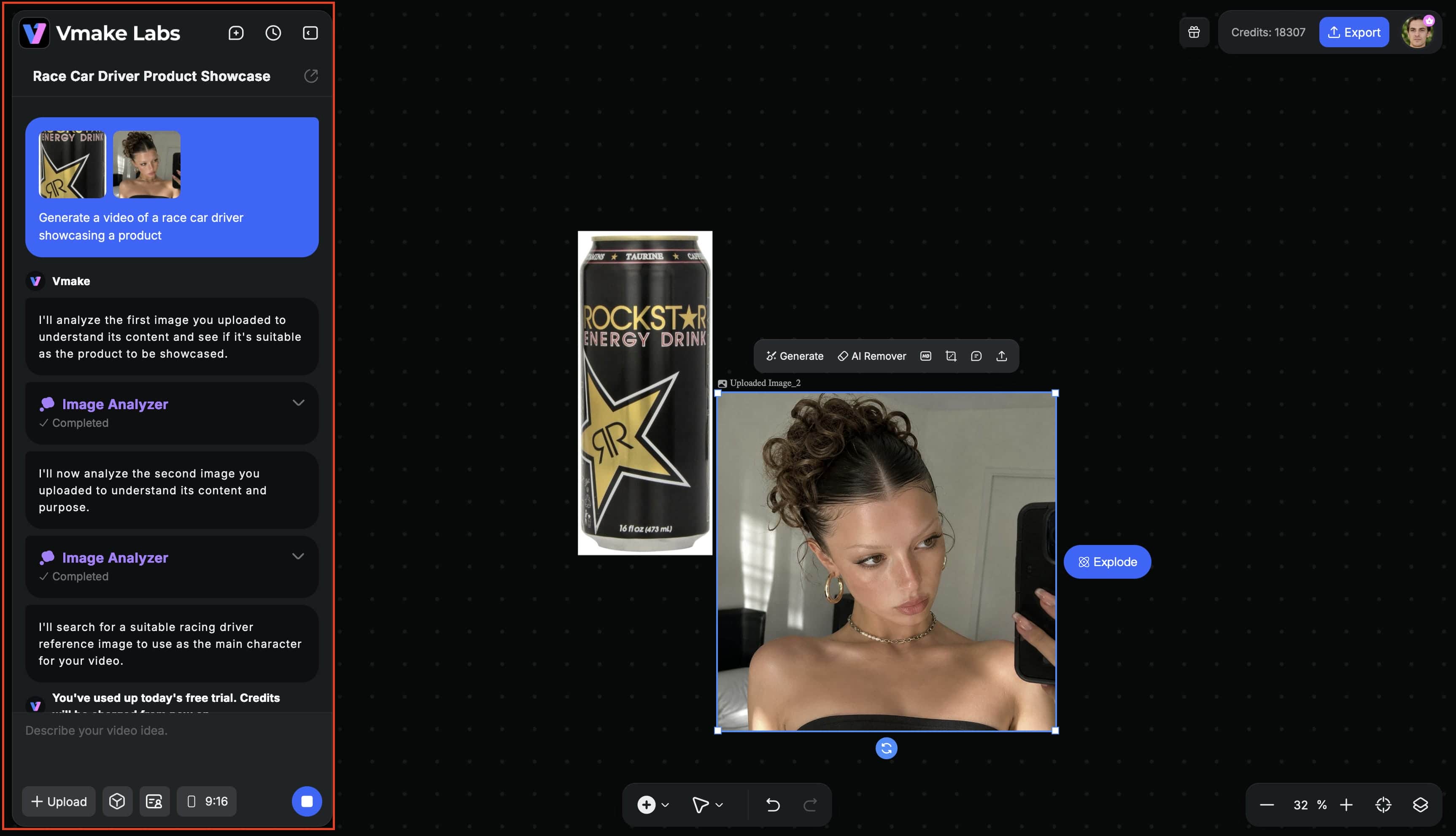
Step 2: Review AI Asset Analysis and Arrange Your Project
The AI agent analyzes uploaded assets and determines how they can be used within the video project. You can review the setup, reposition elements on the canvas, and make adjustments before generating the final video. It performs best with clear product images and subject photos, though results may vary when assets contain busy backgrounds or multiple focal points.
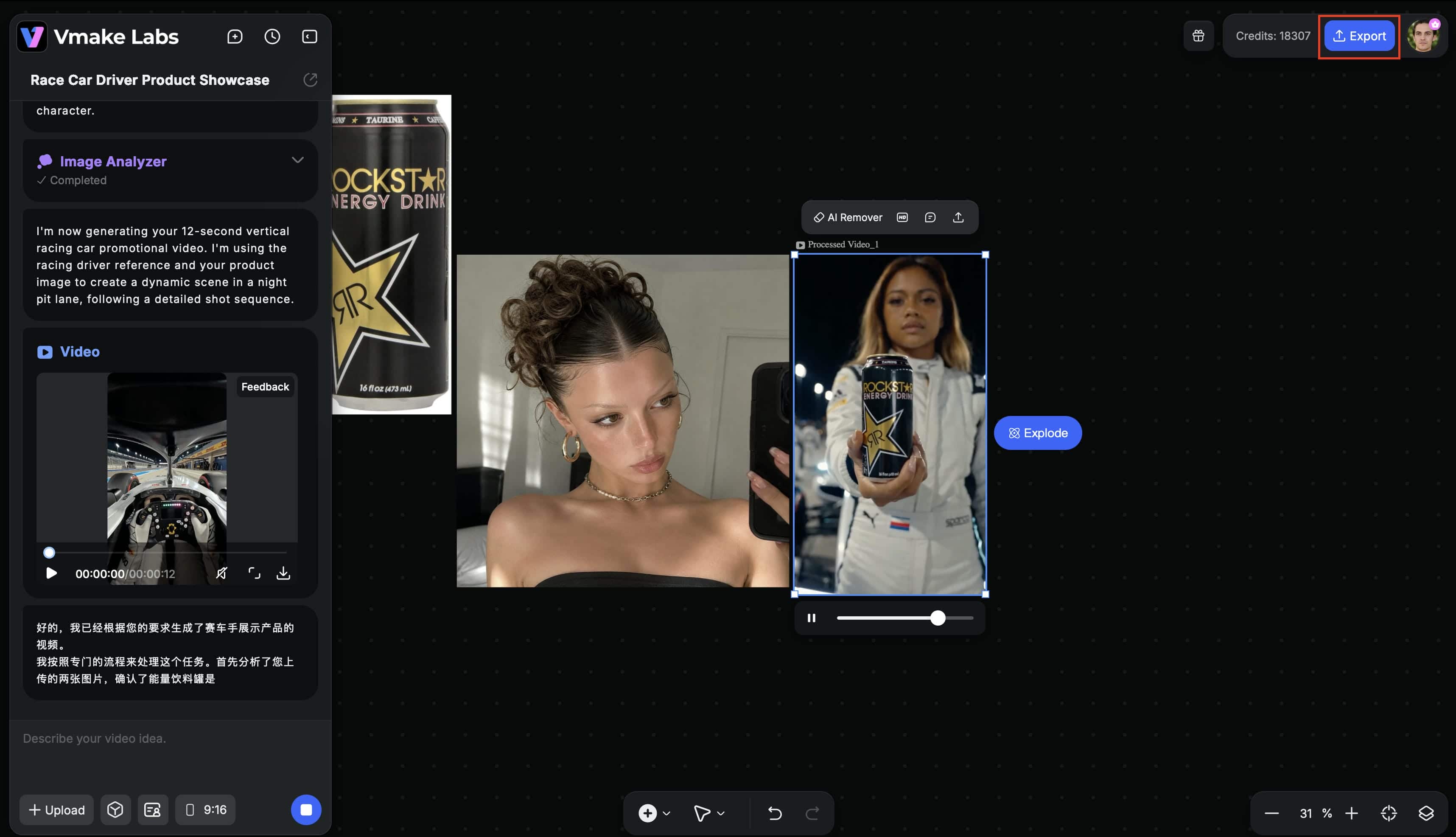
Step 3: Export and Publish YouTube Shorts
Once the video is generated, preview the output to make sure the visuals, pacing, and product placement look right. If you're satisfied with the result, click Export in the top-right corner to render and download the finished video. You can then upload it directly to YouTube Shorts or make additional edits if needed.
Additional Ways Creators Make Money From YouTube Shorts
If you're looking to get rich just off of YouTube Shorts ad revenue, you're in for disappointment. The most successful creators view it as one of their revenue streams, and diversify their revenue across a range of channels:
-
Brand deals and sponsorships: Collaborate with brands to market their products or services. One sponsorship can typically yield more than months of Shorts ad income.
-
Affiliate marketing: Share links to tools, software, or products you like and get paid a commission for sales.
-
Selling digital products: Monetize your audience with ebooks, templates, online courses, or consulting services, and keep most of the cash.
-
Driving traffic to a business: Many entrepreneurs use Shorts to send potential clients to their ecommerce businesses, agencies, or other ventures.
-
Fan support: Dedicated fans may help creators directly with features such as Channel Memberships, Patreon, and Super Thanks.
-
Building an audience beyond YouTube: Having an email list, community, or podcast lets producers build long-term audience relationships without depending on the platform's algorithm.
Conclusion
How much you earn from YouTube Shorts might differ a lot based on things like where your audience is located, how much advertisers want to spend, and the type of material you make. Shorts are more useful for reach than they are for revenue. Many artists make around $10-$300 per million views. That's why top producers often supplement their ad earnings with sponsorships and affiliate marketing. Tools like Vmake AI can help create content, but the biggest factor for long-term development is compelling content.
FAQs
How much do YouTube Shorts pay per 1,000 views?
Expect pennies. Most authors make a meager $0.01 to $0.10 per 1,000 views. Your specialized specialty, audience geography, and seasonal ad demand are what pull all the levers here. People use Vmake AI because if you want to increase your footprint, you need to be pumping out material constantly. But no solution can remedy a weak hook.
How much do YouTube Shorts pay for 1 million views?
You'll usually look anywhere from $10 to $200 for a million hits. It completely hinges on who is watching, their age, and the country they are tuning in from. Steady uploads matter way more than one viral hit, so creators rely on Vmake AI to keep the production line moving, even if the tech can't fix dry raw footage.
How much does YouTube pay per view on Shorts?
There isn't a fixed price tag per click since YouTube drops ad cash into a giant shared pool. Payouts are distributed based on your slice of total views, meaning earnings fluctuate constantly from person to person. Calculating exact per-view rates is a waste of time compared to using Vmake AI to auto-caption clips, so you can focus on better concepts.
Why do some creators earn more from Shorts than others?
Advertisers bid based on viewer demographics, meaning a finance channel out-earns a gaming channel even with identical view counts. Age, location, and niche dictate the budget, so views alone never tell the whole story. If you're stuck with low payouts, use Vmake AI to quickly spin up product-focused marketing clips that target a higher-value audience.
Can you make a full-time income from YouTube Shorts?
Yes, but relying solely on AdSense is a massive trap because real money comes from sponsorships and affiliate links. Smart creators use the quick reach of vertical video to build the audience first, then monetize across multiple channels later. Automating tedious clip-cutting with Vmake AI gives you the free time needed to actually build those alternative revenue streams.
Does Vmake AI help create YouTube Shorts faster?
It saves editing bay hours by doing tiresome clipping and framing and creating visual elements from photographs or text scripts. This automation will save your sanity by making it much easier to keep up with a relentless posting schedule. Just remember it suffers with chaotic, unscripted footage, so your human eye is still needed for the final cut

You May Be Interested

How to Create Professional YouTube Thumbnails with AI: A Creator’s 2026 Strategy
The Ultimate Guide to Transcribe YouTube Video to Text [2026]

YouTube Automation: Guide to Building a Scalable Business

YouTube Thumbnail Size 2026: The New Standard for High-CTR Visuals